
Few dishes embody the soul of Italian home cooking like a rich, hearty Bolognese sauce. Known in Italy as Ragù alla Bolognese, this traditional meat sauce hails from Bologna and is celebrated for its deep, savory flavor, velvety texture, and comforting aroma that fills the kitchen as it simmers. Made with ground beef, aromatic vegetables, tomato, wine, and a touch of milk, it’s the perfect sauce to serve over pasta like tagliatelle, pappardelle, or even in lasagna.
Forget quick meat sauces—true Bolognese is slow-cooked, layered, and subtle. It’s not just about tomatoes and meat; it’s about building flavor slowly and patiently, just like Italian grandmothers have done for generations.
What Makes Bolognese Sauce Authentic?
Authentic Italian Bolognese isn’t overly tomato-heavy or spicy. Unlike American meat sauces, which often lean on marinara as a base, a true Bolognese is meat-forward, with tomato playing a supporting role. Milk is added to mellow the acidity and create a silky texture, and the slow simmer is what transforms the ingredients into a rich, cohesive sauce.
In fact, the official recipe was registered in 1982 by the Accademia Italiana della Cucina. While variations exist from family to family, the essentials remain: beef, pancetta, onion, carrot, celery, tomato paste, white wine, milk, and time.
Ingredients Overview: A Deep Dive Into Flavor
Each ingredient in Bolognese plays a key role. Let’s look at what makes this sauce sing.
1. Ground Beef
Traditionally, a mixture of ground beef and pork or veal is used. For this recipe, we’ll stick with 100% ground beef for accessibility while still achieving a rich, deep flavor.
Why it works: The fat and richness of the beef form the foundation of the sauce.
2. Pancetta
Finely chopped pancetta (Italian cured pork belly) adds salt, fat, and a subtle smokiness that underpins the entire dish.
Substitute: Use unsmoked bacon if pancetta isn’t available.
3. Soffritto (Onion, Carrot, Celery)
The Italian version of mirepoix, this trio of vegetables is sautéed slowly in olive oil or butter until soft and sweet.
Balance: Carrot adds sweetness, onion brings savory depth, and celery adds a slight herbal note.
4. Tomato Paste
Instead of canned tomatoes or sauce, authentic Bolognese uses a small amount of tomato paste for concentrated flavor.
Note: Avoid overpowering the meat with too much tomato. A little goes a long way.
5. White Wine
Dry white wine deglazes the pan and lifts the fond, adding acidity and complexity.
Alternative: Red wine can be used, though it results in a slightly deeper, heavier flavor.
6. Whole Milk
A signature step in Bolognese—milk is added after the meat browns to soften acidity and enrich the sauce.
Why it matters: It gives the sauce a tender, velvety texture.
7. Broth or Water
As the sauce simmers for 2–3 hours, liquid evaporates. Small amounts of beef broth or water are added as needed to maintain moisture and develop depth.
Step-by-Step Instructions: Slow, Steady, and Traditional
Take your time. The longer it simmers, the better it gets.
Step 1: Prep the Ingredients
-
Finely dice 1 small onion, 1 medium carrot, and 1 celery stalk.
-
Chop 3 oz pancetta finely.
-
Measure out:
-
1 lb ground beef (80/20 or lean)
-
2 tbsp tomato paste
-
½ cup dry white wine
-
1 cup whole milk
-
1½–2 cups low-sodium beef broth or water
-
Step 2: Build the Base
-
In a large heavy pot or Dutch oven, cook pancetta over medium-low heat until the fat renders (5–6 minutes).
-
Add 2 tbsp olive oil or butter and stir in the diced onion, carrot, and celery.
-
Sauté slowly for 10–12 minutes, stirring occasionally, until vegetables are soft and golden.
Step 3: Brown the Beef
-
Increase heat to medium and add ground beef.
-
Break up with a spoon and cook until browned and no longer pink—10–12 minutes.
-
Season lightly with salt and pepper.
Step 4: Deglaze and Add Tomato
-
Stir in 2 tbsp tomato paste. Cook 2 minutes to caramelize slightly.
-
Add ½ cup white wine. Simmer until mostly evaporated—3–4 minutes.
Step 5: Add Milk and Simmer
-
Stir in 1 cup of whole milk.
-
Reduce heat to low and let the sauce gently simmer uncovered for 2–3 hours.
-
Stir occasionally and add broth or water in ¼-cup increments as needed to keep it moist and saucy (not soupy).
Key visual: The sauce should look thick, rich, and clingy—not watery.
Tips, Variations & Chef Notes
Pro Tips
-
Low and slow wins: Don’t rush the simmering process—this is where the magic happens.
-
Don’t skimp on soffritto: Take time sautéing the vegetables until soft and aromatic.
-
Use quality meat: Ground chuck or sirloin works well. Avoid ultra-lean blends, or the sauce will be dry.
Variations
-
Mixed meat: Try a 50/50 blend of beef and pork or veal for a richer flavor.
-
Add nutmeg: A pinch of nutmeg added with the milk is traditional in northern Italian households.
-
With tomatoes: Some recipes include a small amount of crushed tomato or passata—just keep it minimal.
Substitutions
-
Pancetta: Use finely diced unsmoked bacon or omit for a leaner version.
-
Milk: Use half-and-half or even heavy cream for a richer sauce.
-
Wine: Red wine is acceptable, but use a dry, drinkable bottle—never cooking wine.
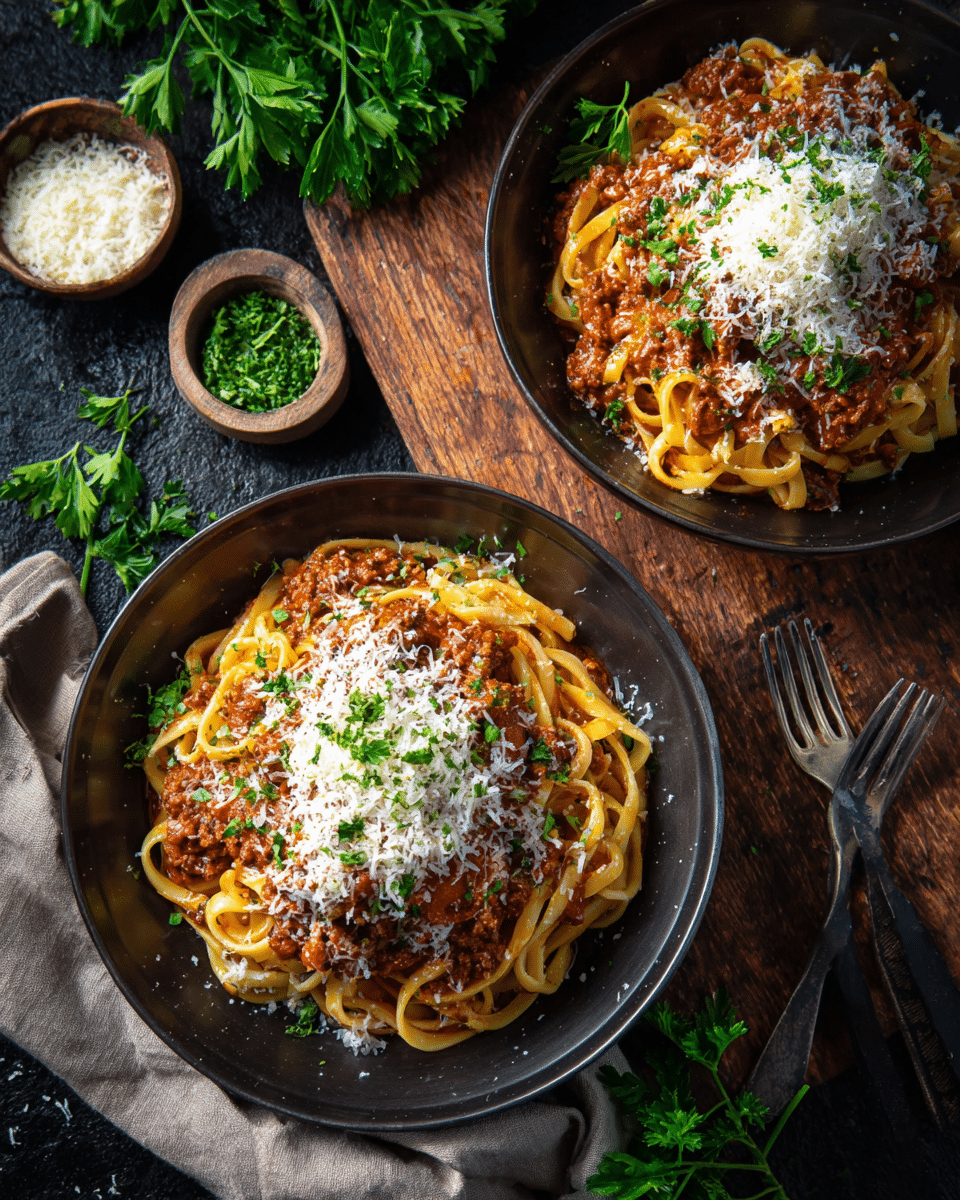 Serving Ideas & Occasions
Traditional Pairings
-
Tagliatelle alla Bolognese: The most traditional pairing. Wide, flat pasta holds the thick sauce beautifully.
-
Pappardelle or fettuccine also work well.
-
No spaghetti: While popular in the U.S., spaghetti is not traditional for Bolognese.
Other Serving Ideas
-
Lasagna Bolognese: Use as the meat sauce layer in classic Lasagne alla Bolognese with béchamel.
-
Polenta: Serve over creamy polenta for a rustic northern Italian meal.
-
Pasta Bake: Mix with short pasta and cheese, then bake for a comfort food twist.
Nutritional & Health Notes
Bolognese is a rich dish, but also offers balanced macros and nutrients when served thoughtfully.
Protein & Iron
Beef is a great source of protein, iron, and B vitamins—especially important for energy and muscle function.
Fats
The sauce includes animal fat and dairy, which makes it rich. Portion size and balanced sides (like greens or salad) can offset this.
Fiber & Carbs
Serve with whole grain or high-fiber pasta to increase satiety and balance the meal.
Make it lighter: Use ground turkey and reduced-fat milk—but keep the long simmer for depth.
FAQ: Authentic Bolognese Sauce
1. Can I make Bolognese ahead of time?
Absolutely. Bolognese tastes even better the next day. Store in the fridge up to 4 days or freeze for up to 3 months. Reheat gently over low heat with a splash of water or broth.
2. Is milk necessary in Bolognese?
Yes. Milk tenderizes the meat and balances acidity, giving the sauce its signature silky finish. It’s a must for authentic flavor and texture.
3. Can I use tomato sauce instead of tomato paste?
Not recommended. Tomato sauce can overwhelm the meat flavor and change the texture. Tomato paste keeps the sauce thick and balanced.
4. Why simmer so long?
Slow simmering breaks down the meat fibers, melds flavors, and evaporates excess liquid—creating that deep, rich flavor you can’t rush.
5. Can I add garlic?
Garlic is not traditional in Bolognese but can be added if you prefer. Use it sparingly—just one clove, finely minced, added with the soffritto.
6. What kind of wine is best?
Dry white wine is traditional (like Pinot Grigio), but a light red like Chianti or Sangiovese works too. Avoid sweet wines.
7. What pasta works best with Bolognese?
Tagliatelle is the gold standard. Pappardelle, fettuccine, or rigatoni are also excellent. The sauce clings best to wide or ridged shapes.
PrintAuthentic Italian Beef Bolognese Sauce: Slow-Simmered Perfection
An authentic Italian beef Bolognese sauce slow-simmered with soffritto, tomato paste, milk, and white wine for deep, savory flavor. Perfect for tagliatelle or lasagna.
- Prep Time: 20 minutes
- Cook Time: 2.5 to 3 hours
- Total Time: 3 hours
- Yield: 6 servings 1x
Ingredients
-
1 lb ground beef (80/20)
-
3 oz pancetta, finely diced
-
1 small onion, finely chopped
-
1 carrot, finely chopped
-
1 celery stalk, finely chopped
-
2 tbsp olive oil or butter
-
2 tbsp tomato paste
-
½ cup dry white wine
-
1 cup whole milk
-
1½–2 cups beef broth or water
-
Salt and black pepper, to taste
-
Optional: Pinch of ground nutmeg
Instructions
-
In a large Dutch oven, cook pancetta over medium-low heat until fat renders.
-
Add olive oil and sauté onion, carrot, and celery for 10–12 minutes until soft.
-
Add ground beef. Cook until browned, breaking it up as it cooks.
-
Stir in tomato paste. Cook 2 minutes.
-
Add wine and simmer until mostly evaporated.
-
Stir in milk (and nutmeg if using). Simmer gently for 2–3 hours, stirring occasionally.
-
Add broth/water as needed to maintain a thick, moist consistency.
-
Season with salt and pepper to taste. Serve over tagliatelle or pasta of choice.
Notes
-
Sauce improves after resting—great for next-day meals.
-
Freeze for up to 3 months; reheat gently with broth.
-
Add a Parmesan rind during simmering for added umami.