
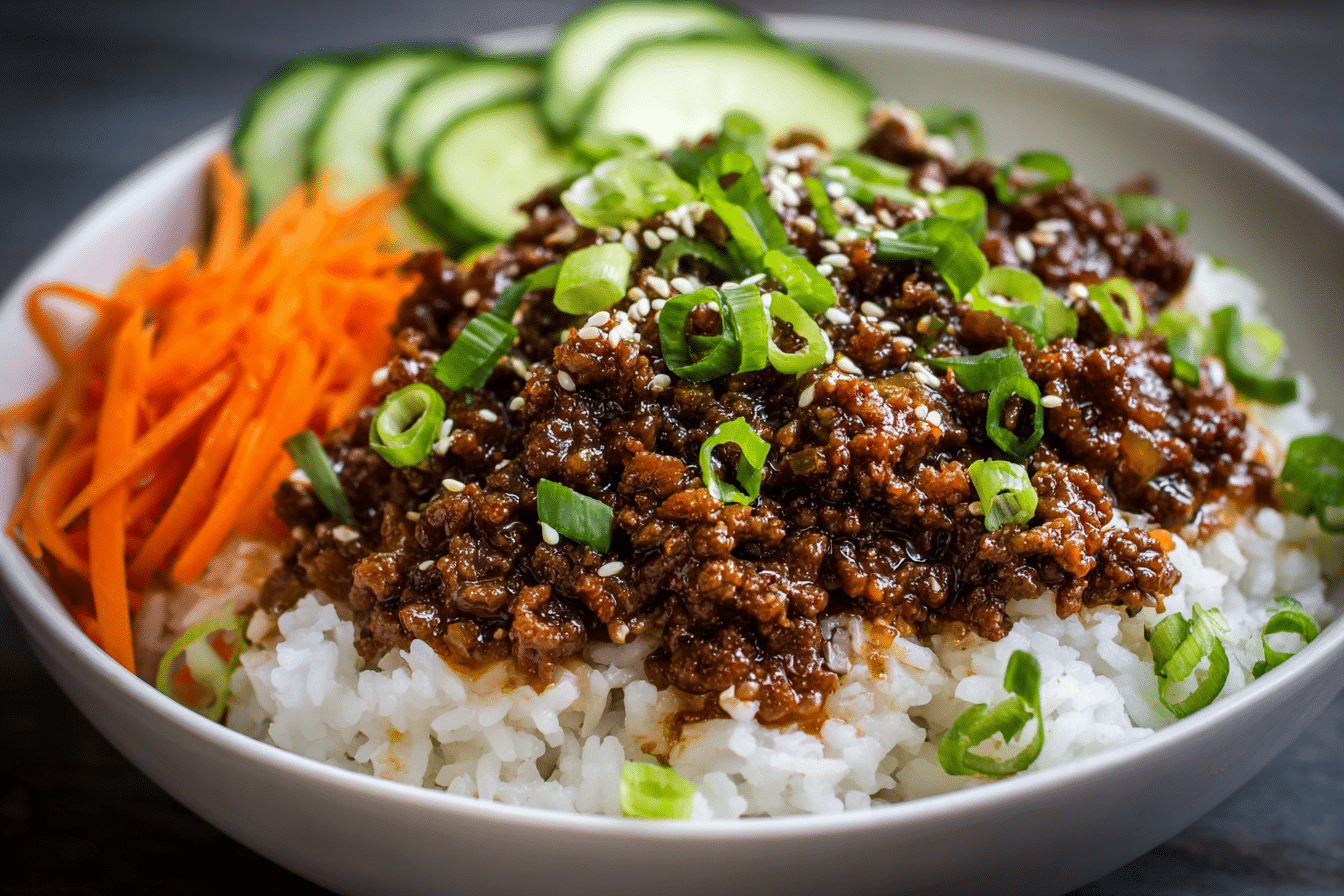
Korean Beef Bowls bring together savory ground beef, warm rice, and bold seasonings in a dish that feels both comforting and vibrant. This recipe captures the spirit of Korean-inspired home cooking with a balance of soy sauce, garlic, ginger, and a hint of sweetness that coats every bite. The aroma alone fills the kitchen with anticipation.
Korean Beef Bowls are especially appealing on busy evenings when a flavorful dinner is essential yet the process must stay manageable. Tender beef mingles with fragrant rice, crisp vegetables, and a sprinkle of sesame seeds for contrast. Each forkful offers savory depth, subtle heat, and satisfying texture.
Served in generous bowls, this meal delivers warmth and color. It suits casual family dinners, relaxed gatherings, or weekly meal preparation. With straightforward steps and accessible ingredients, Korean Beef Bowls quickly become a dependable favorite.
Ingredients Overview
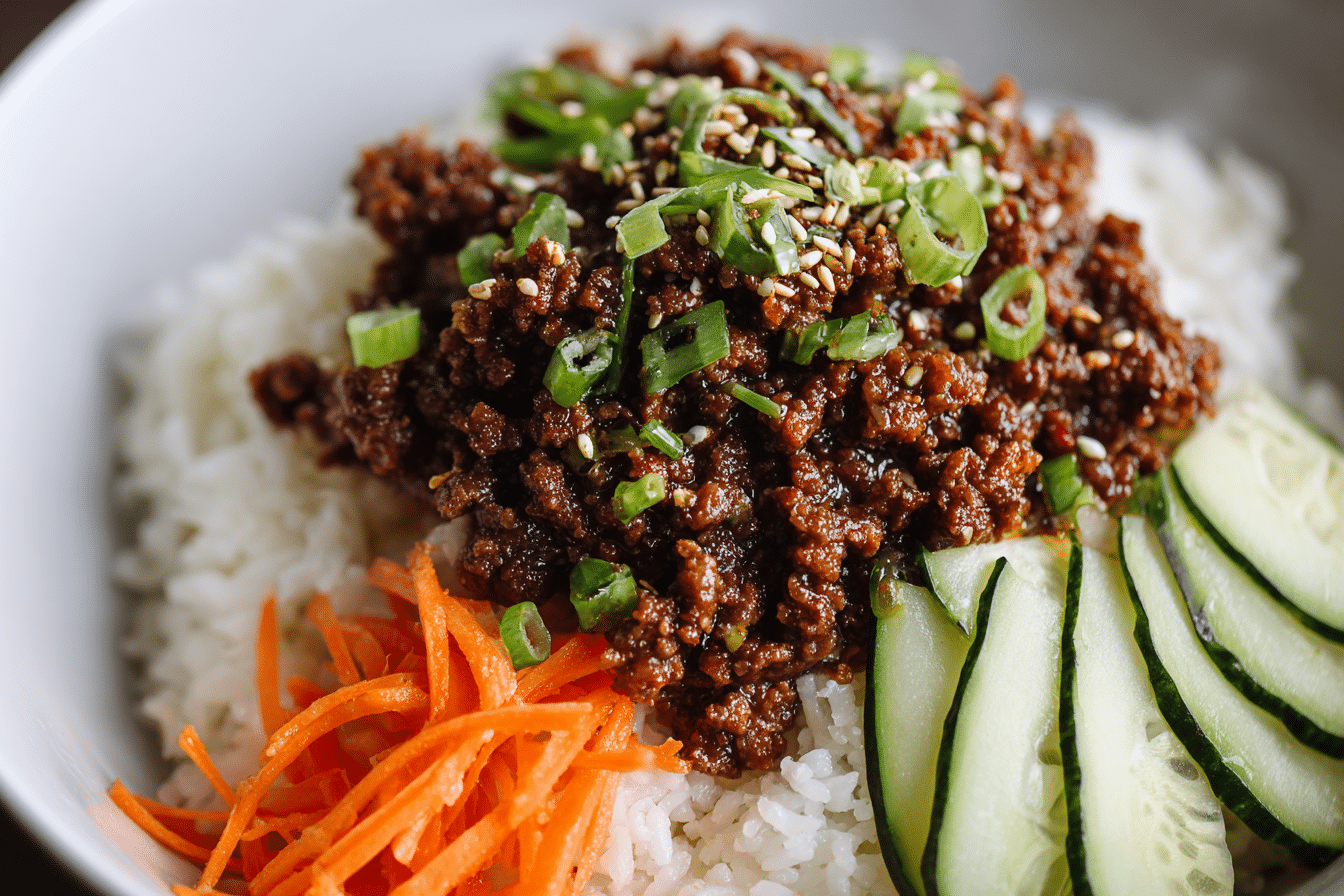
Ground beef forms the hearty base of Korean Beef Bowls. An 85 to 90 percent lean blend offers rich flavor without excessive grease. The fat renders during cooking, carrying the seasoning throughout the dish while keeping the texture tender.
Soy sauce provides the primary savory note. It adds saltiness and umami depth that defines the character of the beef. Low-sodium soy sauce works well for those who prefer a lighter touch, allowing control over overall seasoning.
Brown sugar introduces gentle sweetness, balancing the saltiness of the soy sauce. This slight sweetness is characteristic of many Korean-inspired marinades and sauces. Honey can replace brown sugar if desired, though it produces a slightly different finish.
Fresh garlic and ginger supply aroma and warmth. Minced finely, they blend seamlessly into the beef, infusing each bite with subtle spice. Fresh ginger is ideal, though ground ginger may be used in smaller quantity.
Sesame oil contributes a nutty fragrance that rounds out the sauce. Only a small amount is required, as its flavor is concentrated. Toasted sesame oil offers deeper aroma.
Cooked white rice serves as the foundation. Short-grain or medium-grain rice provides a slightly sticky texture that pairs well with the saucy beef. Brown rice or jasmine rice can also be used, depending on preference.
Green onions add brightness and color, while shredded carrots or sliced cucumbers introduce freshness and crunch. Sesame seeds finish the bowls with delicate texture.
Step-by-Step Instructions
Begin by cooking the rice according to package directions. Rinse the grains under cool water until the water runs clear, then combine with the correct amount of water in a saucepan or rice cooker. Bring to a boil, reduce to a gentle simmer, cover, and cook until tender. Allow the rice to rest, covered, for several minutes before fluffing with a fork.
While the rice cooks, prepare the sauce. In a small bowl, stir together soy sauce, brown sugar, sesame oil, minced garlic, and grated ginger. Mix until the sugar dissolves. This mixture will coat the beef and create the signature glaze.
Heat a large skillet over medium-high heat. Add the ground beef, breaking it apart with a wooden spoon. Cook until browned and no pink remains, about 6 to 8 minutes. Stir occasionally to promote even browning.
If excess grease accumulates, carefully drain it from the pan. Leaving a small amount enhances flavor, but too much can result in a heavy texture.
Reduce the heat to medium. Pour the prepared sauce over the cooked beef. Stir well so the meat absorbs the liquid evenly. Allow the mixture to simmer for 3 to 5 minutes, stirring occasionally. The sauce will thicken slightly and cling to the beef.
Taste and adjust seasoning if necessary. A splash of rice vinegar can add brightness, while a pinch of red pepper flakes introduces gentle heat.
Prepare any vegetables during this stage. Slice green onions thinly. Julienne carrots or slice cucumbers into thin rounds. These fresh elements contrast with the warm beef.
To assemble Korean Beef Bowls, spoon a generous portion of rice into each bowl. Top with the saucy beef, arranging it across the surface. Add vegetables along the side or on top, depending on presentation preference.
Finish with a sprinkle of sesame seeds and additional sliced green onions. Serve immediately while warm.
Common mistakes to avoid include overcooking the beef, which can lead to dryness, and adding too much soy sauce, which may overpower the balance. Keeping heat at a steady medium once the sauce is added prevents burning and allows flavors to meld smoothly.
Tips, Variations & Substitutions
For a lighter version of Korean Beef Bowls, ground turkey or ground chicken may replace beef. These proteins absorb the sauce well, though a drizzle of extra sesame oil can help maintain richness.
Those seeking additional vegetables can stir in finely chopped bell peppers or spinach during the final minutes of cooking. The residual heat wilts greens gently without compromising texture.
For a gluten-free adaptation, substitute tamari or coconut aminos for traditional soy sauce. Confirm that all other ingredients meet dietary requirements.
If a deeper heat profile is desired, add a spoonful of gochujang to the sauce. This Korean chili paste contributes gentle spice and complexity. Adjust sweetness accordingly, as gochujang contains natural sweetness.
Rice alternatives include cauliflower rice for a lower-carbohydrate option or quinoa for added protein. Each base alters texture slightly yet pairs well with the seasoned beef.
Preparing components in advance supports efficient meal planning. Cooked beef stores well in the refrigerator for up to four days and reheats gently on the stovetop with a splash of water to loosen the sauce.
Serving Ideas & Occasions
Korean Beef Bowls fit seamlessly into weeknight dinners, casual gatherings, or packed lunches. Their balanced flavor and adaptable toppings allow each diner to customize their bowl.
Serve alongside a simple cucumber salad dressed with rice vinegar and sesame oil for a refreshing contrast. Steamed edamame or lightly sautéed bok choy also complement the savory beef.
For entertaining, arrange toppings buffet-style so guests can assemble their own bowls. Include shredded cabbage, sliced radishes, and a soft-boiled egg for added richness.
These bowls travel well in meal prep containers, with rice on the bottom and beef layered above. Store toppings separately to maintain freshness until serving.
Nutritional & Health Notes
Korean Beef Bowls provide a balanced combination of protein, carbohydrates, and moderate fat. Ground beef supplies essential nutrients such as iron, zinc, and vitamin B12, which support energy and overall wellness.
Rice contributes carbohydrates that fuel daily activity. Choosing brown rice increases fiber content, promoting digestive health and sustained fullness.
Incorporating fresh vegetables adds vitamins, minerals, and antioxidants. Carrots provide beta-carotene, while green onions contain vitamin K and beneficial plant compounds.
Sodium content can be adjusted by selecting reduced-sodium soy sauce and moderating added salt. Controlling portion size of rice and beef allows flexibility for various dietary preferences.
As with any dish, balance within the broader diet remains important. Pairing these bowls with vegetable-rich sides creates a satisfying and nourishing meal.
FAQs
-
Can Korean Beef Bowls be prepared ahead of schedule?
Yes, the beef mixture can be cooked and stored in an airtight container in the refrigerator for up to four days. Reheat gently on the stovetop or in the microwave with a small splash of water to loosen the sauce. Rice can also be prepared in advance and reheated with a damp paper towel to restore moisture.
-
Which type of rice works well for Korean Beef Bowls?
Short-grain or medium-grain white rice offers a slightly sticky texture that pairs beautifully with the saucy beef. Jasmine rice provides a fragrant alternative. Brown rice adds fiber and a slightly nutty flavor. Each option works effectively, so selection depends on texture and nutritional preference.
-
Is it possible to freeze the beef mixture?
The cooked beef mixture freezes well. Allow it to cool completely before transferring to a freezer-safe container. Freeze for up to three months. Thaw overnight in the refrigerator before reheating gently on the stovetop. Fresh vegetables should be prepared separately after reheating for optimal texture.
-
How can spice level be adjusted?
To introduce heat, stir red pepper flakes or a spoonful of gochujang into the sauce. For milder flavor, omit chili elements entirely. Serving sliced fresh chilies on the side allows individual customization without altering the entire dish.
-
Can this recipe be prepared with sliced beef instead of ground beef?
Thinly sliced flank steak or sirloin can replace ground beef. Cook the slices quickly over high heat until just cooked through, then add the sauce and simmer briefly. Avoid prolonged cooking, as thin slices can become tough if overcooked.
-
What vegetables pair well with Korean Beef Bowls?
Shredded carrots, sliced cucumbers, steamed broccoli, sautéed spinach, and thinly sliced cabbage all complement the savory beef. A soft-boiled egg adds richness and protein. Choose a combination that offers color, crunch, and contrast.
-
How should leftovers be stored?
Store rice and beef in separate airtight containers in the refrigerator. Consume within four days for optimal freshness. Reheat thoroughly before serving. Fresh toppings such as green onions and cucumbers should be added after reheating to maintain texture and flavor.
Print
Korean Beef Bowls feature savory ground beef simmered in a soy, garlic, and ginger sauce served over warm rice with crisp vegetables and sesame seeds.
- Prep Time: 15 minutes
- Cook Time: 15 minutes
- Total Time: 30 minutes
- Yield: 4 servings 1x
Ingredients
1 pound ground beef
3 cups cooked white rice
1/4 cup low-sodium soy sauce
2 tablespoons brown sugar
1 tablespoon sesame oil
3 cloves garlic, minced
1 tablespoon fresh ginger, grated
1/4 teaspoon red pepper flakes, optional
2 green onions, thinly sliced
1 cup shredded carrots
1 tablespoon sesame seeds
Instructions
-
Cook rice according to package directions and keep warm.
-
In a small bowl, combine soy sauce, brown sugar, sesame oil, garlic, ginger, and red pepper flakes if using.
-
Heat a large skillet over medium-high heat and cook ground beef until browned, breaking it apart as it cooks.
-
Drain excess grease if necessary.
-
Reduce heat to medium and pour sauce over beef. Stir and simmer for 3 to 5 minutes until slightly thickened.
-
Spoon rice into bowls and top with beef mixture.
-
Garnish with green onions, shredded carrots, and sesame seeds before serving.