
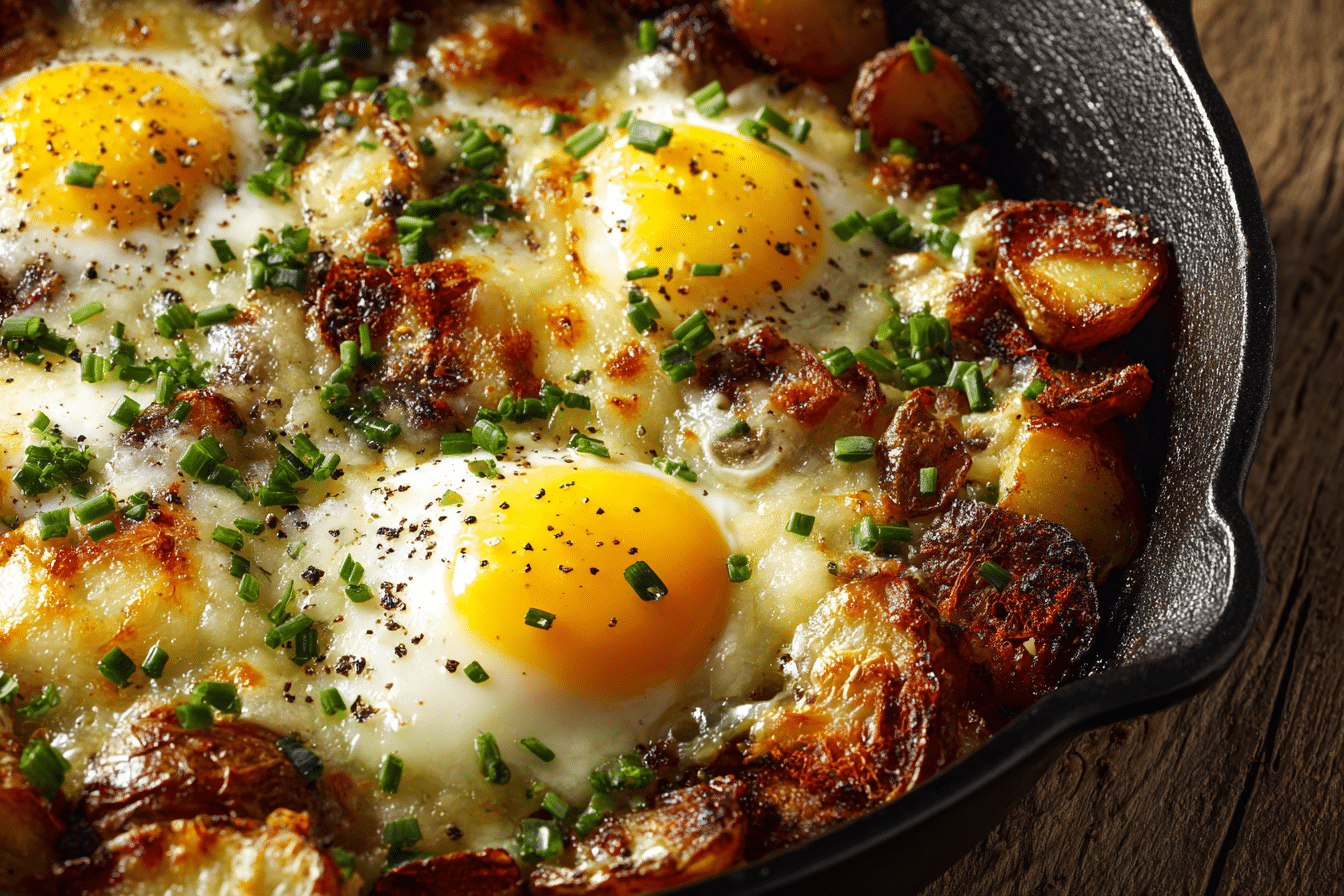
Cheesy Egg and Potato Breakfast Skillet brings together crisp golden potatoes, soft-set eggs, and melted cheese in a single pan that goes straight from stove to table. This dish carries the comfort of a slow morning meal while remaining practical enough for a weekday breakfast.
The contrast in textures is what draws many home cooks toward this skillet. The potatoes turn deeply golden with lightly crisp edges, while the eggs settle into tender curds that weave through every bite. Cheese melts into the warm layers, adding richness without overpowering the other ingredients.
Prepared in a sturdy skillet, this recipe keeps cleanup simple and presentation rustic. Whether served for a relaxed brunch or an early family breakfast, Cheesy Egg and Potato Breakfast Skillet offers warmth, savory depth, and satisfying texture in each forkful.
Ingredients Overview
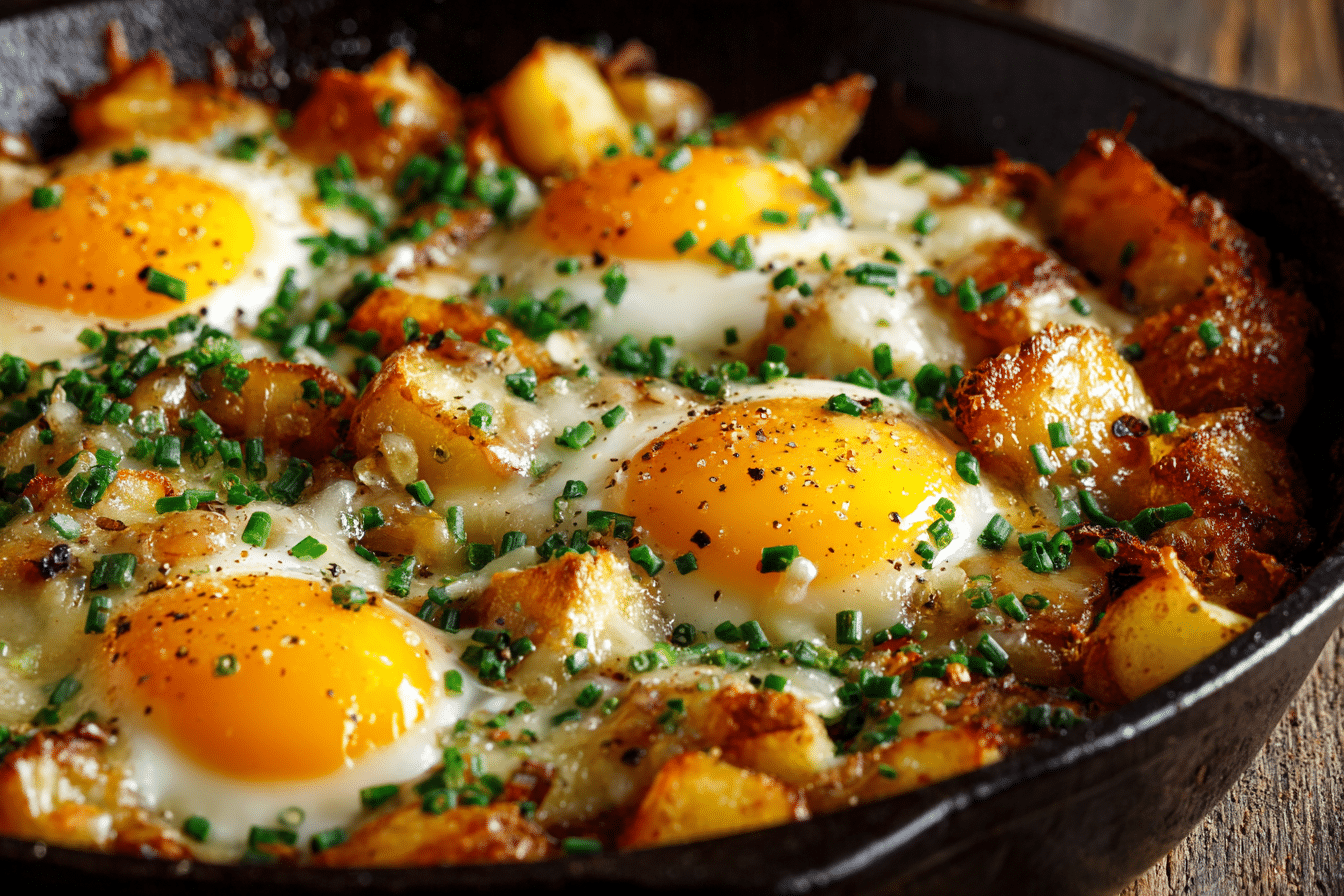
Potatoes form the base of Cheesy Egg and Potato Breakfast Skillet. Yukon Gold or red potatoes work especially well because they hold shape during cooking while developing a crisp exterior. Russet potatoes can also be used, though they should be soaked and dried thoroughly to remove excess starch for better browning.
Eggs bring structure and softness. Large eggs are ideal, providing enough volume to coat the potato layer evenly. Whisking them lightly with a splash of milk or cream creates tender curds and prevents dryness.
Cheese provides richness and binding power. Sharp cheddar melts smoothly and adds a savory finish. Monterey Jack offers a milder profile with excellent meltability. A blend of both creates balanced flavor and creamy texture. For variation, smoked gouda or fontina can add subtle depth.
Onion and bell pepper add sweetness and color. Yellow onion softens and turns lightly golden, while diced red or green bell pepper introduces gentle crunch. Garlic enhances aroma without overwhelming the dish.
Olive oil or butter helps the potatoes brown evenly. Butter contributes a deeper savory note, while olive oil offers a lighter finish. A combination of both provides balance.
Salt and freshly ground black pepper season each layer. Paprika or dried thyme may be added for warmth and subtle herb character.
Step-by-Step Instructions
Begin by washing and dicing the potatoes into evenly sized cubes, about ½ inch thick. Uniform pieces promote even cooking and consistent browning. Pat them dry thoroughly with a clean kitchen towel.
Heat a large oven-safe skillet over medium heat. Add olive oil and butter, allowing the butter to melt fully without browning. Spread the potatoes in a single layer. Avoid overcrowding, as too many pieces stacked together will steam rather than crisp.
Cook the potatoes for 12 to 15 minutes, stirring occasionally. Let them sit undisturbed between turns so a golden crust can develop. When edges appear crisp and centers feel tender when pierced with a fork, add diced onion and bell pepper. Cook for another 3 to 4 minutes until vegetables soften.
Stir in minced garlic and cook for 30 seconds until fragrant. Season evenly with salt, black pepper, and optional paprika or thyme.
While the vegetables finish cooking, whisk the eggs in a bowl with milk or cream. Pour the egg mixture gently over the potato base. Tilt the skillet slightly to distribute evenly.
Reduce heat to medium-low. Allow the eggs to cook slowly without stirring for several minutes. As the edges begin to set, use a spatula to draw cooked egg toward the center, allowing uncooked portions to flow into the empty spaces. Continue until eggs are mostly set but still slightly soft on top.
Sprinkle shredded cheese evenly across the surface. Transfer the skillet to a preheated oven at 375°F and bake for 5 to 7 minutes, just until the cheese melts and the eggs are fully cooked through but not dry.
Remove from the oven and let the skillet rest for 3 to 5 minutes before serving. This brief resting period allows the eggs to finish setting and makes slicing easier.
Common mistakes include stirring the potatoes too frequently, which prevents crisping, or cooking the eggs over high heat, leading to a rubbery texture. Gentle heat and patience create the ideal result.
Tips, Variations & Substitutions
For extra crisp potatoes, parboil diced pieces for 5 minutes before sautéing. Drain thoroughly and allow surface moisture to evaporate before adding to the skillet.
For added protein, cooked breakfast sausage, diced ham, or crumbled bacon can be stirred into the potato mixture before pouring in the eggs. Vegetarian options such as sautéed mushrooms or spinach blend seamlessly with the base ingredients.
To lighten the dish, substitute half-and-half for heavy cream or omit dairy from the eggs entirely. Plant-based cheese alternatives may be used, though melting characteristics vary by brand.
Spice variations include a pinch of cayenne pepper, chopped jalapeño, or a dash of hot sauce stirred into the eggs. Fresh herbs such as chives or parsley sprinkled just before serving add brightness.
For a dairy-free version, use olive oil exclusively and select a non-dairy milk for the egg mixture. The overall structure remains consistent, though flavor will shift slightly.
Serving Ideas & Occasions
Cheesy Egg and Potato Breakfast Skillet suits casual weekend brunches, holiday mornings, or relaxed gatherings with family. Served directly in the skillet, it creates a welcoming centerpiece for the table.
Pair with sliced avocado, fresh fruit, or a simple green salad dressed lightly with lemon juice and olive oil. Warm biscuits or crusty bread complement the creamy eggs and crisp potatoes.
For beverages, freshly brewed coffee or herbal tea balances the savory flavors. Sparkling water with citrus provides a refreshing contrast during brunch.
This skillet also works well for breakfast-for-dinner menus, offering comfort and substance without complex preparation.
Nutritional & Health Notes
Cheesy Egg and Potato Breakfast Skillet provides protein from eggs and cheese, carbohydrates from potatoes, and vitamins from vegetables. Eggs contribute essential nutrients such as vitamin B12 and choline.
Potatoes contain potassium and fiber, particularly when skins remain intact. Using moderate amounts of cheese keeps saturated fat within a balanced range.
To reduce calories, decrease cheese slightly and increase vegetable volume. Adding spinach, zucchini, or mushrooms increases fiber and micronutrients without drastically changing flavor.
Cooking with olive oil introduces monounsaturated fats, which fit well within a balanced eating pattern. Portion awareness remains important, especially when serving alongside bread or additional sides.
FAQs
-
Can Cheesy Egg and Potato Breakfast Skillet be prepared ahead of schedule?
Yes, partial preparation works well. Potatoes and vegetables may be cooked earlier in the day and stored in the refrigerator. When ready to serve, reheat the skillet gently, then add whisked eggs and continue with the recipe. Fully cooked leftovers can also be refrigerated and reheated in the oven at 325°F until warmed through.
-
How can I prevent the potatoes from sticking to the skillet?
A well-seasoned cast iron skillet or quality nonstick pan reduces sticking. Preheating the pan before adding fat is essential. Also, avoid moving the potatoes too frequently; allowing them to sit undisturbed promotes crust formation and natural release from the surface.
-
What type of cheese melts smoothly in this recipe?
Cheddar, Monterey Jack, fontina, and gouda melt consistently and blend well with eggs. Pre-shredded cheese may contain anti-caking agents that affect melt quality, so shredding from a block often yields smoother results.
-
Can this skillet be prepared without an oven?
Yes. After adding cheese, cover the skillet with a lid and cook over low heat until the eggs are fully set and the cheese melts. This stovetop method works well, though oven finishing provides slightly more even heat distribution.
-
How long does Cheesy Egg and Potato Breakfast Skillet stay fresh?
Stored in an airtight container in the refrigerator, leftovers remain suitable for up to 3 days. Reheat gently in a skillet over low heat or in the oven to maintain texture. Microwaving works, though potatoes may soften further.
-
Are there dairy-free options for this dish?
Dairy-free milk alternatives such as almond or oat milk can replace cream in the eggs. Plant-based shredded cheese substitutes may also be used. Choose varieties formulated for melting to maintain texture.
-
Can sweet potatoes replace regular potatoes?
Yes. Sweet potatoes introduce a subtle sweetness and vibrant color. Dice them evenly and allow slightly longer cooking to achieve tenderness. Their softer texture pairs well with sharp cheeses and savory seasonings.
Print
Cheesy Egg and Potato Breakfast Skillet combines crisp diced potatoes, tender eggs, sautéed vegetables, and melted cheddar in a single hearty pan.
- Prep Time: 15 minutes
- Cook Time: 15 minutes
- Total Time: 30 minutes
- Yield: 4 servings 1x
Ingredients
2 tablespoons olive oil
1 tablespoon butter
1 1/2 pounds Yukon Gold potatoes, diced into 1/2 inch cubes
1 small yellow onion, diced
1/2 cup diced bell pepper
2 cloves garlic, minced
8 large eggs
1/4 cup milk or cream
1 1/2 cups shredded cheddar or Monterey Jack cheese
1 teaspoon salt
1/2 teaspoon freshly ground black pepper
1/2 teaspoon paprika or dried thyme optional
Instructions
-
Heat oven to 375°F.
-
Warm olive oil and butter in a large oven-safe skillet over medium heat.
-
Add diced potatoes in a single layer and cook 12 to 15 minutes, stirring occasionally, until golden and tender.
-
Stir in onion and bell pepper and cook 3 to 4 minutes until softened.
-
Add garlic and cook 30 seconds.
-
Whisk eggs with milk, salt, pepper, and optional seasoning.
-
Pour egg mixture over potatoes and cook on medium-low heat, gently drawing cooked egg toward the center until mostly set.
-
Sprinkle shredded cheese evenly on top.
-
Transfer skillet to oven and bake 5 to 7 minutes until cheese melts and eggs are fully cooked.
-
Rest 3 minutes before slicing and serving.