
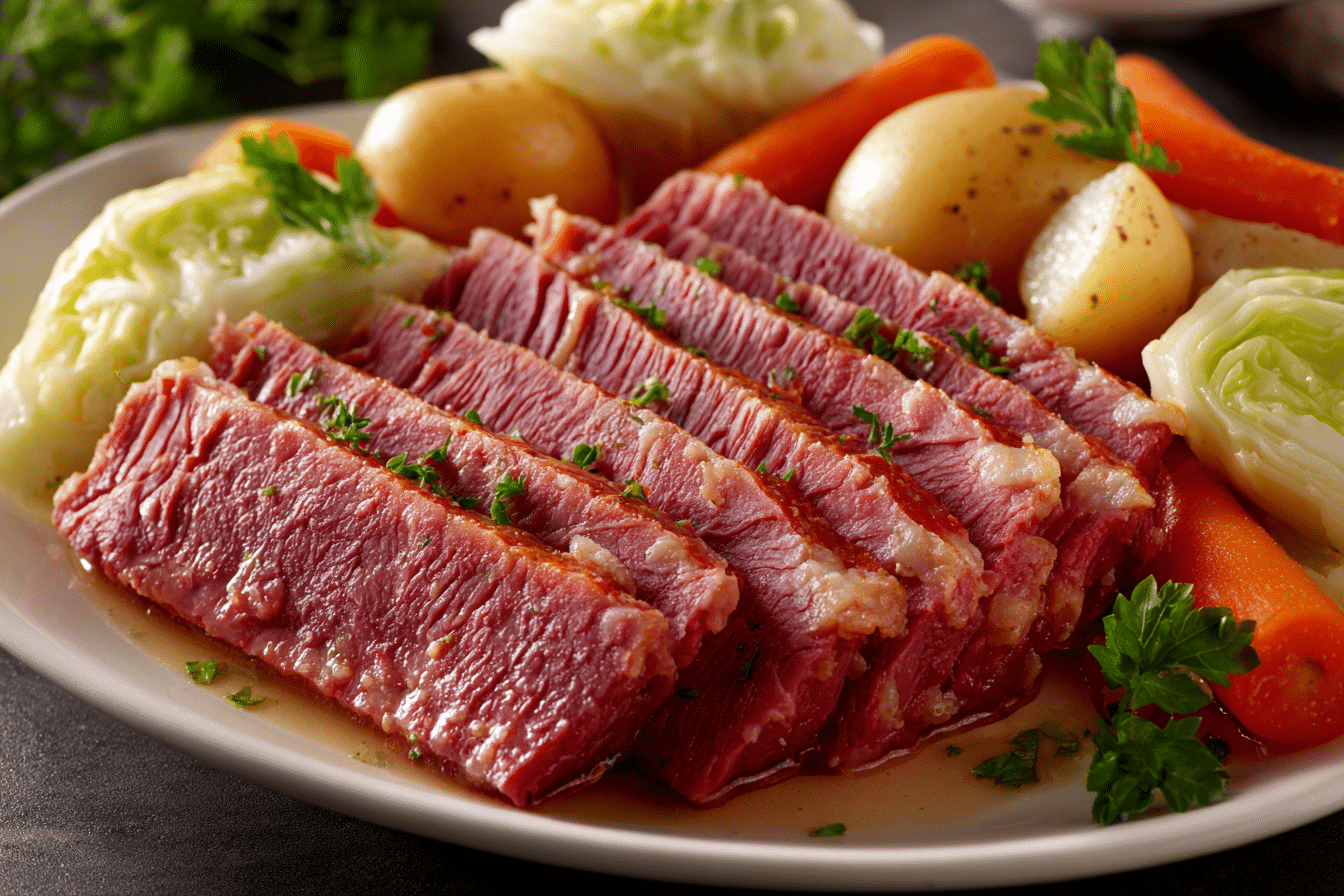
Corned Beef and Cabbage is a timeless dish built on simple ingredients and slow cooking. The tender slices of salt-cured beef paired with buttery cabbage and hearty vegetables create a meal that feels deeply comforting and satisfying. As it simmers, the kitchen fills with the savory aroma of spices, onion, and gently sweet cabbage softening in the broth.
This dish is often associated with family gatherings and celebratory meals, yet it is easy enough for a relaxed weekend dinner. Corned Beef and Cabbage relies on patience rather than complicated techniques. The long, gentle cook transforms a firm brisket into fork-tender meat, while potatoes and carrots absorb the flavorful cooking liquid. Every component works together, creating a balanced plate of rich, savory, and subtly sweet flavors.
Ingredients Overview
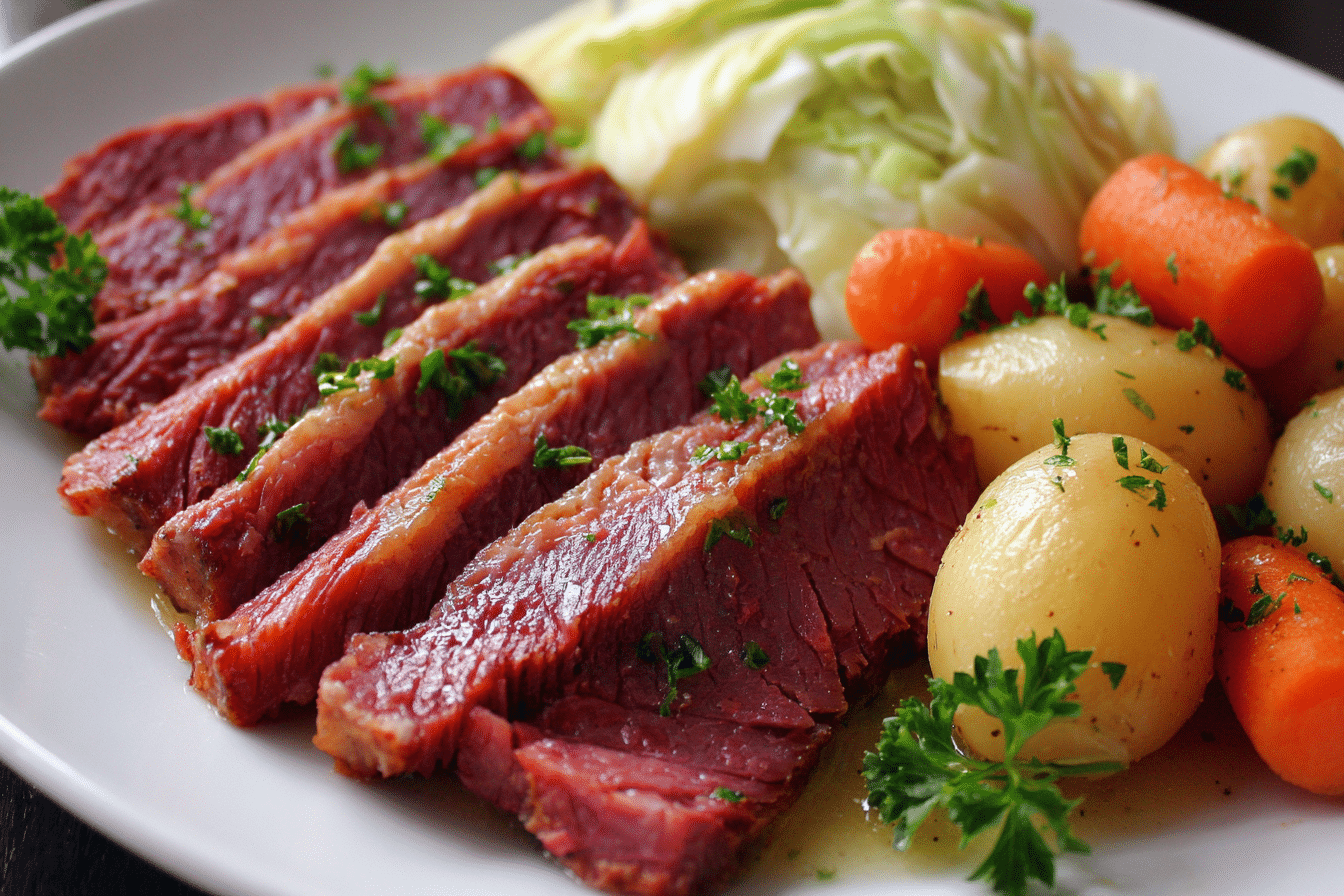
The foundation of Corned Beef and Cabbage is corned beef brisket. This cut comes cured in a seasoned brine and typically includes a small packet of pickling spices. Flat-cut brisket slices neatly and is leaner, while point-cut brisket contains more marbling and delivers a slightly richer texture. Either works well, depending on preference.
Cabbage plays an essential role, bringing a mild sweetness that balances the salty beef. Green cabbage is traditional because it holds its shape during simmering without becoming overly soft. Cut into thick wedges so the leaves stay intact while cooking.
Yukon Gold or red potatoes are ideal for this recipe. They remain creamy and tender without falling apart in the broth. Carrots add color and natural sweetness, complementing the cabbage beautifully. Large pieces prevent them from turning mushy.
Onion and garlic deepen the savory base of the broth. Bay leaves and whole peppercorns reinforce the spice profile that defines Corned Beef and Cabbage. A splash of apple cider vinegar can brighten the broth slightly, though it is optional.
Water is the most common cooking liquid, but low-sodium beef broth adds extra depth. If using broth, choose one that is not overly salty since the brisket already carries significant seasoning.
Step-by-Step Instructions
Begin by removing the corned beef from its packaging and rinsing it under cold water. This step removes excess surface brine and prevents the finished dish from tasting overly salty. Pat the brisket dry with paper towels.
Place the brisket in a large heavy pot or Dutch oven. Add the spice packet that comes with the meat, along with one sliced onion, two crushed garlic cloves, and two bay leaves. Cover with water or a mixture of water and low-sodium beef broth until the meat is submerged by about an inch.
Bring the liquid to a gentle boil, then immediately reduce to a low simmer. Skim off any foam that rises to the surface during the first few minutes. Cover partially and let the brisket simmer slowly for about 2 1/2 to 3 hours, depending on size. The meat should be fork-tender when done.
About 40 minutes before the brisket finishes cooking, add peeled potatoes and large carrot chunks to the pot. Maintain a steady simmer. Cooking them in the same broth allows the vegetables to absorb the seasoned flavors.
In the final 20 minutes, add cabbage wedges. Nestle them gently into the liquid, ensuring they are partially submerged. Avoid overcooking the cabbage; it should be tender but still hold its shape.
Once the brisket is tender, transfer it to a cutting board and let it rest for 15 minutes. Resting helps retain juices and makes slicing easier. Cut the meat against the grain into even slices.
Arrange sliced corned beef on a platter surrounded by potatoes, carrots, and cabbage. Spoon a bit of the hot broth over the top to keep everything moist and flavorful.
Tips, Variations & Substitutions
For deeper flavor, allow the brisket to cool in its cooking liquid before slicing. This method results in extra juicy meat and can be helpful when preparing Corned Beef and Cabbage a day in advance.
If you prefer a slightly crisp edge, place sliced brisket under a broiler for a few minutes after cooking. This step adds a pleasant contrast to the tender interior.
Parsnips can replace or accompany carrots for an earthier sweetness. Turnips add a traditional touch and hold up well during simmering. For a lighter option, reduce the number of potatoes and increase cabbage.
Slow cookers also work well. Cook the brisket on low for 8 to 9 hours, adding vegetables during the final few hours so they remain tender without becoming overly soft.
Serving Ideas & Occasions
Corned Beef and Cabbage is often served for St. Patrick’s Day gatherings, but it fits any cool-weather dinner. Present it family-style on a large platter so guests can help themselves.
Whole-grain mustard or a simple horseradish cream sauce complements the richness of the beef. A slice of warm soda bread on the side rounds out the meal and soaks up the flavorful broth.
For a complete spread, add a crisp green salad dressed lightly with vinaigrette. The freshness balances the savory elements and keeps the meal from feeling too heavy.
Nutritional & Health Notes
Corned Beef and Cabbage provides a good source of protein and iron from the brisket. The vegetables contribute fiber, vitamin C, and potassium, particularly from cabbage and potatoes.
Because corned beef is cured, it tends to be higher in sodium. Rinsing the meat before cooking and using low-sodium broth can help moderate salt levels. Pairing the dish with extra vegetables and controlling portion size supports a balanced meal.
While rich and hearty, this dish can fit into an overall varied diet when enjoyed occasionally and paired with fresh sides.
FAQs
-
Why is my corned beef tough?
Tough corned beef usually needs more cooking time. This cut benefits from slow simmering, which breaks down connective tissue. If it feels firm, continue cooking gently and check every 20 minutes until fork-tender.
-
Should I boil or simmer Corned Beef and Cabbage?
A gentle simmer is essential. Rapid boiling can cause the meat to tighten and become dry. Keep the liquid just below a rolling boil for the most tender results.
-
Can I cook Corned Beef and Cabbage in advance?
Yes. Cook the brisket fully, then let it cool in the broth. Refrigerate overnight. Reheat gently in the cooking liquid before slicing and serving.
-
How do I slice corned beef properly?
Always slice against the grain. Look for the direction of the muscle fibers and cut perpendicular to them. This shortens the fibers and creates tender slices.
-
Can I use red cabbage instead of green?
Green cabbage is traditional and milder in flavor. Red cabbage can be used, but it may slightly change the color of the broth and has a stronger taste.
-
What can I do with leftovers?
Leftover corned beef works well in sandwiches, hash with potatoes, or folded into omelets. Store in an airtight container for up to four days.
-
Is Corned Beef and Cabbage Irish?
While strongly associated with Irish-American traditions, especially around St. Patrick’s Day, the dish became popular in the United States among Irish immigrants who adapted local ingredients.
Print
Corned Beef and Cabbage is a slow-simmered brisket served with tender cabbage, potatoes, and carrots in a savory broth.
- Prep Time: 10 minutes
- Cook Time: 20 minutes
- Total Time: 30 minutes
- Yield: 6 servings 1x
Ingredients
3 to 4 pound corned beef brisket with spice packet
1 large onion sliced
2 cloves garlic crushed
2 bay leaves
6 cups water or low-sodium beef broth
1 1/2 pounds Yukon Gold potatoes halved
4 large carrots cut into chunks
1 medium green cabbage cut into wedges
Instructions
-
Rinse corned beef under cold water and place in a large pot.
-
Add spice packet, onion, garlic, bay leaves, and enough liquid to cover.
-
Bring to a boil then reduce to a gentle simmer and cook 2 1/2 to 3 hours.
-
Add potatoes and carrots and continue simmering 40 minutes.
-
Add cabbage during the final 20 minutes of cooking.
-
Remove brisket and rest 15 minutes before slicing against the grain.
-
Serve with vegetables and spoon broth over the top.