
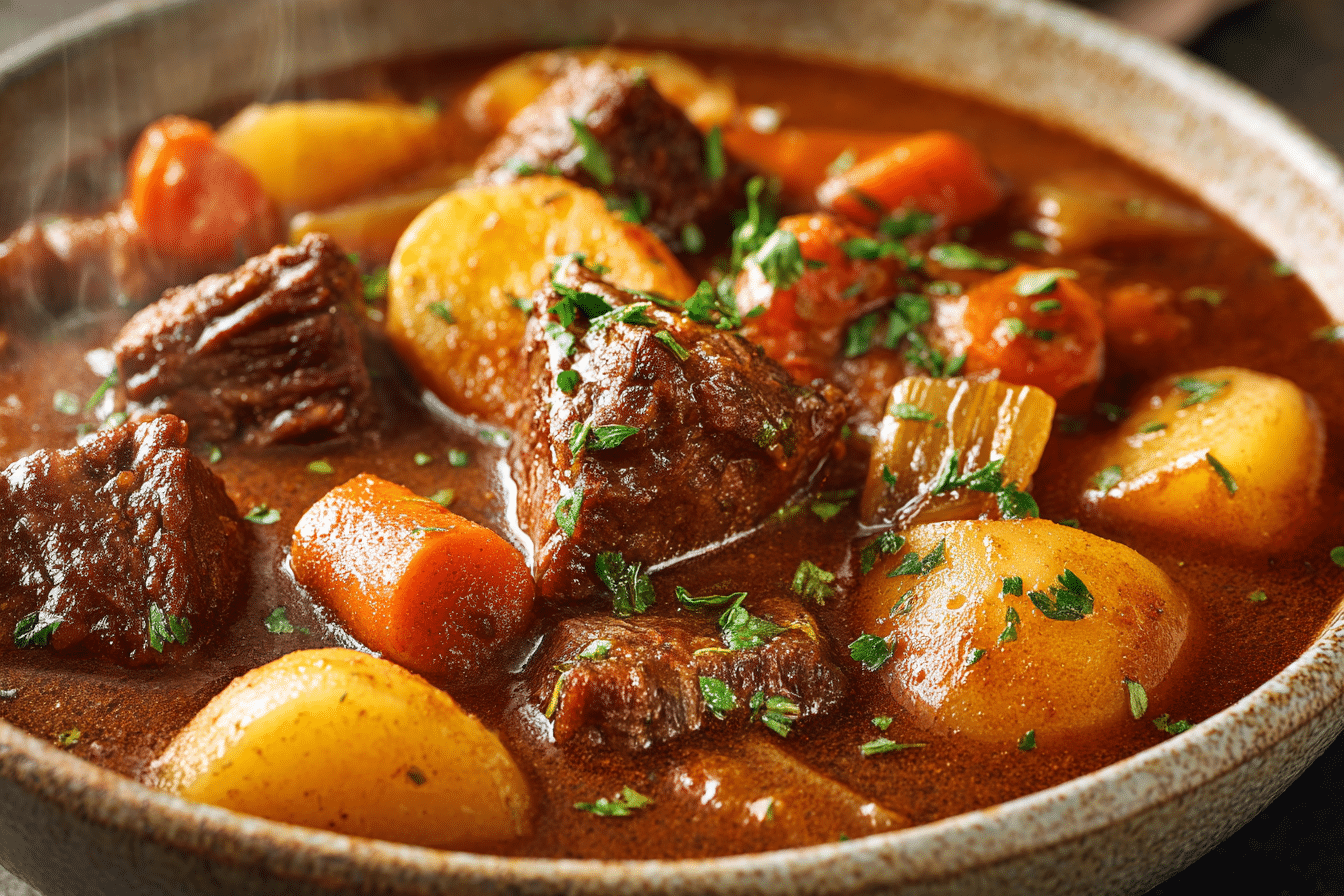
Slow Cooker Beef Stew is the kind of meal that fills the kitchen with a rich, savory aroma long before dinner is served. Tender chunks of beef, soft carrots, creamy potatoes, and a deeply flavored broth simmer together for hours, creating a dish that feels warm and satisfying with every spoonful.
This stew relies on gentle, steady heat to transform simple ingredients into something deeply comforting. The beef becomes fork-tender, the vegetables absorb the savory broth, and the sauce thickens into a silky gravy that coats each bite. Slow Cooker Beef Stew is especially welcome on cooler days, though its familiar flavors make it a year-round favorite.
With minimal preparation and patient cooking, this recipe delivers consistent, reliable results. Once everything is in the slow cooker, time does most of the work.
Ingredients Overview
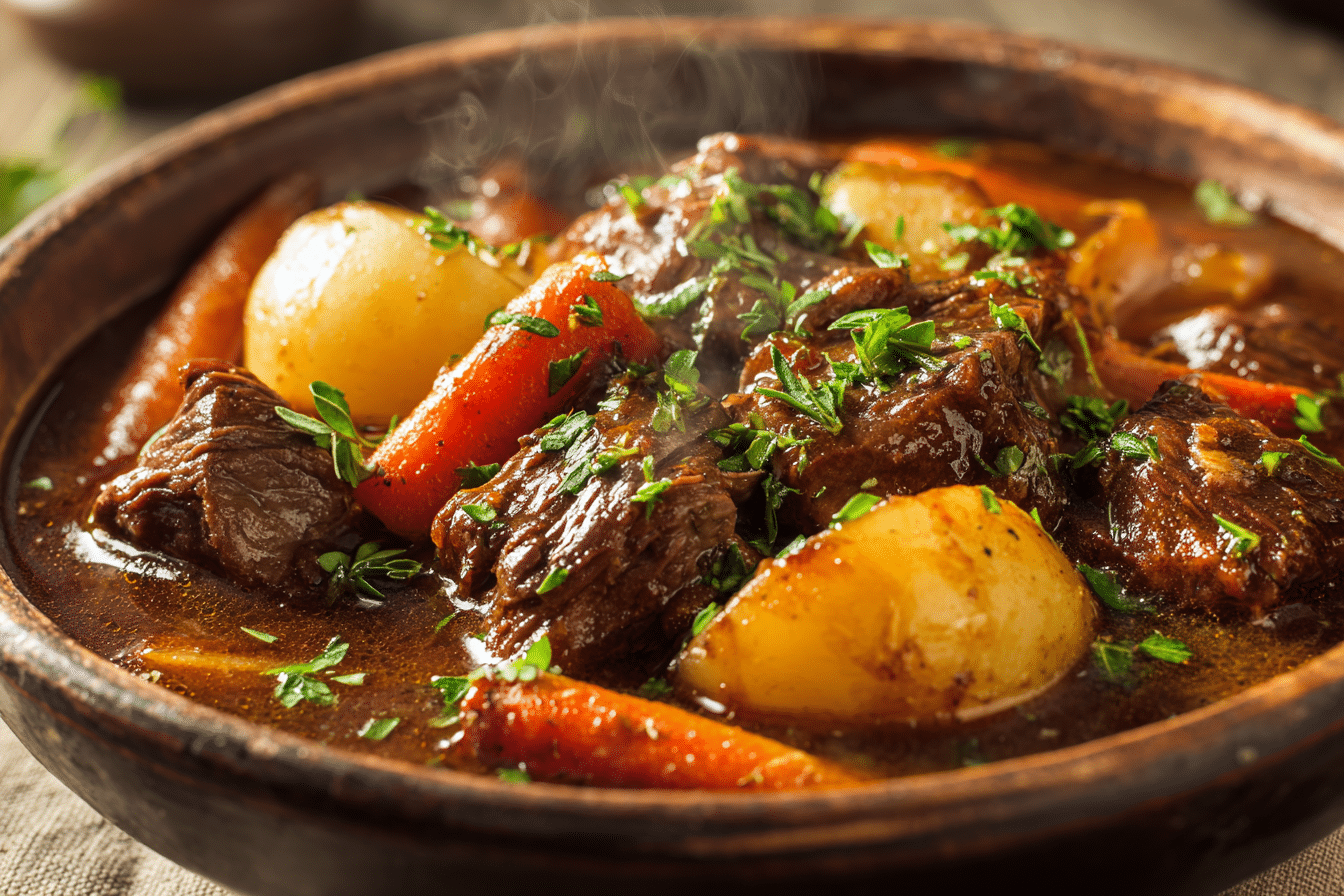
Slow Cooker Beef Stew begins with well-marbled beef chuck. This cut is ideal for slow cooking because its connective tissue breaks down gradually, producing tender meat and a rich, flavorful broth. Avoid lean cuts such as sirloin, which can become dry during extended cooking.
Potatoes add body and natural starch that helps thicken the stew. Yukon Gold potatoes offer a creamy texture, while red potatoes hold their shape beautifully. Russets can be used but may soften more than desired.
Carrots provide subtle sweetness that balances the savory depth of the beef. Thick slices are best, as thin pieces can become overly soft after several hours. Celery adds aromatic depth and gentle earthiness to the base.
Onion and garlic build the foundation of flavor. As they cook slowly, they mellow and blend seamlessly into the broth.
Beef broth forms the liquid base. A low-sodium version allows better seasoning control. For deeper flavor, a splash of Worcestershire sauce contributes subtle umami notes without overpowering the stew.
Tomato paste adds richness and color while helping develop a fuller taste. It does not make the stew taste like tomato; instead, it rounds out the savory elements.
Dried thyme and bay leaves lend herbal warmth. Fresh thyme can also be used, though dried holds up especially well during long cooking.
A small amount of flour tossed with the beef before browning helps thicken the stew naturally. Alternatively, a cornstarch slurry can be added at the end if a thicker consistency is preferred.
Salt and freshly ground black pepper bring balance to all components.
Step-by-Step Instructions
Begin by cutting the beef chuck into evenly sized 1 1/2-inch cubes. Pat the pieces dry with paper towels. Dry surfaces brown more effectively, which builds flavor.
Season the beef generously with salt and black pepper. Toss with a few tablespoons of flour until lightly coated. The flour helps create a slight crust during browning and later thickens the stew.
Heat a large skillet over medium-high heat with a tablespoon of oil. Once hot, add the beef in batches. Avoid overcrowding the pan, as this causes steaming rather than browning. Sear each side for about two to three minutes until a deep brown crust forms. Transfer browned beef to the slow cooker.
In the same skillet, reduce heat to medium. Add diced onion and cook until softened, about five minutes. Stir in minced garlic and cook briefly until fragrant. Add tomato paste and cook for one minute to deepen its flavor.
Pour a small amount of beef broth into the skillet to deglaze, scraping up browned bits from the bottom. These bits contain concentrated flavor and should not be discarded. Transfer this mixture to the slow cooker.
Add carrots, potatoes, celery, thyme, and bay leaves to the slow cooker. Pour in the remaining beef broth and Worcestershire sauce. The liquid should mostly cover the ingredients without overflowing.
Cover and cook on low for eight hours or on high for four to five hours. Low heat generally produces the most tender results. The stew is ready when the beef easily pulls apart with a fork and the vegetables are soft but not falling apart.
If a thicker consistency is desired, mix one tablespoon of cornstarch with two tablespoons of cold water. Stir into the stew during the final thirty minutes of cooking and allow it to thicken.
Remove bay leaves before serving. Taste and adjust seasoning as needed.
Common mistakes include skipping the browning step, which reduces depth of flavor, and adding too much liquid. The slow cooker traps moisture, so less liquid is required than stovetop cooking.
Tips, Variations & Substitutions
For added depth, a splash of dry red wine can replace a portion of the broth. Add it during the deglazing step to cook off alcohol while retaining flavor.
Mushrooms make a wonderful addition. Add them during the last two hours of cooking to maintain their texture.
For a lighter version, reduce the potatoes slightly and increase the carrots and celery. The stew will still feel hearty while containing fewer starches.
Fresh herbs such as parsley stirred in just before serving brighten the final dish. Rosemary can also be used sparingly for a more aromatic profile.
If pressed for time, skip browning and place raw seasoned beef directly into the slow cooker. The flavor will be milder but still satisfying.
Leftovers store well and often taste even richer the next day as flavors continue to develop.
Serving Ideas & Occasions
Slow Cooker Beef Stew pairs beautifully with crusty bread or warm dinner rolls, perfect for soaking up the thick gravy. A simple green salad with a light vinaigrette balances the richness of the stew.
For family dinners, serve in deep bowls topped with fresh parsley. The presentation is rustic and inviting.
This stew is ideal for relaxed Sunday meals, meal preparation for busy weeks, or casual gatherings where comfort food is welcome. It also transports well in a slow cooker set to warm, making it suitable for potlucks.
A glass of red wine or sparkling water with lemon complements the savory depth without overwhelming the palate.
Nutritional & Health Notes
Slow Cooker Beef Stew provides protein, iron, and essential B vitamins from the beef. The long cooking process breaks down connective tissue, making the meat tender and easier to chew.
Carrots and celery contribute fiber and antioxidants. Potatoes supply complex carbohydrates that provide sustained energy.
Choosing leaner beef chuck and trimming excess fat before cooking can reduce overall saturated fat. Using low-sodium broth helps manage salt levels.
Because this stew is filling, moderate portion sizes typically satisfy hunger comfortably. Pairing it with a vegetable side increases fiber and nutrient diversity.
As with most hearty dishes, balance within the overall diet remains important.
FAQs
-
Can Slow Cooker Beef Stew be frozen?
Yes, this stew freezes well. Allow it to cool completely before transferring to freezer-safe containers. Freeze for up to three months. Thaw overnight in the refrigerator and reheat gently on the stovetop or in the microwave, stirring occasionally.
-
Why is my beef tough?
Tough beef usually means it has not cooked long enough. Connective tissue requires extended, gentle heat to break down. Continue cooking on low until the meat becomes tender. Avoid turning the heat too high, as rapid cooking can cause dryness.
-
Do I have to brown the beef first?
While not mandatory, browning adds deeper flavor and color. Skipping this step results in a lighter-tasting stew. If time permits, browning is recommended for richer results.
-
Can I add frozen vegetables?
Frozen vegetables can be used, though they may release additional water. Add them during the last hour of cooking to prevent over-softening.
-
How do I thicken the stew without flour?
A cornstarch slurry works well. Mix cornstarch with cold water and stir into the stew during the final cooking stage. Alternatively, mash some of the potatoes directly in the pot to naturally thicken the broth.
-
Can this recipe be made without potatoes?
Yes, potatoes can be omitted or replaced with turnips or parsnips. These alternatives provide similar texture while offering a slightly different flavor profile.
-
How long can leftovers be stored?
Store cooled stew in an airtight container in the refrigerator for up to four days. Reheat thoroughly before serving.
Print
Slow Cooker Beef Stew is a hearty dish featuring tender beef, potatoes, carrots, and herbs simmered slowly in a rich savory broth.
- Prep Time: 10 minutes
- Cook Time: 20 minutes
- Total Time: 30 minutes
- Yield: 6 servings 1x
Ingredients
2 pounds beef chuck, cut into 1 1/2-inch cubes
3 tablespoons all-purpose flour
Salt to taste
Black pepper to taste
1 tablespoon olive oil
1 medium onion, diced
3 cloves garlic, minced
2 tablespoons tomato paste
4 cups low sodium beef broth
1 tablespoon Worcestershire sauce
4 medium Yukon Gold potatoes, cut into chunks
3 large carrots, sliced thick
2 celery stalks, sliced
1 teaspoon dried thyme
2 bay leaves
Instructions
-
Pat beef dry, season with salt and pepper, and toss with flour.
-
Brown beef in batches in a hot skillet with olive oil. Transfer to slow cooker.
-
Sauté onion in the same skillet until softened. Add garlic and cook briefly.
-
Stir in tomato paste and cook for one minute.
-
Deglaze pan with a small amount of broth and transfer mixture to slow cooker.
-
Add potatoes, carrots, celery, thyme, bay leaves, Worcestershire sauce, and remaining broth.
-
Cover and cook on low for 8 hours or high for 4 to 5 hours until beef is tender.
-
Remove bay leaves before serving. Adjust seasoning as needed.