
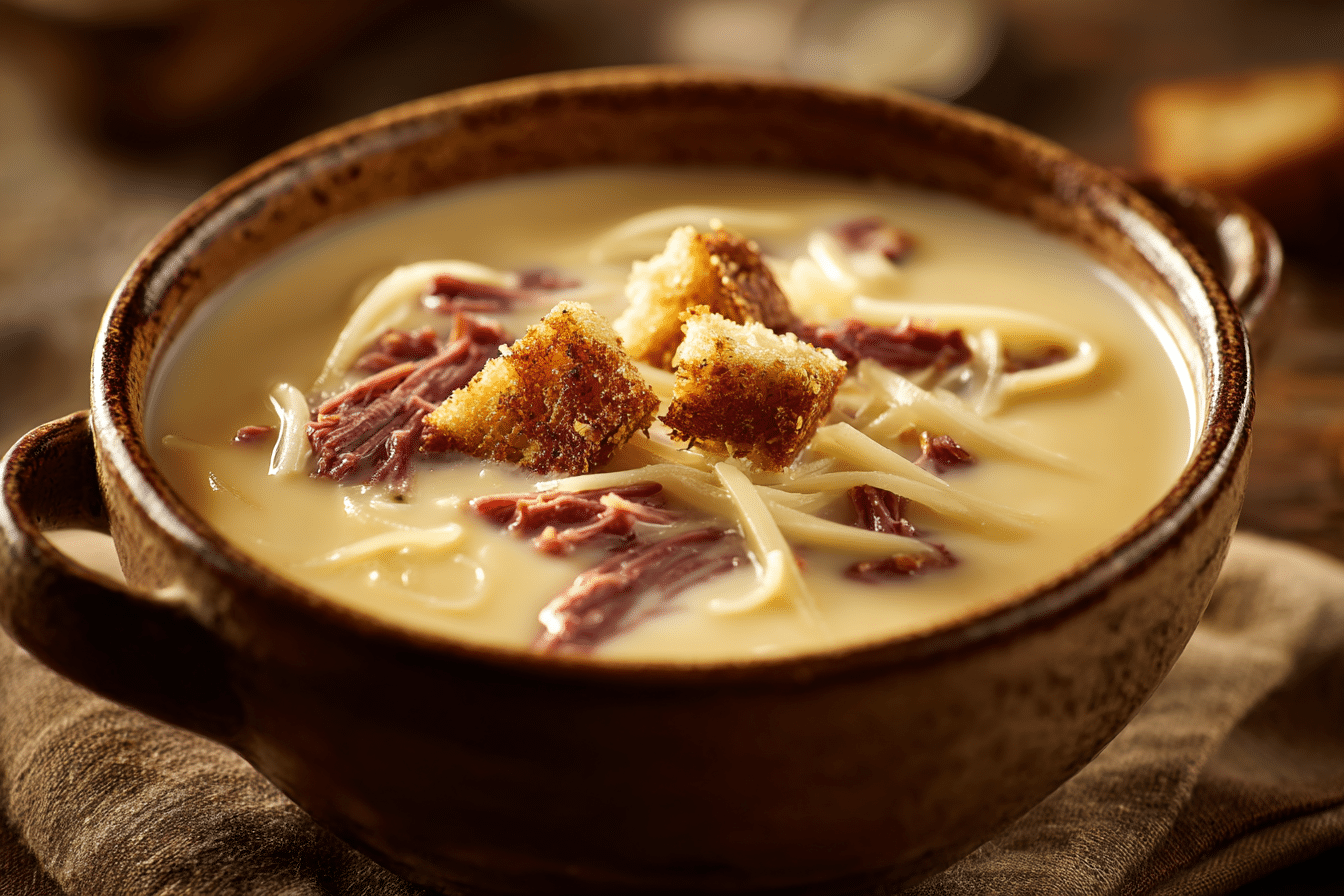
Reuben Soup brings the classic deli sandwich into a warm, creamy bowl that feels deeply satisfying. Inspired by the traditional layers of corned beef, sauerkraut, Swiss cheese, and rye bread, this soup captures those bold flavors in a smooth, spoonable form. Each bite carries savory richness, gentle tang from fermented cabbage, and subtle nuttiness from melted cheese.
Instead of stacking ingredients between slices of bread, Reuben Soup blends them into a velvety broth that coats every spoonful. The corned beef adds hearty depth, while sauerkraut brightens the base with balanced acidity. Swiss cheese melts into the broth, creating a luscious texture without heaviness.
Whether served during chilly evenings or as a comforting lunch, this dish offers familiar flavor in a fresh format. It feels classic yet creative, with creamy texture and vibrant character in every bowl.
Ingredients Overview

Corned beef forms the savory backbone of Reuben Soup. Choose fully cooked corned beef from the deli counter or leftover brisket from a previous meal. It should be tender and finely chopped so it blends smoothly into the broth. Thick chunks can overpower the texture, so aim for small, even pieces.
Sauerkraut delivers the signature tang. Drain it well and give it a gentle rinse if you prefer milder acidity. High-quality refrigerated sauerkraut often provides brighter flavor than shelf-stable varieties. The cabbage should remain slightly crisp, offering subtle contrast to the creamy base.
Swiss cheese creates richness and mild nuttiness. Freshly shredded cheese melts more evenly than pre-shredded options, which often contain anti-caking agents. Gruyère can substitute for a slightly deeper flavor, though traditional Swiss keeps the profile authentic.
A base of onion and garlic builds aromatic depth. Butter adds smoothness, while flour thickens the broth to achieve that creamy consistency associated with Reuben Soup. Whole milk and beef broth combine to form a balanced liquid foundation. For extra richness, half-and-half may replace part of the milk.
Caraway seeds echo the flavor of rye bread. Even a small pinch provides distinctive warmth. Dijon mustard adds subtle sharpness without overwhelming the soup. Finally, rye bread croutons sprinkled on top deliver crunch and complete the sandwich-inspired experience.
Step-by-Step Instructions
Begin by melting butter in a large pot over medium heat. Add finely diced onion and cook gently until soft and translucent. Stir occasionally to prevent browning, since deep color can shift the flavor profile. Add minced garlic during the final minute, allowing it to release fragrance without scorching.
Sprinkle flour evenly over the softened onion mixture. Stir constantly for several minutes to form a pale roux. This step thickens the soup and prevents a raw flour taste. The mixture should appear smooth and slightly pasty.
Gradually pour in beef broth while whisking steadily. Slow addition prevents lumps and keeps the base silky. Once the broth is incorporated, add milk and continue stirring. Bring the mixture to a gentle simmer, not a rolling boil, since high heat may cause dairy to separate.
Add chopped corned beef, drained sauerkraut, Dijon mustard, and a small pinch of caraway seeds. Stir thoroughly and allow the soup to simmer gently until slightly thickened. The flavors will meld as the broth reduces slightly.
Lower the heat before adding shredded Swiss cheese. Stir in small handfuls, allowing each addition to melt fully before adding the next. Rushing this stage can cause clumping. The soup should turn creamy and smooth, with cheese fully integrated into the broth.
Taste and adjust seasoning with salt and freshly ground black pepper. Keep in mind that corned beef and cheese already contain salt, so adjust carefully.
For rye croutons, cube slices of rye bread and toast them in a skillet with a touch of butter until golden and crisp. Stir frequently to achieve even browning. These croutons add texture and reinforce the classic sandwich character.
Serve Reuben Soup hot, topped with rye croutons and an extra sprinkle of Swiss cheese if desired. The final texture should be thick yet pourable, coating the spoon without feeling heavy.
Common mistakes include boiling the soup after adding cheese, which can lead to grainy texture, or skipping the roux stage, resulting in a thin broth. Gentle heat and steady stirring create the smooth finish that defines this dish.
Tips, Variations & Substitutions
For a lighter version of Reuben Soup, replace part of the milk with low-sodium chicken broth. The flavor remains balanced while reducing richness slightly. Greek yogurt can also substitute for a small portion of the cheese, though add it off heat to avoid curdling.
If corned beef is unavailable, cooked pastrami provides a smoky alternative. The seasoning profile shifts slightly, yet the overall character stays close to the original concept.
Vegetarian adaptations are possible by replacing corned beef with sautéed mushrooms and using vegetable broth. Smoked paprika adds depth that mimics cured meat notes.
Those sensitive to gluten can use cornstarch instead of flour for thickening. Mix cornstarch with cold broth before adding it to the pot to prevent lumps. Gluten-free bread works well for croutons.
For deeper flavor, a splash of pickle brine intensifies tang without overwhelming the broth. Add gradually and taste as you go. A swirl of sour cream on top adds visual contrast and creamy finish.
Serving Ideas & Occasions
Reuben Soup pairs beautifully with a crisp green salad dressed in light vinaigrette. The fresh greens balance the creamy base and provide refreshing contrast. A platter of sliced pickles alongside the bowl reinforces the deli-inspired flavor profile.
Serve this soup during relaxed family dinners, casual gatherings, or holiday celebrations such as St. Patrick’s Day. It feels festive without requiring complicated preparation.
For lunch service, offer smaller portions with half sandwiches for a comforting café-style meal. A glass of sparkling water with lemon or a light lager complements the savory depth without overpowering the palate.
This dish feels equally fitting for cool-weather evenings or whenever a hearty, creamy soup feels appealing.
Nutritional & Health Notes
Reuben Soup contains protein from corned beef and Swiss cheese, contributing to satiety and muscle support. Sauerkraut adds fiber and beneficial probiotics, supporting digestive health when using unpasteurized varieties.
Dairy components provide calcium and vitamin B12. Choosing low-sodium broth and rinsing sauerkraut can reduce overall salt content, which is helpful for those monitoring sodium intake.
While this soup offers richness, portion control keeps it balanced within a varied diet. Pairing it with fresh vegetables or salad increases fiber and nutrients without adding heaviness.
Using whole milk creates a creamy texture, though reduced-fat milk can lower calorie content slightly. Adjust ingredients according to dietary preferences while maintaining the core flavors that define Reuben Soup.
FAQs
Can Reuben Soup be prepared in advance?
Yes, Reuben Soup can be prepared in advance and stored in the refrigerator for up to three days. Allow the soup to cool fully before transferring it to an airtight container. When reheating, use gentle heat on the stovetop and stir frequently to maintain smooth texture. Avoid high heat, since dairy-based soups may separate if overheated. If the soup thickens during storage, add a small splash of broth or milk while warming to restore its creamy consistency. The flavor often deepens after resting, as the corned beef and sauerkraut continue to blend into the broth.
Can this soup be frozen?
Freezing Reuben Soup is possible, though texture may change slightly due to dairy content. For best results, freeze the soup before adding cheese, then stir in freshly shredded Swiss during reheating. If freezing after full preparation, cool the soup completely and store it in freezer-safe containers with space for expansion. Thaw overnight in the refrigerator before reheating gently. Stir well to re-emulsify the broth. While the texture may become slightly less smooth, the overall flavor remains rich and satisfying.
How can I thicken the soup further?
If a thicker consistency is desired, allow the soup to simmer gently for additional reduction, stirring regularly. Alternatively, mix a small amount of cornstarch with cold broth and whisk it into the simmering soup. Another method involves adding extra shredded Swiss cheese gradually, which increases body while deepening flavor. Avoid adding dry flour directly to the hot soup, since this may create lumps. Controlled heat and steady stirring help maintain a silky finish while achieving the preferred thickness.
What type of sauerkraut works best?
Refrigerated sauerkraut often provides fresher flavor and firmer texture compared to shelf-stable jars. Look for varieties without excessive added sugar or artificial preservatives. If a milder taste is preferred, rinse the sauerkraut briefly under cold water and drain thoroughly before adding it to the soup. For bolder tang, incorporate it directly without rinsing. Finely chopping long strands creates better distribution throughout the broth, allowing balanced flavor in each spoonful of Reuben Soup.
Is there a dairy-free option?
A dairy-free version can be created by replacing butter with plant-based alternatives and using unsweetened oat or almond milk in place of dairy milk. Choose a neutral, unsweetened variety to maintain savory flavor. Dairy-free cheese substitutes designed for melting may work, though texture can differ from traditional Swiss. Nutritional yeast adds subtle cheesy depth if avoiding cheese entirely. The result will not replicate classic creaminess exactly, yet it still captures the savory and tangy spirit of Reuben Soup.
Can I prepare this in a slow cooker?
Yes, a slow cooker can simplify preparation. Sauté onion and garlic with butter and flour on the stovetop first to form the roux. Transfer that mixture to the slow cooker along with broth, milk, corned beef, sauerkraut, mustard, and caraway seeds. Cook on low for several hours until flavors blend thoroughly. Stir in shredded Swiss during the final thirty minutes, allowing it to melt gently. This method creates a hands-off approach while preserving the soup’s creamy texture.
What bread works best for croutons?
Traditional rye bread delivers the most authentic flavor, especially varieties containing caraway seeds. Marble rye adds visual appeal and mild sweetness. Slice the bread into even cubes and toast until golden for crisp texture. Avoid very soft sandwich bread, since it may become soggy quickly. Toasted croutons should remain crunchy long enough to contrast with the creamy broth. Adding them just before serving preserves their texture and completes the classic deli-inspired experience of Reuben Soup.
Print
Reuben Soup transforms the classic deli sandwich into a creamy, savory bowl filled with corned beef, sauerkraut, Swiss cheese, and rye croutons.
Ingredients
2 tablespoons butter
1 small onion, finely diced
2 cloves garlic, minced
3 tablespoons all-purpose flour
3 cups beef broth
2 cups whole milk
2 cups cooked corned beef, finely chopped
1 1/2 cups sauerkraut, drained and chopped
1 teaspoon Dijon mustard
1/4 teaspoon caraway seeds
2 cups shredded Swiss cheese
Salt to taste
Black pepper to taste
2 cups rye bread, cubed
Instructions
-
Melt butter in a large pot over medium heat. Add diced onion and cook until soft and translucent.
-
Stir in minced garlic and cook for 1 minute.
-
Sprinkle flour over the onion mixture and stir constantly for 2 to 3 minutes to form a roux.
-
Gradually whisk in beef broth until smooth, then add milk and bring to a gentle simmer.
-
Add chopped corned beef, sauerkraut, Dijon mustard, and caraway seeds. Simmer for 10 to 15 minutes.
-
Reduce heat to low and stir in shredded Swiss cheese a handful at a time until fully melted.
-
Season with salt and black pepper to taste.
-
Toast rye bread cubes in a skillet with a small amount of butter until golden and crisp.
-
Serve soup hot, topped with rye croutons.