
Beef Stew is the kind of dish that fills the kitchen with a slow, savory aroma and draws everyone to the table before it is even served. With tender chunks of beef, hearty vegetables, and a rich broth that thickens as it simmers, this timeless meal offers deep flavor and satisfying texture in every spoonful.
A well-made Beef Stew balances soft vegetables with melt-in-your-mouth beef, all wrapped in a silky, savory gravy. It is simple enough for a weeknight dinner yet comforting enough for a relaxed Sunday meal. The magic happens slowly, as gentle heat transforms basic ingredients into something warm and deeply satisfying.
Whether prepared on the stovetop, in the oven, or in a slow cooker, Beef Stew remains a dependable classic that rewards patience and careful seasoning.
Ingredients Overview
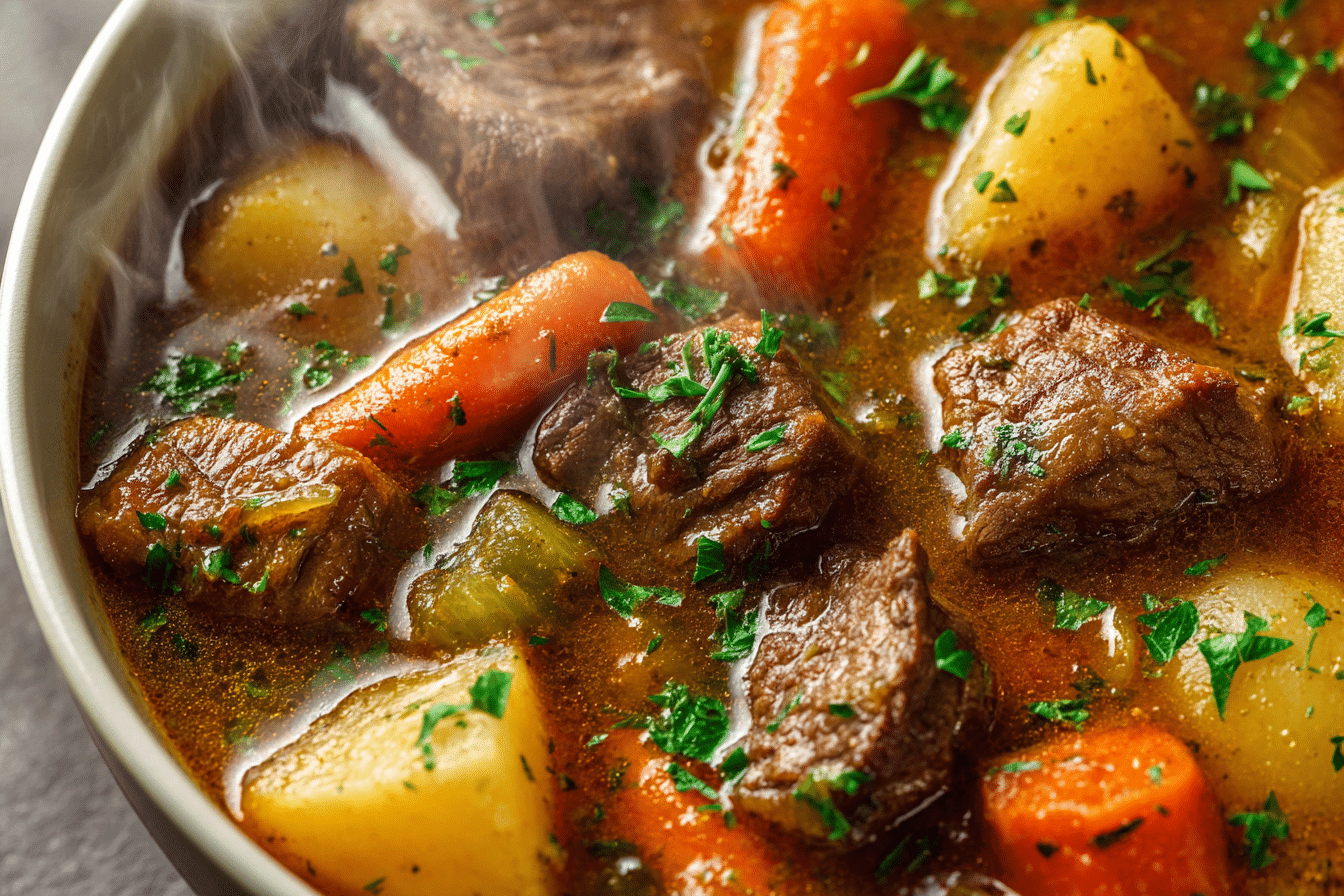
The heart of Beef Stew is well-marbled beef chuck. This cut comes from the shoulder and becomes tender after long, slow cooking. The connective tissue breaks down into gelatin, giving the broth body and a luscious texture. Avoid lean cuts, as they can turn dry and tough.
Onions form the aromatic base. When sautéed, they soften and add subtle sweetness that balances the savory broth. Carrots contribute gentle sweetness and color, while potatoes bring heartiness and naturally thicken the stew as they release starch during cooking.
Celery adds a mild herbal note and background depth. Garlic brings warmth and aroma without overpowering the dish. Tomato paste provides concentrated richness and enhances the stew’s color.
Beef broth is essential for depth of flavor. Choose a low-sodium version to control seasoning. A splash of Worcestershire sauce adds complexity and subtle tang. Bay leaves and dried thyme give the stew a classic, earthy character.
Flour is often used to coat the beef before browning. This step helps create a light crust and assists in thickening the final broth. For a gluten-free version, cornstarch slurry can be added near the end instead.
Fresh parsley at the finish brightens the dish and adds gentle contrast to the rich base.
Step-by-Step Instructions
Begin by cutting the beef chuck into evenly sized 1½-inch cubes. Pat the pieces dry with paper towels. Dry surfaces brown better, creating deeper flavor. Season the beef generously with salt and black pepper, then lightly toss with flour.
Heat a heavy-bottomed Dutch oven over medium-high heat. Add a tablespoon of oil. Once the oil shimmers, place the beef in a single layer. Avoid overcrowding; brown in batches if necessary. Let the pieces sear undisturbed for several minutes before turning. Deep browning at this stage builds the stew’s foundation.
Transfer the browned beef to a plate. Lower the heat to medium and add chopped onions and celery to the same pot. Cook until softened, scraping up the browned bits from the bottom. Stir in minced garlic and tomato paste, cooking for about one minute to remove any raw taste.
Return the beef to the pot. Pour in beef broth until the meat is just covered. Add bay leaves, dried thyme, and a splash of Worcestershire sauce. Bring the mixture to a gentle simmer.
Reduce the heat to low, cover partially, and cook for about 1½ hours. The stew should bubble gently, not boil rapidly. Slow simmering keeps the beef tender.
After the initial simmer, add chopped carrots and potatoes. Continue cooking for another 45 to 60 minutes, until the vegetables are tender and the beef yields easily to a fork.
If the broth appears thin, uncover the pot during the last 20 minutes to allow it to reduce. Taste and adjust seasoning with additional salt and pepper if needed.
Remove bay leaves before serving. Sprinkle chopped parsley over the top for a fresh finish.
Common mistakes include rushing the browning process, boiling instead of simmering, or cutting vegetables too small, which can cause them to break down completely.
Tips, Variations & Substitutions
For deeper flavor, deglaze the pot with a small splash of red wine after sautéing the onions. Let it reduce slightly before adding broth.
If you prefer a thicker stew, mash a few potato pieces directly into the broth near the end of cooking. This adds body without additional flour.
Mushrooms can be added for earthy richness. Add them during the last 45 minutes so they hold their shape. Parsnips can replace carrots for a slightly sweeter profile.
For a lighter version, reduce the amount of potatoes and increase carrots and celery. A slow cooker version works well: brown the beef first, then transfer everything to the slow cooker and cook on low for 7 to 8 hours.
Leftover Beef Stew often tastes even richer the next day, as the flavors continue to develop.
Serving Ideas & Occasions
Beef Stew pairs beautifully with crusty bread that can soak up the thick broth. A simple green salad with a light vinaigrette balances the richness of the stew.
For a cozier presentation, serve the stew over creamy mashed potatoes or buttered egg noodles. The sauce coats each bite and adds extra comfort.
This dish fits perfectly into cool-weather dinners, family gatherings, or relaxed weekend meals. It also reheats well, making it suitable for meal preparation during busy weeks.
A glass of red wine or sparkling water with lemon complements the savory depth without overwhelming the palate.
Nutritional & Health Notes
Beef Stew offers a balanced combination of protein, carbohydrates, and vegetables. Beef provides high-quality protein along with iron and vitamin B12, which support energy production and red blood cell formation.
Carrots contribute beta-carotene, while potatoes supply potassium and fiber. When prepared with moderate oil and controlled salt, Beef Stew can fit comfortably into a balanced meal plan.
Using leaner portions of chuck and trimming visible fat before cooking can reduce overall fat content. Including a generous amount of vegetables increases fiber and nutrient density.
Because the stew is filling and rich, moderate portion sizes are usually satisfying without the need for large servings.
FAQs
What is the best cut of beef for Beef Stew?
Beef chuck is widely considered the ideal cut for Beef Stew because it contains enough connective tissue and marbling to become tender during long cooking. As it simmers, the connective tissue breaks down and adds body to the broth. Other suitable options include bottom round or brisket, though they may require slightly different cooking times. Lean cuts such as sirloin are not recommended because they can turn dry and chewy when cooked for extended periods.
How long should Beef Stew simmer?
Beef Stew typically needs about 2 to 2½ hours of gentle simmering on the stovetop. The first stage tenderizes the beef, and the second stage finishes cooking the vegetables. The stew should bubble softly rather than boil. Cooking too quickly can cause the meat to tighten and become tough. The stew is ready when the beef easily breaks apart with a fork and the vegetables are tender but still intact.
Can I make Beef Stew in a slow cooker?
Yes, Beef Stew adapts well to a slow cooker. Brown the beef and sauté the aromatics first to build flavor. Transfer everything to the slow cooker, add broth and seasonings, then cook on low for 7 to 8 hours or on high for 4 to 5 hours. Add potatoes and carrots halfway through if you prefer firmer vegetables. The slow, steady heat creates tender meat and a rich, developed broth.
How do I thicken Beef Stew?
There are several ways to thicken Beef Stew. Coating the beef in flour before browning helps naturally thicken the broth as it cooks. You can also simmer uncovered to reduce excess liquid. Another method is stirring in a cornstarch slurry made with cold water near the end of cooking. Mashing a few cooked potatoes into the broth is another effective and natural thickening option.
Can Beef Stew be frozen?
Beef Stew freezes well for up to three months when stored in airtight containers. Allow the stew to cool completely before freezing. When reheating, thaw overnight in the refrigerator and warm gently on the stovetop. Potatoes may become slightly softer after freezing, but the flavor remains rich. Stir occasionally during reheating and adjust seasoning if needed.
Why is my Beef Stew meat tough?
Tough meat usually results from insufficient cooking time or cooking at too high a temperature. Beef chuck requires slow, gentle heat to break down connective tissue properly. If the stew is boiled rapidly, the muscle fibers tighten and become firm. Continue simmering at low heat until the meat softens. Patience is essential when preparing Beef Stew for tender results.
Can I prepare Beef Stew a day ahead?
Preparing Beef Stew a day in advance often improves its flavor. As the stew rests in the refrigerator, the ingredients meld and deepen in taste. Reheat slowly on the stovetop, stirring occasionally. You may need to add a small amount of broth or water if it has thickened too much overnight. Skim any solidified fat from the surface before reheating for a cleaner finish.
Print
Beef Stew is a hearty, slow-simmered dish with tender beef, carrots, potatoes, and a rich savory broth that thickens as it cooks.
Ingredients
2 pounds beef chuck, cut into 1½-inch cubes
3 tablespoons all-purpose flour
1 teaspoon salt
½ teaspoon black pepper
2 tablespoons vegetable oil
1 medium onion, chopped
2 celery stalks, chopped
3 cloves garlic, minced
2 tablespoons tomato paste
4 cups low-sodium beef broth
1 tablespoon Worcestershire sauce
2 bay leaves
1 teaspoon dried thyme
3 carrots, sliced into chunks
3 medium potatoes, peeled and cubed
2 tablespoons chopped fresh parsley
Instructions
-
Pat beef dry and toss with flour, salt, and pepper.
-
Heat oil in a Dutch oven over medium-high heat and brown beef in batches. Remove and set aside.
-
In the same pot, cook onion and celery until softened. Add garlic and tomato paste; cook briefly.
-
Return beef to the pot and add broth, Worcestershire sauce, bay leaves, and thyme. Bring to a gentle simmer.
-
Cover partially and cook on low for 1½ hours.
-
Add carrots and potatoes. Continue simmering 45 to 60 minutes until beef and vegetables are tender.
-
Remove bay leaves, adjust seasoning, and sprinkle with parsley before serving.