
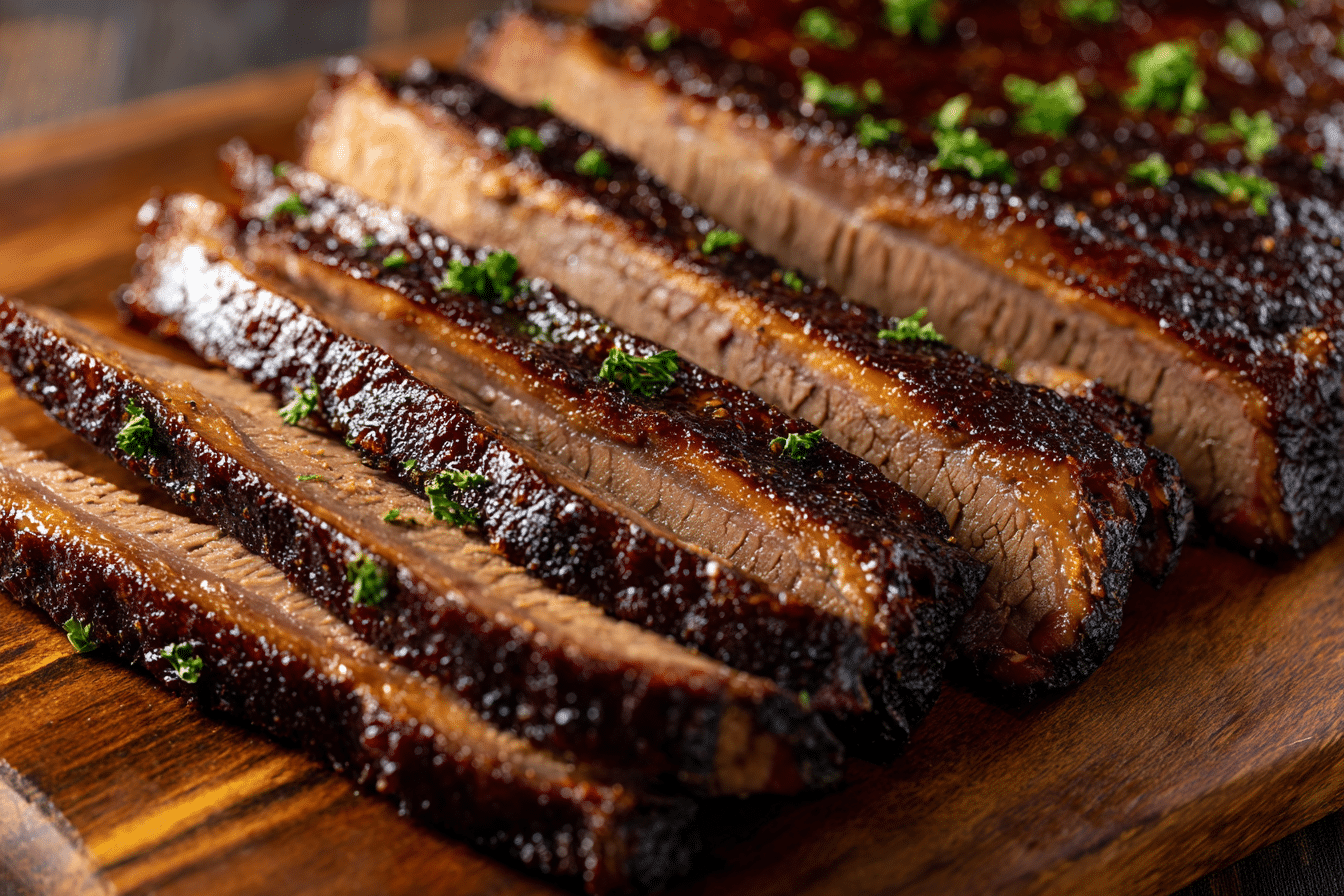
Smoked Brisket is more than a meal; it is a slow ritual built around patience, wood smoke, and deep savory flavor. From the first curl of smoke rising from the pit to the final tender slice resting on a cutting board, this dish carries the unmistakable aroma of time well spent.
The magic of Smoked Brisket lies in contrast. A dark, peppery bark gives way to juicy, tender meat with rich marbling that melts as it cooks. Each slice should bend without breaking, glistening with natural juices and carrying a subtle smokiness that lingers on the palate.
Whether prepared for a backyard gathering or a quiet weekend cook, Smoked Brisket rewards care and attention. With the right cut, steady temperature, and proper resting time, you can create brisket that is tender, flavorful, and deeply satisfying.
Ingredients Overview
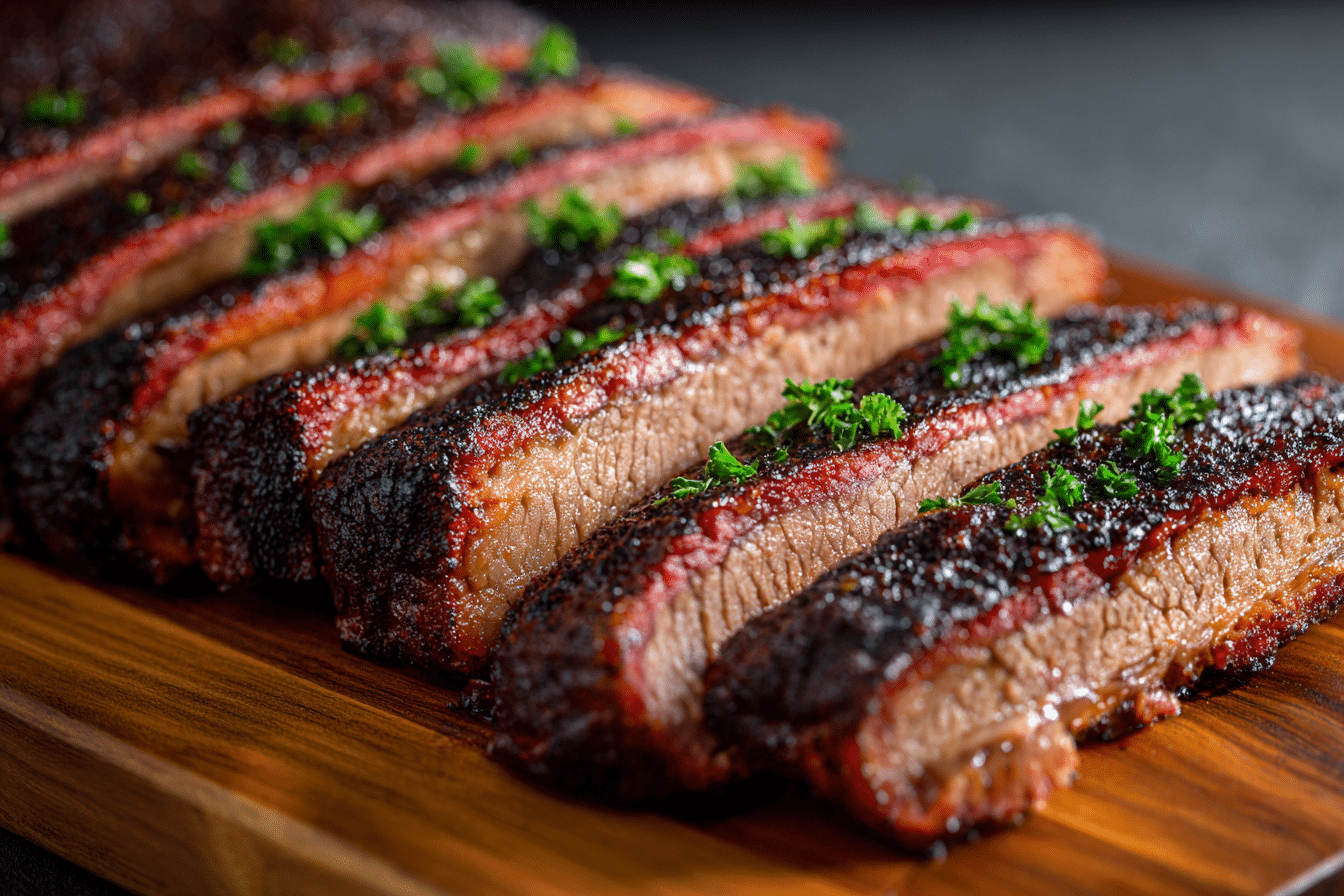
A traditional Smoked Brisket begins with a whole packer brisket, typically 10 to 14 pounds. This cut includes both the flat and the point. The flat is leaner and slices neatly, while the point contains more marbling and produces richer, juicier meat. Choosing a brisket with consistent marbling throughout helps prevent dry spots during the long cooking process.
Kosher salt and coarse black pepper form the backbone of the seasoning. This simple combination highlights the beef rather than masking it. The salt draws moisture to the surface, helping develop the dark crust known as bark. Coarse pepper adds texture and a gentle heat that stands up to smoke.
Many cooks add garlic powder and onion powder for depth. These subtle additions blend into the bark without overpowering the beef. Paprika can be included for color and mild warmth, though it should not dominate.
Wood selection plays a central role in flavor. Oak provides steady heat and balanced smoke, while hickory delivers a stronger profile. Fruit woods like apple or cherry offer a slightly sweeter aroma and darker exterior color.
Optional ingredients include yellow mustard or beef tallow. A thin layer of mustard helps the seasoning adhere and disappears during cooking. Beef tallow can be brushed on during wrapping to maintain moisture.
Step-by-Step Instructions
Begin by trimming the brisket. Leave about one-quarter inch of fat on the fat cap to protect the meat during cooking. Remove any hard, waxy fat that will not render. Trim thin edges of the flat to promote even cooking.
Pat the brisket dry. If using mustard, spread a thin layer over the surface. Combine kosher salt, coarse black pepper, garlic powder, and onion powder. Coat the brisket evenly on all sides, pressing gently so the seasoning adheres.
Preheat your smoker to 225°F to 250°F. Stability is critical. Use indirect heat and maintain consistent airflow. Add your chosen wood chunks or splits once the smoker reaches temperature and produces clean, thin smoke rather than thick white smoke.
Place the brisket on the smoker with the fat side facing the heat source. Insert a meat thermometer probe into the thickest part of the flat. Close the lid and avoid opening it frequently, as temperature fluctuations can extend cooking time.
Over the next several hours, the brisket will absorb smoke and develop bark. Around 160°F internal temperature, the meat may enter the stall, where the temperature plateaus due to moisture evaporation. At this point, you may wrap the brisket tightly in butcher paper or heavy-duty foil. Wrapping helps push through the stall and preserves moisture.
Return the wrapped brisket to the smoker. Continue cooking until the internal temperature reaches about 195°F to 205°F. More important than temperature alone is tenderness. Insert a probe or skewer into the meat; it should slide in with little resistance.
Remove the brisket from the smoker and let it rest, still wrapped, for at least one hour. Resting allows juices to redistribute and the muscle fibers to relax.
When ready to serve, separate the point from the flat. Slice the flat against the grain into pencil-thick slices. The point can be sliced or cubed for burnt ends if desired.
Tips, Variations & Substitutions
Consistency in temperature makes a noticeable difference. Sudden spikes in heat can cause the exterior to darken too quickly while the interior remains firm. A reliable thermometer at grate level helps maintain steady conditions.
If you prefer a stronger bark, leave the brisket unwrapped for the entire cook, though this may lengthen cooking time. For a softer exterior and slightly juicier result, wrap earlier in the stall.
To add subtle sweetness, incorporate a small amount of brown sugar into the rub. For a spicier profile, include cayenne pepper or crushed red pepper flakes.
If a full packer brisket feels overwhelming, a brisket flat alone can be smoked successfully. Keep in mind that it cooks faster and benefits from careful monitoring to prevent dryness.
Beef tallow brushed over slices before serving can restore moisture and intensify richness, especially if reheating leftovers.
Serving Ideas & Occasions
Smoked Brisket pairs naturally with classic sides such as coleslaw, potato salad, baked beans, and cornbread. The balance of creamy, tangy, and smoky elements creates a satisfying plate.
For casual gatherings, serve brisket sliced on a large wooden board with pickles, sliced onions, and soft rolls. Guests can build their own sandwiches with a spoonful of barbecue sauce if desired.
It also works beautifully in tacos with fresh salsa and lime, or layered into hearty sandwiches with melted cheese. Smoked Brisket is especially fitting for weekend cookouts, holiday gatherings, and celebratory meals centered around outdoor cooking.
Nutritional & Health Notes
Smoked Brisket is rich in protein, providing essential amino acids that support muscle maintenance and overall body function. A typical serving also contains iron, zinc, and B vitamins.
Because brisket includes natural fat marbling, it is higher in saturated fat than lean cuts of beef. Trimming excess fat before cooking and slicing away large fat deposits after resting can moderate fat intake.
Portion control plays an important role in balance. Pairing brisket with vegetable-based sides such as grilled vegetables or fresh salads can create a more rounded meal.
As with many slow-cooked meats, sodium levels depend on the seasoning used. Adjust salt levels to suit your dietary needs without compromising the fundamental flavor of the beef.
FAQs
How long does Smoked Brisket take to cook?
Cooking time depends on the size of the brisket and the stability of your smoker. A general guideline is about 1 to 1.5 hours per pound at 225°F to 250°F. A 12-pound brisket may take anywhere from 12 to 18 hours, including resting time. Weather conditions, airflow, and how often the smoker is opened can influence timing. Rather than relying strictly on the clock, focus on internal temperature and tenderness. The brisket is ready when a probe slides into the meat with minimal resistance, usually between 195°F and 205°F.
What is the best wood for Smoked Brisket?
Oak is widely used because it burns steadily and provides balanced smoke that complements beef. Hickory offers a stronger flavor and creates a pronounced smoky aroma. Fruit woods such as apple or cherry produce a milder, slightly sweet smoke and add a deep color to the bark. Many pitmasters blend woods to achieve a layered flavor. The key is producing clean, thin smoke. Thick, heavy smoke can create bitterness, so always allow the fire to stabilize before placing the brisket in the smoker.
Should I wrap my Smoked Brisket?
Wrapping is optional but commonly practiced. During the stall, moisture evaporating from the meat cools its surface and slows temperature rise. Wrapping in butcher paper or foil reduces evaporation and helps push through this phase. Butcher paper preserves more bark texture, while foil traps additional moisture and softens the exterior slightly. Leaving the brisket unwrapped the entire time can result in a thicker bark but requires patience and steady heat management. The choice depends on your desired texture and time frame.
How do I know when Smoked Brisket is done?
Internal temperature is a guide, but tenderness is the true indicator. When the brisket reaches around 195°F, begin checking with a probe or skewer. Insert it into the thickest parts of both the flat and the point. If it slides in easily, similar to room-temperature butter, the brisket is ready. If there is resistance, continue cooking and check again after 20 to 30 minutes. Every brisket cooks differently due to variations in size, fat content, and smoker conditions.
Why did my Smoked Brisket turn out dry?
Dry brisket often results from overcooking the lean flat or selecting a cut with minimal marbling. Cooking at temperatures that are too high can also cause moisture loss. Proper trimming, steady smoker heat, and allowing the brisket to rest adequately all help retain juices. Wrapping during the stall can also reduce moisture loss. When slicing, always cut against the grain to maintain tenderness. If brisket does become dry, serving it with reserved juices or a light brush of warm beef tallow can help restore moisture.
How long should Smoked Brisket rest?
Resting is essential for juicy slices. After removing the brisket from the smoker, keep it wrapped and allow it to rest for at least one hour. For larger briskets, a two-hour rest in an insulated cooler can improve texture even further. During this time, the internal juices redistribute throughout the meat. Cutting too soon can cause those juices to spill out, leaving the slices drier. Proper resting makes a noticeable difference in both tenderness and flavor.
Can I reheat Smoked Brisket without drying it out?
Yes, careful reheating preserves moisture. Slice the brisket and place it in a baking dish with a small amount of beef broth or reserved juices. Cover tightly with foil and warm in a low oven around 275°F until heated through. Avoid high heat, which can dry the meat quickly. Another method is vacuum sealing slices and reheating them gently in simmering water. Keeping the brisket covered and adding a bit of moisture helps maintain tenderness and flavor.
Print
Smoked Brisket is a slow-cooked beef classic prepared over steady wood smoke until tender and richly flavored, finished with a dark peppery bark and juicy interior.
Ingredients
1 whole packer brisket, 12 pounds
3 tablespoons kosher salt
3 tablespoons coarse black pepper
1 tablespoon garlic powder
1 tablespoon onion powder
2 tablespoons yellow mustard, optional
Wood chunks or splits such as oak or hickory
Instructions
-
Trim the brisket, leaving about one quarter inch of fat on the fat cap and removing hard excess fat.
-
Pat dry and coat lightly with mustard if using.
-
Mix salt, pepper, garlic powder, and onion powder, then season the brisket evenly on all sides.
-
Preheat smoker to 225 to 250 degrees Fahrenheit with indirect heat and clean smoke.
-
Place brisket on smoker and cook until internal temperature reaches about 160 degrees Fahrenheit.
-
Wrap tightly in butcher paper or foil and return to smoker.
-
Continue cooking until internal temperature reaches 195 to 205 degrees Fahrenheit and probe tender.
-
Rest wrapped brisket for at least 1 hour before slicing against the grain.