
Smoky Red Chimichurri Sauce brings a deep, rustic character to the table that feels both vibrant and comforting. Inspired by traditional Argentinian chimichurri, this version adds smoked paprika and roasted red peppers for added depth and color. The result is a sauce that balances herbaceous freshness with a subtle smoky warmth.
The texture is slightly chunky yet spoonable, with finely chopped parsley and oregano suspended in olive oil and red wine vinegar. Garlic adds a sharp edge, while a hint of chili brings gentle heat. When drizzled over grilled steak, chicken, or vegetables, Smoky Red Chimichurri Sauce creates contrast against charred edges and juicy interiors.
It is the kind of sauce that transforms simple grilled meats into something memorable. With minimal cooking and fresh ingredients, it delivers bold flavor in every spoonful.
Ingredients Overview
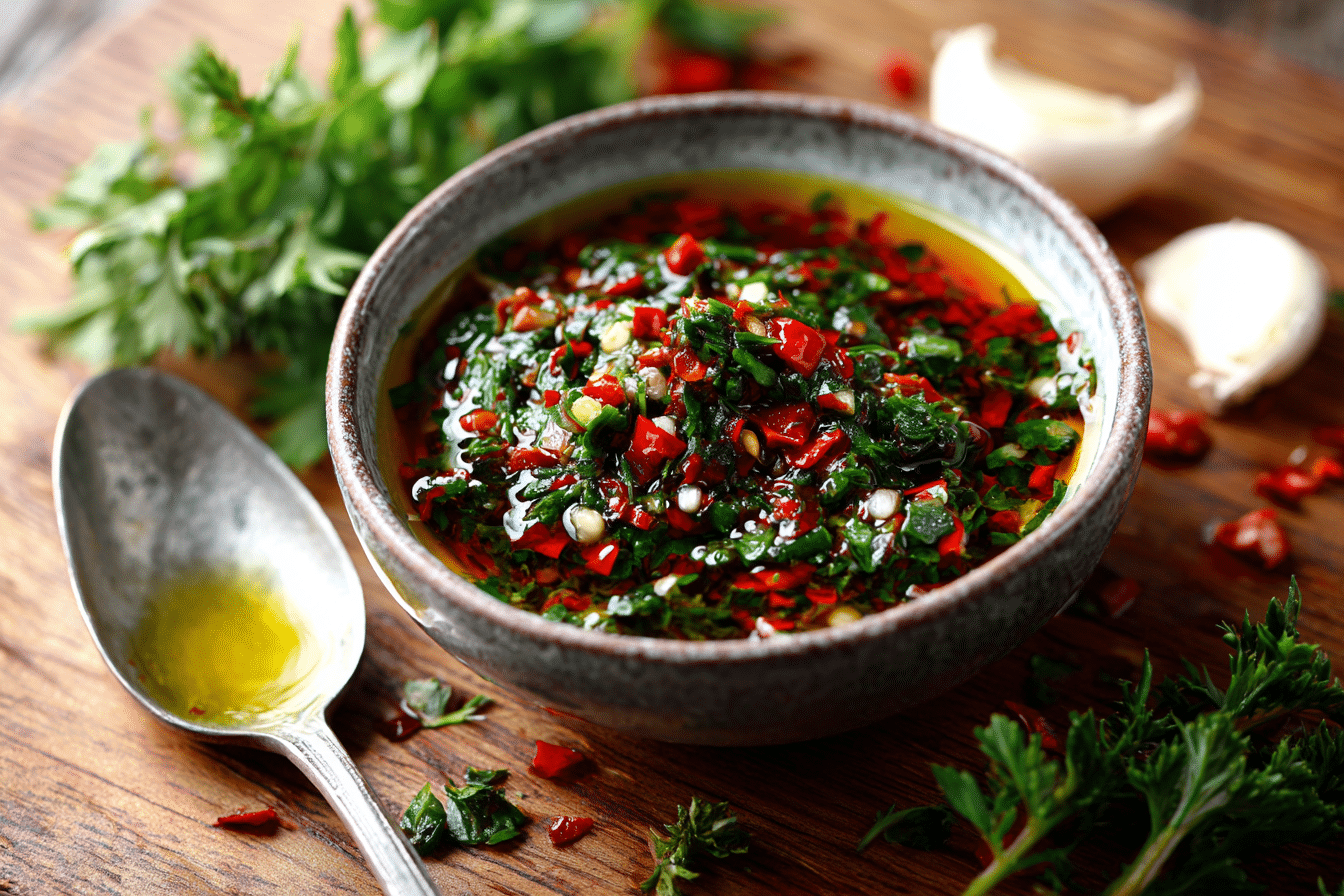
The backbone of Smoky Red Chimichurri Sauce is fresh flat-leaf parsley. Its grassy brightness keeps the sauce lively and prevents it from tasting heavy. Fresh oregano adds a slightly peppery, earthy note that pairs beautifully with grilled meats.
Roasted red peppers are what give this version its signature red hue and gentle sweetness. You can roast fresh bell peppers until blistered and peeled, or use high-quality jarred roasted peppers for convenience. They add body and subtle sweetness without overpowering the herbs.
Smoked paprika introduces that defining smoky layer. Choose a sweet or mildly smoked variety rather than a hot one, unless you prefer extra heat. This ingredient deepens the overall flavor and ties the sauce to grilled dishes.
Garlic provides pungency and sharpness. Finely mincing it prevents large, harsh bites while allowing it to infuse evenly. Red wine vinegar contributes acidity, cutting through richness and balancing the olive oil. If unavailable, sherry vinegar or fresh lemon juice can be used, though the flavor profile will shift slightly.
Extra virgin olive oil forms the base, carrying flavor and creating a silky texture. A pinch of red pepper flakes adds gentle warmth. Salt brings everything together, while freshly ground black pepper rounds out the finish.
Each ingredient plays a clear role, creating a sauce that feels cohesive and thoughtfully balanced.
Step-by-Step Instructions
Begin by preparing the roasted red peppers. If roasting fresh peppers, place them directly over a gas flame or under a broiler, turning occasionally until the skins blister and blacken. Transfer them to a bowl and cover for 10 minutes to steam. This loosens the skin, making it easier to peel. Remove seeds and membranes before finely chopping.
On a large cutting board, gather fresh parsley and oregano. Chop them finely by hand rather than using a food processor. Hand chopping prevents bruising and keeps the texture pleasantly coarse rather than pasty.
Mince the garlic very finely. If you prefer a milder garlic flavor, let the minced garlic sit in the red wine vinegar for five minutes before combining it with the other ingredients. This slightly softens its sharpness.
In a medium bowl, combine the chopped parsley, oregano, and roasted red peppers. Stir in the minced garlic. Sprinkle in smoked paprika and red pepper flakes, adjusting the amount depending on your preferred heat level.
Pour in red wine vinegar and mix thoroughly. Slowly drizzle in extra virgin olive oil while stirring. The oil should coat the herbs and peppers without drowning them. The final consistency should be loose enough to spoon but thick enough to cling to grilled meats.
Season with salt and freshly ground black pepper. Taste and adjust acidity or salt as needed. If the sauce tastes too sharp, add a small splash of olive oil. If it feels too heavy, a touch more vinegar will brighten it.
Allow the Smoky Red Chimichurri Sauce to rest at room temperature for at least 20 minutes before serving. This resting time helps the flavors meld and deepen.
Avoid blending the sauce into a smooth puree. Traditional chimichurri is textured, and that texture is part of its charm. Also avoid refrigerating immediately after preparation if serving soon, as cold temperatures mute flavor.
Tips, Variations & Substitutions
For a deeper smoky character, try charring the garlic lightly before mincing. This softens its sharpness and adds complexity. If you enjoy extra heat, increase the red pepper flakes or add a finely chopped fresh chili.
To create a thicker, almost spreadable version, reduce the olive oil slightly and increase the amount of roasted red peppers. This works well as a sandwich spread for grilled steak or chicken.
For a milder herb flavor, substitute part of the oregano with fresh cilantro. This shifts the sauce slightly while maintaining its vibrant quality. If parsley is unavailable, use a combination of cilantro and a small amount of fresh basil, though the flavor will be less traditional.
White wine vinegar can replace red wine vinegar in a pinch, but the flavor will be lighter. Lemon juice offers brightness but changes the profile from classic chimichurri.
Always chop ingredients by hand for the best texture. A food processor tends to create an overly smooth mixture that lacks the rustic character expected from Smoky Red Chimichurri Sauce.
Serving Ideas & Occasions
Smoky Red Chimichurri Sauce pairs beautifully with grilled flank steak, ribeye, or skirt steak. Spoon it generously over sliced meat just before serving to allow it to seep into every cut edge.
It also complements grilled chicken thighs, lamb chops, and even roasted vegetables like zucchini, eggplant, or portobello mushrooms. Try drizzling it over grilled shrimp or spooning it onto fish tacos for a smoky herb finish.
For gatherings, serve it alongside a platter of grilled meats so guests can add as much or as little as they prefer. It brings color and brightness to backyard cookouts, holiday barbecues, and casual weeknight dinners alike.
Nutritional & Health Notes
Smoky Red Chimichurri Sauce is naturally dairy-free and gluten-free, making it suitable for a wide range of dietary needs. It is primarily made with fresh herbs, peppers, vinegar, and olive oil.
Olive oil provides heart-healthy monounsaturated fats when enjoyed in moderation. Fresh parsley and oregano contain antioxidants and small amounts of vitamins A and C. Roasted red peppers add additional vitamin C and natural sweetness without added sugar.
Because this sauce is oil-based, portion size matters. A tablespoon or two is typically enough to add substantial flavor to a serving of grilled meat or vegetables.
Overall, it is a flavorful condiment that adds depth without relying on heavy creams or processed ingredients.
FAQs
Can Smoky Red Chimichurri Sauce be made ahead of time?
Yes, Smoky Red Chimichurri Sauce can be prepared several hours in advance. In fact, allowing it to rest for a few hours improves the overall flavor as the herbs and garlic infuse into the oil and vinegar. Store it in an airtight container in the refrigerator if making it more than two hours ahead. Before serving, bring it to room temperature and stir well, as the oil may solidify slightly when chilled.
How long does Smoky Red Chimichurri Sauce last?
When stored in a sealed container in the refrigerator, Smoky Red Chimichurri Sauce typically lasts up to four days. The fresh herbs may darken slightly over time, but the flavor remains vibrant. Always use a clean spoon when serving to maintain freshness. If the sauce develops an off smell or unusual texture, discard it.
Can I freeze Smoky Red Chimichurri Sauce?
Freezing is possible, though the texture may change slightly once thawed. The herbs can lose some brightness, and the oil may separate. If freezing, store the sauce in small portions, such as in an ice cube tray, then transfer to a freezer-safe container. Thaw in the refrigerator and stir thoroughly before using.
Is Smoky Red Chimichurri Sauce spicy?
This sauce has mild heat from red pepper flakes, but it is not overwhelmingly spicy. The level of heat can be easily adjusted. For a milder version, reduce or omit the red pepper flakes. For a spicier variation, add more flakes or include a finely chopped fresh chili.
What meats pair best with Smoky Red Chimichurri Sauce?
Grilled beef cuts such as flank steak, skirt steak, and ribeye are classic pairings. The acidity and herbs cut through rich, charred meat beautifully. It also pairs well with grilled chicken thighs, lamb chops, and even pork tenderloin. The smoky notes complement anything cooked over an open flame.
Can I use dried herbs instead of fresh?
Fresh herbs are strongly recommended for authentic flavor and texture. Dried parsley lacks the brightness needed for Smoky Red Chimichurri Sauce. If necessary, dried oregano can be used in small amounts, but fresh parsley should remain the primary herb for the best result.
Why is my Smoky Red Chimichurri Sauce too oily?
If the sauce feels overly oily, it likely contains too much olive oil relative to the herbs and peppers. Stir in additional chopped parsley or roasted red peppers to rebalance the texture. You can also add a small splash of vinegar to brighten the flavor and reduce the perception of heaviness.
PrintSmoky Red Chimichurri Sauce is a vibrant herb sauce with roasted red peppers, smoked paprika, garlic, and olive oil. It pairs beautifully with grilled steak, chicken, lamb, and vegetables.
Ingredients
1 cup finely chopped fresh flat-leaf parsley
2 tablespoons finely chopped fresh oregano
1/2 cup finely chopped roasted red peppers
3 cloves garlic, very finely minced
1 teaspoon smoked paprika
1/2 teaspoon red pepper flakes
2 tablespoons red wine vinegar
1/2 to 3/4 cup extra virgin olive oil
3/4 teaspoon salt
1/2 teaspoon freshly ground black pepper
Instructions
-
If using fresh peppers, roast until blistered and blackened, steam in a covered bowl for 10 minutes, peel, remove seeds, and finely chop.
-
Finely chop parsley and oregano by hand on a cutting board.
-
Mince the garlic very finely.
-
In a bowl, combine parsley, oregano, roasted red peppers, and garlic.
-
Stir in smoked paprika and red pepper flakes.
-
Add red wine vinegar and mix well.
-
Slowly drizzle in olive oil while stirring until the sauce reaches a spoonable consistency.
-
Season with salt and black pepper, adjusting to taste.
-
Let the sauce rest at room temperature for 20 minutes before serving.