
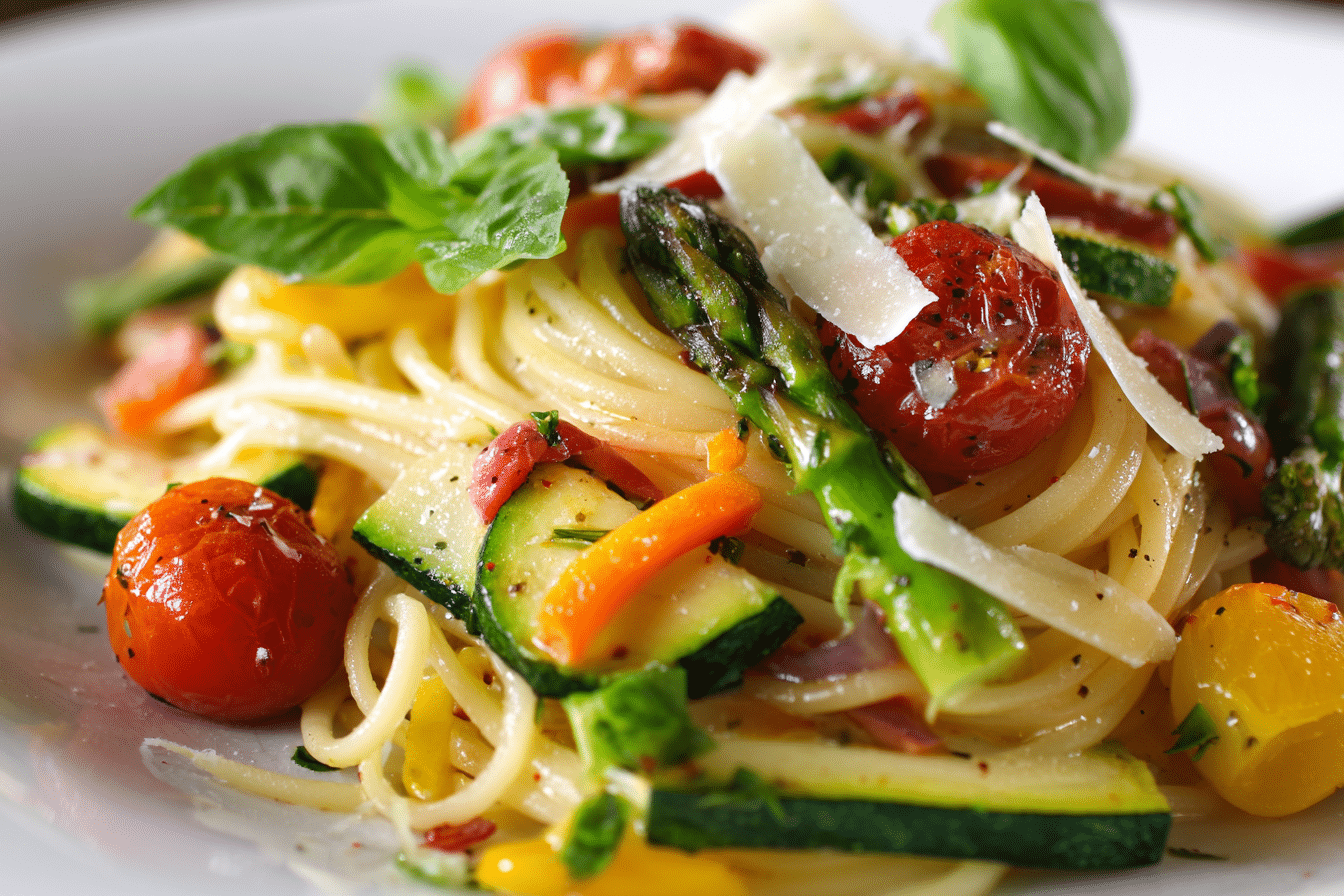
Pasta Primavera celebrates fresh vegetables and tender pasta brought together in a light, vibrant dish. The name “primavera” means spring in Italian, and the recipe reflects that spirit through colorful vegetables, delicate herbs, and a simple sauce that allows the ingredients to shine.
In Pasta Primavera, vegetables play the starring role. Crisp zucchini, sweet bell peppers, bright peas, and tender carrots combine with pasta to create a meal that feels both lively and satisfying. The vegetables remain slightly crisp, providing contrast to the soft pasta.
Unlike heavier pasta dishes built around thick sauces, Pasta Primavera focuses on freshness. Olive oil, garlic, and a touch of parmesan form a light coating that ties the vegetables and pasta together without masking their natural flavors.
Another appealing feature of Pasta Primavera is its flexibility. The dish easily adapts to the vegetables available in different seasons, allowing cooks to work with produce already in the kitchen.
Whether served as a main dish or a colorful side, Pasta Primavera offers a wholesome meal filled with texture, brightness, and garden-inspired flavor.
Ingredients Overview
Pasta Primavera relies on fresh vegetables and simple pantry staples that blend naturally into a balanced dish.
Pasta forms the foundation of the recipe. Medium shapes such as penne, fusilli, or farfalle work especially well because their ridges hold small pieces of vegetables and sauce. Whole wheat pasta can also be used for additional fiber and a mild nutty flavor.
Zucchini adds tender texture and gentle sweetness. Its mild taste blends well with other vegetables while absorbing the flavors of garlic and olive oil.
Bell peppers introduce color and crispness. Red, yellow, or orange peppers bring natural sweetness that contrasts with the savory pasta and herbs.
Carrots contribute a mild earthy sweetness and vibrant color. Thin slices cook quickly while maintaining a slight crunch.
Green peas offer small bursts of sweetness that complement the other vegetables. Fresh or frozen peas both work well in this dish.
Cherry tomatoes add juiciness and brightness. When warmed slightly in the pan, they release a bit of juice that helps form part of the light sauce.
Garlic provides aromatic depth. Cooking garlic briefly in olive oil releases fragrance that forms the flavor base for the entire dish.
Olive oil acts as the main sauce component. It coats the vegetables and pasta while carrying the garlic flavor throughout the dish.
Parmesan cheese adds savory richness and a mild salty note. Finely grated parmesan melts slightly into the warm pasta and vegetables.
Fresh herbs such as basil or parsley contribute freshness and fragrance. These herbs balance the warmth of the sautéed vegetables.
Salt and freshly ground black pepper complete the seasoning and help highlight the natural flavor of the vegetables.
Step-by-Step Instructions
Begin by bringing a large pot of salted water to a boil. Add the pasta and cook according to package directions until tender but slightly firm in the center. This texture allows the pasta to hold up well once combined with the vegetables.
Before draining the pasta, reserve about half a cup of the cooking water. This starchy liquid helps bring the dish together later.
While the pasta cooks, prepare the vegetables. Slice zucchini into half-moons, cut bell peppers into thin strips, and slice carrots thinly so they cook quickly. Halve the cherry tomatoes and set aside.
Heat olive oil in a large skillet over medium heat. Add minced garlic and cook gently for about thirty seconds until fragrant. Avoid browning the garlic too much, as this can introduce bitterness.
Add the carrots and bell peppers to the skillet first, since they require slightly longer cooking time. Cook for about three to four minutes while stirring occasionally.
Next add the zucchini and cook for another two minutes. The vegetables should soften slightly while maintaining a bit of crisp texture.
Stir in the peas and cherry tomatoes. Continue cooking briefly until the tomatoes begin to soften and release a small amount of juice.
Add the cooked pasta directly into the skillet with the vegetables. Pour in a few tablespoons of the reserved pasta water and toss everything together.
Sprinkle grated parmesan over the pasta and stir gently. The cheese and pasta water combine with the olive oil to create a light, glossy coating.
Finish with freshly chopped basil or parsley and a final sprinkle of black pepper. Serve the pasta warm while the vegetables remain bright and tender.
Tips, Variations & Substitutions
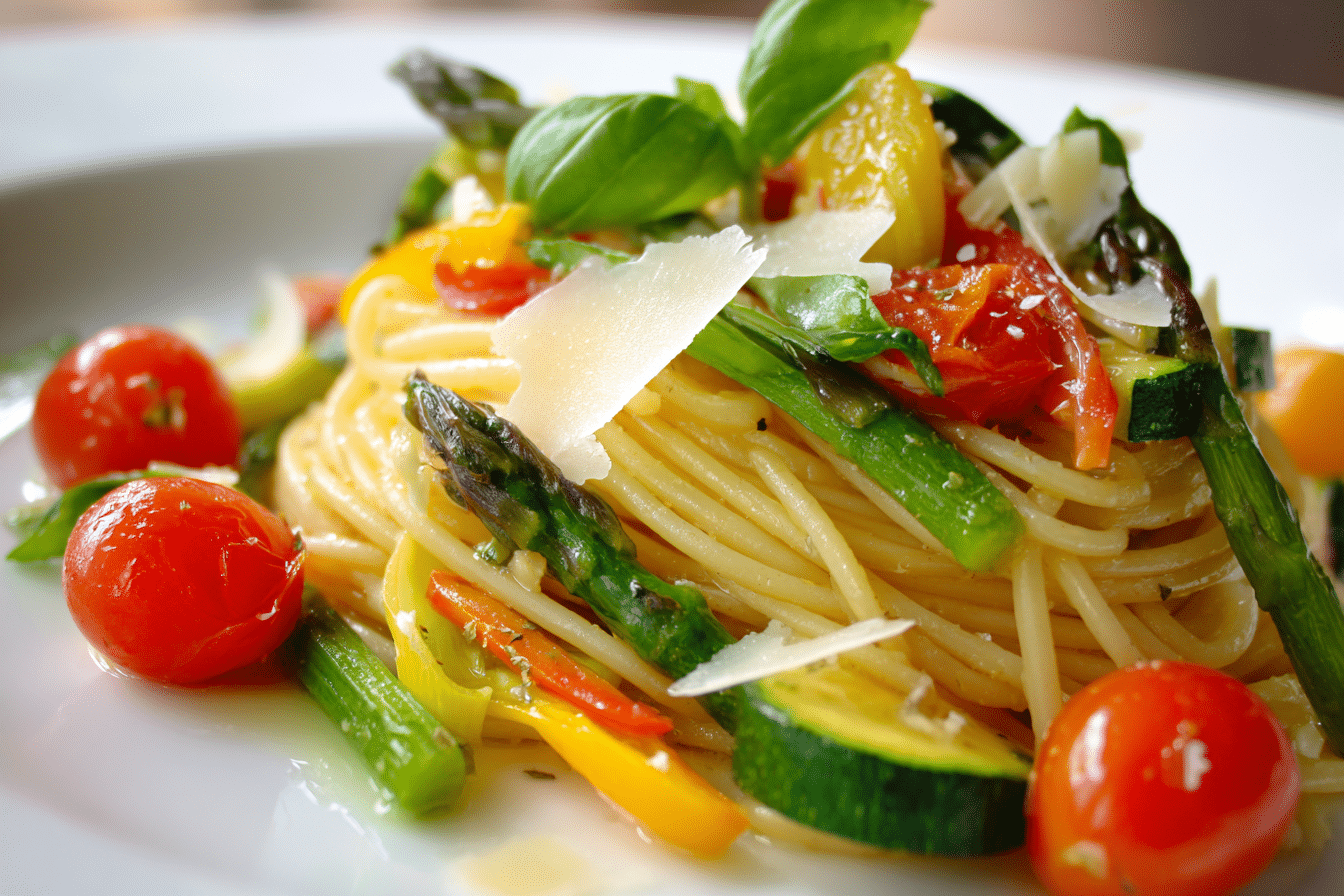
Pasta Primavera is naturally adaptable, allowing different vegetables and flavors while maintaining its fresh character.
Seasonal vegetables often work beautifully in this dish. Asparagus, broccoli, green beans, or snap peas can easily replace or accompany the vegetables listed in the base recipe.
For a creamier variation, a small splash of cream or a spoonful of ricotta can be stirred in near the end of cooking. This adds richness while still allowing the vegetables to remain the focus.
Roasted vegetables can also be used instead of sautéed ones. Roasting intensifies sweetness and introduces gentle caramelized flavor.
To turn Pasta Primavera into a more filling meal, grilled chicken, shrimp, or chickpeas can be added. These ingredients provide additional protein while blending smoothly with the vegetables.
Whole wheat pasta increases fiber and adds subtle nutty flavor. Gluten-free pasta made from rice or lentils also works well when cooked carefully.
Fresh herbs are important for balance. Basil, parsley, chives, or thyme can add fragrance and brightness to the finished dish.
Keeping the vegetables slightly crisp helps maintain texture and prevents the dish from becoming too soft.
Serving Ideas & Occasions
Pasta Primavera works well for many occasions thanks to its colorful appearance and balanced flavor.
For a simple dinner, serve it as the main dish with a green salad and crusty bread. The fresh vegetables and light sauce make the meal satisfying without feeling heavy.
The pasta also pairs nicely with grilled proteins such as chicken, salmon, or shrimp. The vegetables complement the smoky flavors produced by grilling.
During warm months, Pasta Primavera feels especially appropriate because it highlights fresh seasonal produce. The dish can even be served slightly cooled for a lighter lunch.
At gatherings or potluck events, the bright colors of the vegetables make the dish visually appealing on a buffet table.
Smaller portions can also be served as a side dish alongside roasted meats or vegetable platters.
Nutritional & Health Notes
Pasta Primavera offers a balanced dish that includes carbohydrates, vegetables, and healthy fats.
The variety of vegetables contributes fiber, vitamins, and antioxidants that support overall health. Carrots and bell peppers provide vitamin A and vitamin C, while zucchini and peas offer additional nutrients and plant-based fiber.
Olive oil supplies heart-friendly fats that help carry the flavors of garlic and herbs throughout the dish.
Parmesan cheese contributes protein and calcium while adding savory depth with only a small quantity.
Choosing whole wheat pasta increases fiber content and may help support digestion and steady energy levels.
Because the dish focuses heavily on vegetables and uses a light sauce, it can easily fit into many balanced eating patterns.
FAQs
What vegetables work best in Pasta Primavera?
Pasta Primavera traditionally includes a mix of colorful vegetables such as zucchini, bell peppers, carrots, peas, and cherry tomatoes. These vegetables cook quickly and provide a balance of sweetness, texture, and color. However, the dish is flexible and can include seasonal produce like asparagus, broccoli, green beans, or mushrooms. Choosing vegetables that cook at similar speeds helps maintain a pleasant texture throughout the dish.
Can Pasta Primavera be made ahead of time?
Yes, Pasta Primavera can be prepared ahead of time, though it tastes freshest shortly after cooking. If making it in advance, store the pasta and vegetables in a sealed container in the refrigerator for up to two days. When reheating, add a small splash of water or broth while warming the pasta gently. This helps restore the light sauce and prevents the pasta from becoming dry.
Is Pasta Primavera vegetarian?
Pasta Primavera is naturally vegetarian because it focuses on vegetables, pasta, olive oil, and herbs. Parmesan cheese is often included, though it can be omitted or replaced with a vegetarian-friendly cheese alternative if desired. The recipe can also become completely plant-based by removing cheese and adding nutritional yeast or a small amount of plant-based parmesan.
Can gluten-free pasta be used?
Yes, gluten-free pasta works well in Pasta Primavera. Varieties made from rice, corn, lentils, or chickpeas are widely available and blend nicely with the vegetables and light sauce. Cook gluten-free pasta carefully according to package instructions and avoid overcooking, since it can become soft more quickly than traditional wheat pasta.
How can I make Pasta Primavera creamier?
A creamier version can be achieved by adding a small amount of cream, ricotta, or mascarpone near the end of cooking. Stirring the cheese into the hot pasta with a bit of pasta water creates a silky texture while maintaining the vegetable-forward nature of the dish. The creamy addition should remain subtle so the vegetables continue to stand out.
What protein can be added to this dish?
Several proteins pair nicely with Pasta Primavera. Grilled chicken, shrimp, or salmon complement the vegetables without overpowering the dish. For plant-based options, chickpeas, white beans, or tofu can provide additional protein while blending naturally with the pasta and vegetables.
Why reserve pasta cooking water?
Pasta cooking water contains starch released from the noodles during boiling. When added to the skillet with the vegetables and pasta, this starchy water helps bind the olive oil, cheese, and vegetable juices into a light sauce. Adding it gradually allows the pasta to become glossy and evenly coated rather than dry.
PrintPasta Primavera: 6 Colorful Fresh Garden Twirls
Pasta Primavera combines tender pasta with colorful vegetables, garlic, olive oil, and parmesan for a fresh and vibrant vegetable-filled pasta dish.
Ingredients
12 ounces penne or fusilli pasta
1 zucchini sliced
1 red bell pepper sliced
1 carrot thinly sliced
1 cup cherry tomatoes halved
1/2 cup green peas
3 tablespoons olive oil
2 garlic cloves minced
1/3 cup grated parmesan cheese
2 tablespoons chopped fresh basil or parsley
Salt to taste
Black pepper to taste
Instructions
-
Cook pasta in salted boiling water until tender but slightly firm.
-
Reserve 1/2 cup pasta water before draining.
-
Heat olive oil in a large skillet and cook garlic briefly.
-
Add carrots and bell peppers and cook for several minutes.
-
Stir in zucchini and cook until slightly tender.
-
Add peas and cherry tomatoes and cook briefly.
-
Toss cooked pasta with the vegetables and a splash of pasta water.
-
Sprinkle parmesan and herbs over the pasta and serve warm.
Notes
Seasonal vegetables such as asparagus or broccoli can easily replace or accompany the vegetables in this recipe.