
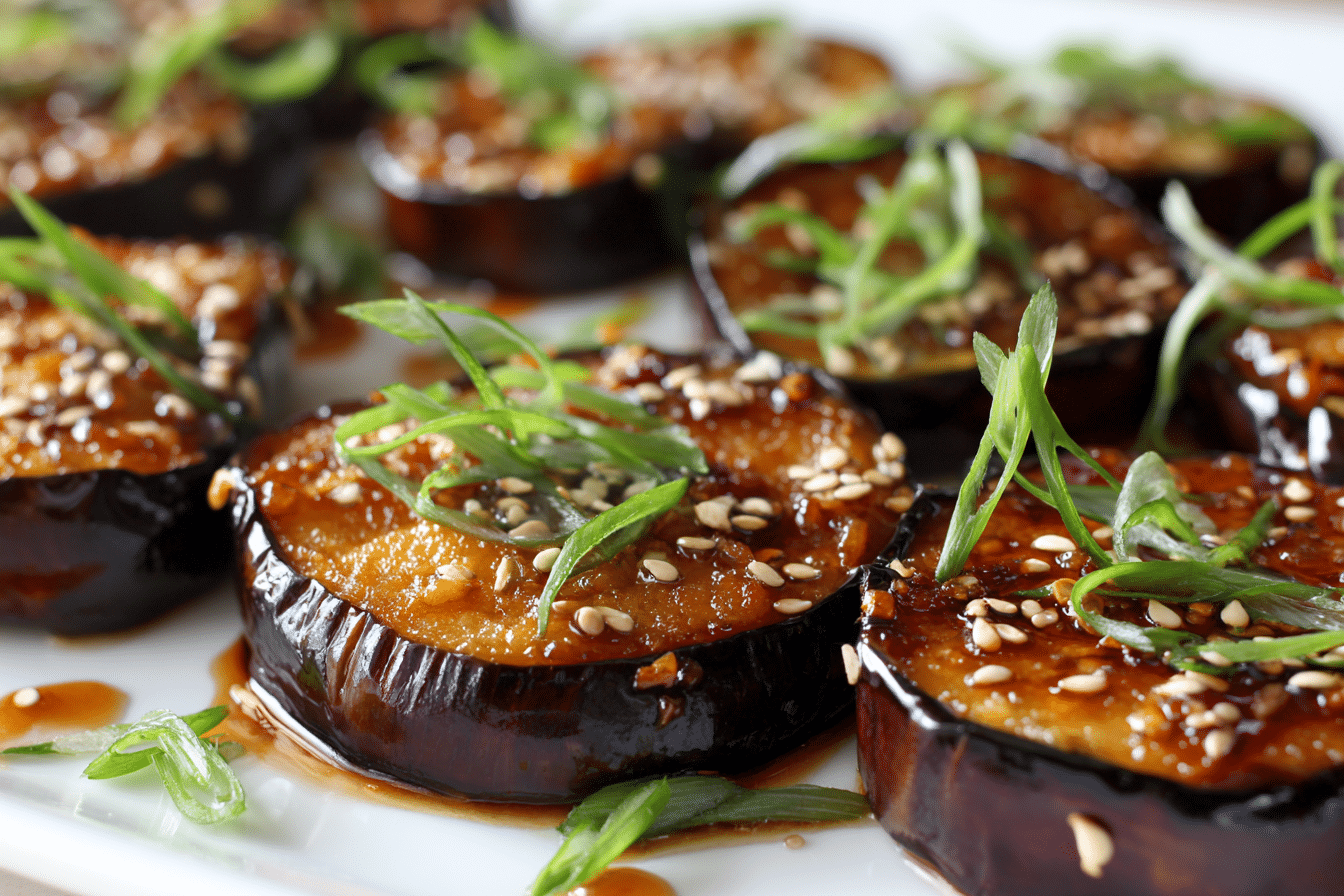
Crispy Miso Glazed Eggplant is a flavorful Japanese-inspired dish that transforms tender eggplant into a rich, savory plate with a lightly caramelized surface. The combination of roasted eggplant and miso glaze creates a balance of deep umami flavor with subtle sweetness.
Eggplant has a natural ability to absorb seasonings, which makes it ideal for bold sauces like miso glaze. When roasted at high heat, the flesh becomes soft and creamy while the edges develop a slightly crisp texture.
The miso glaze coats the eggplant with a mixture of fermented soybean paste, soy sauce, and a touch of sweetness. As the dish finishes in the oven, the glaze thickens and lightly caramelizes, creating a glossy finish.
Crispy Miso Glazed Eggplant works well as a vegetable side dish, appetizer, or even as part of a plant-focused main meal. Served with rice or noodles, the dish highlights how a few well-balanced ingredients can turn eggplant into a deeply satisfying dish.
The preparation remains simple, relying on roasting and a quick glaze that enhances the natural character of the eggplant.
Ingredients Overview
Crispy Miso Glazed Eggplant uses a small group of ingredients that combine to create bold umami flavor.
Japanese eggplant is the preferred variety for this recipe. These eggplants are long and slender with thin skin and a tender interior. Their delicate texture allows them to cook quickly and absorb glaze easily. If Japanese eggplant is unavailable, Chinese eggplant works well as a substitute.
Miso paste forms the base of the glaze. Made from fermented soybeans, miso contributes a rich savory flavor that defines the dish. White miso is often used because it has a milder taste and slight sweetness.
Soy sauce adds depth and saltiness to the glaze. When combined with miso, it strengthens the savory character without overwhelming the eggplant.
Mirin, a lightly sweet Japanese cooking wine, introduces gentle sweetness and balances the strong umami notes of miso and soy sauce.
Sugar or honey may be added in small amounts to encourage caramelization and create a glossy coating.
Rice vinegar provides mild acidity that keeps the glaze balanced and prevents it from tasting too heavy.
Sesame oil contributes a warm nutty aroma that complements the roasted eggplant.
Vegetable oil is used to coat the eggplant before roasting, helping the slices become lightly crisp around the edges.
Sesame seeds and chopped green onions are often sprinkled over the finished dish for texture and freshness.
If miso paste is new to the kitchen, white or yellow miso varieties are easiest to work with because their flavor remains balanced and slightly sweet.
Step-by-Step Instructions
Begin by preheating the oven to 425°F (220°C). High heat helps the eggplant develop crisp edges while keeping the interior soft.
Wash the eggplants and slice them lengthwise into halves or quarters depending on their size. Score the flesh lightly with a knife in a crosshatch pattern. This step allows the glaze to penetrate the eggplant more evenly.
Arrange the eggplant pieces on a baking sheet lined with parchment paper. Brush the cut surfaces with vegetable oil.
Place the tray in the oven and roast the eggplant for about twenty minutes. The flesh should become soft and the surface lightly golden.
While the eggplant roasts, prepare the miso glaze. In a small bowl combine miso paste, soy sauce, mirin, rice vinegar, sugar, and sesame oil. Stir until the mixture becomes smooth and slightly thick.
Remove the eggplant from the oven once it becomes tender.
Brush a generous layer of the miso glaze over the cut surfaces of the eggplant. Return the tray to the oven and bake for another five to seven minutes.
During this final stage, the glaze will warm and slightly caramelize across the surface of the eggplant.
Remove the eggplant from the oven and allow it to rest briefly.
Sprinkle sesame seeds and chopped green onions over the top before serving.
Serve the eggplant warm while the glaze remains glossy and aromatic.
Tips, Variations & Substitutions
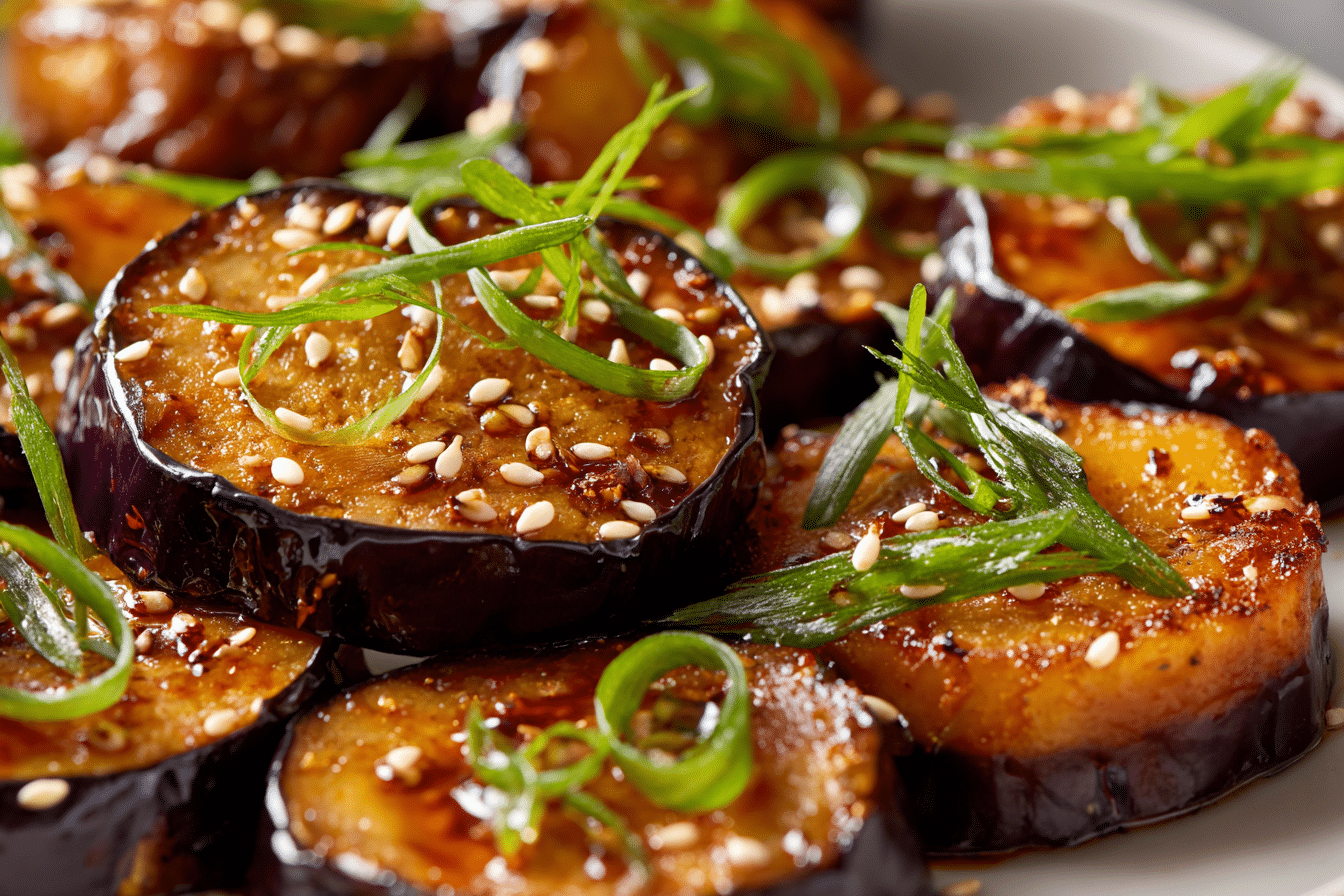
Scoring the eggplant surface helps the glaze soak into the flesh, creating stronger flavor throughout the dish.
Roasting at high temperature remains important because eggplant tends to release moisture during cooking. High heat helps evaporate this moisture and produces lightly crisp edges.
If the glaze begins to brown too quickly, reduce the oven temperature slightly during the final minutes of cooking.
For additional depth, grated ginger or minced garlic can be added to the miso glaze.
Chili flakes or chili paste can introduce gentle heat for a spicier variation.
To create a slightly smoky flavor, the eggplant can be grilled instead of roasted before applying the glaze.
Firm tofu or mushrooms can also be brushed with the same miso glaze for a complementary side dish.
If mirin is unavailable, a small mixture of rice vinegar and sugar can provide a similar balance of sweetness and acidity.
Serving Ideas & Occasions
Crispy Miso Glazed Eggplant fits beautifully into many Asian-inspired meals.
It is often served with steamed jasmine rice or short-grain rice, which absorbs the savory miso glaze.
The eggplant can also accompany noodle dishes such as soba or udon.
For a balanced meal, pair the eggplant with sautéed greens, tofu, or stir-fried vegetables.
Because the dish has a rich umami flavor, it works well as a small plate in a shared meal with several dishes.
Crispy Miso Glazed Eggplant also makes a flavorful topping for rice bowls with avocado, cucumbers, and sesame seeds.
Nutritional & Health Notes
Crispy Miso Glazed Eggplant offers a vegetable-centered dish that delivers flavor with relatively simple ingredients.
Eggplant provides fiber and several plant compounds while remaining naturally low in calories.
Miso paste contains fermented soybeans, which contribute protein and distinctive umami flavor.
Using roasting rather than deep frying reduces the amount of oil required for cooking.
Sesame oil and vegetable oil provide fats that help carry flavor and support the roasting process.
Because miso and soy sauce contain sodium, moderate portions help maintain balanced seasoning within a meal.
When served with rice and vegetables, the dish contributes to a balanced plant-focused meal.
FAQs
What type of miso works best for miso glazed eggplant?
White miso is most commonly used because it has a mild flavor with gentle sweetness. Yellow miso also works well and produces a slightly deeper taste. Stronger varieties such as red miso can be used but should be balanced carefully because their flavor is more intense.
Why should eggplant be scored before roasting?
Scoring the eggplant creates shallow cuts in the surface that help the glaze penetrate the flesh. This allows the miso mixture to soak into the eggplant rather than sitting only on the surface.
Can this recipe be made in an air fryer?
Yes, eggplant can be cooked in an air fryer at about 375°F until tender. Once softened, the miso glaze can be brushed on and cooked for a few additional minutes until lightly caramelized.
Is Crispy Miso Glazed Eggplant vegetarian?
Yes, the dish is vegetarian because it uses eggplant, miso paste, and plant-based seasonings. Some miso varieties may contain different fermentation ingredients, but most common types remain plant-based.
Can leftover miso glazed eggplant be reheated?
Leftovers can be reheated in the oven or a skillet over medium heat. Reheating gently helps maintain the soft interior while warming the glaze.
What dishes pair well with miso eggplant?
Steamed rice, noodle dishes, and sautéed vegetables pair nicely with the savory glaze. Tofu, mushrooms, or simple cucumber salads also balance the rich flavor.
Can other vegetables use the same miso glaze?
Yes, the glaze works well with vegetables such as zucchini, mushrooms, tofu, or cauliflower. These ingredients absorb the sauce easily and develop a flavorful surface when roasted or grilled.
PrintCrispy Miso Glazed Eggplant: 3 Savory Japanese Layers
Crispy Miso Glazed Eggplant is a Japanese-inspired dish featuring roasted eggplant brushed with a savory miso glaze and finished with sesame seeds and green onions.
Ingredients
2 Japanese eggplants
2 tablespoons vegetable oil
2 tablespoons white miso paste
1 tablespoon soy sauce
1 tablespoon mirin
1 teaspoon rice vinegar
1 teaspoon sugar or honey
1 teaspoon sesame oil
1 tablespoon sesame seeds
2 green onions chopped
Instructions
-
Preheat oven to 425°F or 220°C.
-
Slice eggplants lengthwise and score the flesh lightly.
-
Brush with vegetable oil and place on a baking sheet.
-
Roast for 20 minutes until tender.
-
Mix miso paste, soy sauce, mirin, rice vinegar, sugar, and sesame oil in a bowl.
-
Remove eggplant from oven and brush with miso glaze.
-
Return to oven and cook for 5 to 7 minutes until glaze warms and caramelizes.
-
Sprinkle sesame seeds and green onions before serving.
Notes
Scoring the eggplant allows the miso glaze to absorb into the flesh for stronger flavor.