
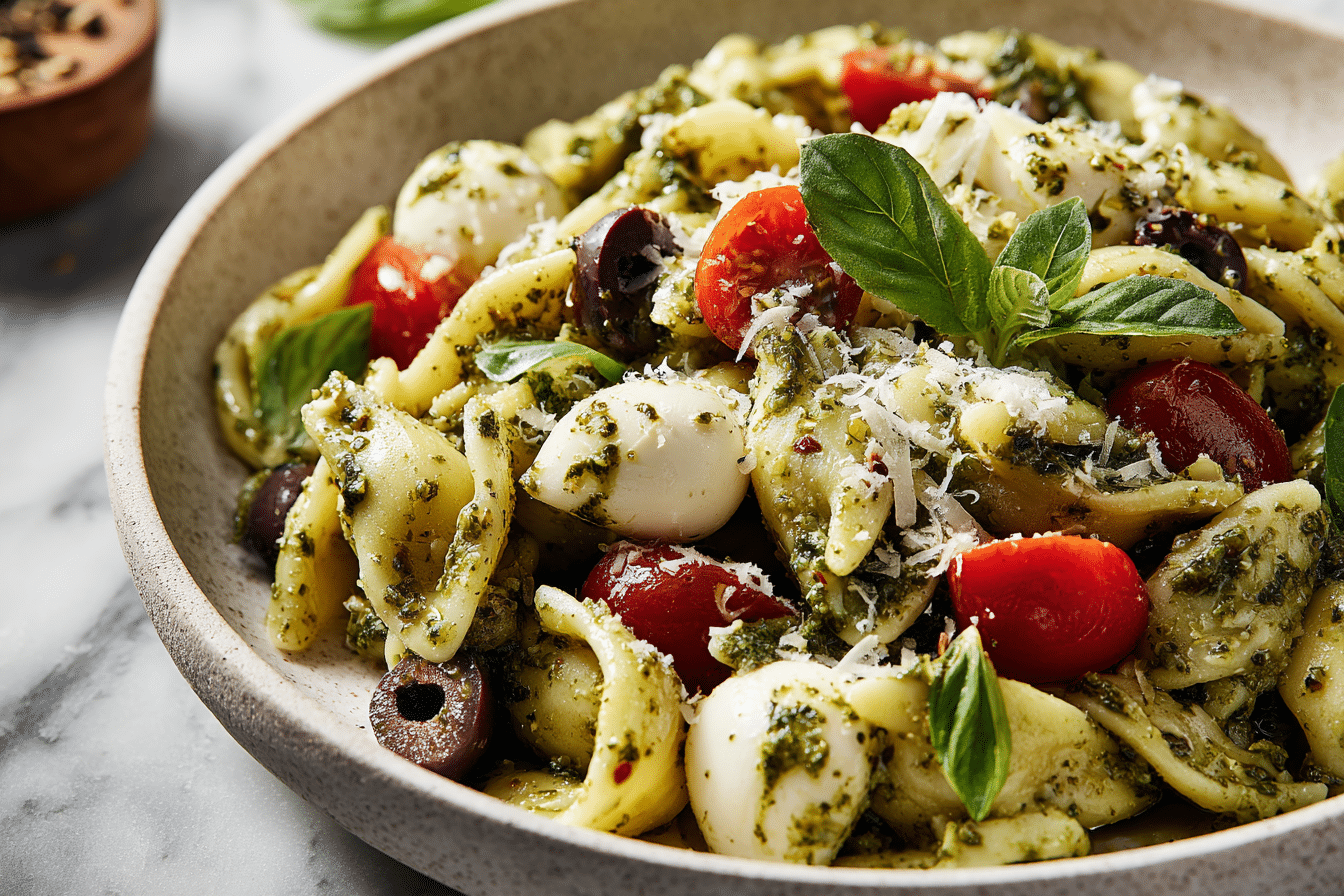
Pesto pasta salad is a vibrant, herb-filled dish that brings together tender pasta, aromatic basil pesto, and crisp vegetables in every bite. It’s a chilled salad that feels satisfying yet light, offering a balance of creamy, savory, and slightly nutty notes. Whether served at a backyard gathering or packed for a weekday lunch, pesto pasta salad delivers consistent flavor and texture.
This dish shines because of its simplicity. With just a handful of ingredients, each component stands out while still blending harmoniously. The pesto coats the pasta beautifully, while fresh vegetables add contrast and crunch. A hint of acidity rounds everything out, preventing the dish from feeling heavy.
Another appealing aspect of pesto pasta salad is its flexibility. It adapts well to seasonal produce and different dietary preferences, making it a dependable option for many occasions. Once prepared, it holds up well in the refrigerator, allowing the flavors to deepen over time.
Ingredients Overview
The foundation of pesto pasta salad starts with pasta, typically short shapes like rotini, fusilli, or penne. These shapes trap the pesto sauce in their ridges and curves, allowing each bite to carry a rich coating of flavor. Cooking the pasta just until tender but still slightly firm helps maintain structure when tossed with dressing.
Pesto is the star ingredient, traditionally made from fresh basil, garlic, pine nuts, Parmesan cheese, and olive oil. It brings a fragrant, herbaceous profile along with a creamy texture. Store-bought pesto works well, though homemade versions often provide a brighter taste.
Vegetables add both texture and color. Cherry tomatoes bring sweetness and juiciness, while cucumbers contribute a refreshing crunch. Red onions introduce a mild sharpness that balances the richness of the pesto. Bell peppers can add subtle sweetness and visual appeal.
Cheese enhances the dish with a salty, creamy element. Mozzarella pearls or crumbled feta are popular choices. Mozzarella keeps things mild and creamy, while feta adds a tangy contrast.
A small amount of olive oil and lemon juice helps loosen the pesto and adds brightness. This combination keeps the salad from feeling dense and allows the flavors to distribute evenly.
For substitutions, walnuts or almonds can replace pine nuts in pesto, and dairy-free cheese alternatives can suit dietary needs. Gluten-free pasta can also be used without sacrificing texture if cooked carefully.
Ingredients
12 ounces rotini pasta
1 cup basil pesto
1 cup cherry tomatoes, halved
1 cup cucumber, diced
1/2 cup red bell pepper, chopped
1/4 cup red onion, finely sliced
1/2 cup mozzarella pearls
1/4 cup grated Parmesan cheese
2 tablespoons olive oil
1 tablespoon lemon juice
1/2 teaspoon salt
1/4 teaspoon black pepper
2 tablespoons fresh basil leaves, chopped
Step-by-Step Instructions
Begin by bringing a large pot of salted water to a rolling boil. Add the rotini pasta and cook according to package instructions until just tender with a slight firmness in the center. This texture prevents the pasta from becoming overly soft once mixed with the dressing. Drain and rinse briefly under cool water to stop the cooking process, then set aside to cool completely.
While the pasta cools, prepare the vegetables. Slice the cherry tomatoes in halves, dice the cucumber into small cubes, and chop the bell pepper into bite-sized pieces. Thinly slice the red onion so it blends evenly without overpowering the dish.
In a large mixing bowl, combine the cooled pasta with the pesto. Stir gently until the pasta is evenly coated. If the mixture feels too thick, add olive oil gradually to loosen the sauce and create a smoother consistency.
Add the prepared vegetables and mozzarella pearls to the bowl. Toss carefully to distribute all ingredients without crushing the softer components. Sprinkle in the grated Parmesan cheese for added depth.
Drizzle lemon juice over the salad and season with salt and black pepper. Mix again, tasting as you go to adjust seasoning if necessary. The lemon juice brightens the overall flavor and balances the richness of the pesto.
Cover the bowl and refrigerate for at least 30 minutes before serving. This resting time allows the flavors to meld together. Before serving, give the salad a gentle stir and sprinkle fresh basil on top for a final touch.
Common mistakes include overcooking the pasta, which leads to a mushy texture, and adding pesto to hot pasta, which can dull its fresh flavor. Cooling the pasta first helps maintain the integrity of the sauce.
Tips, Variations & Substitutions
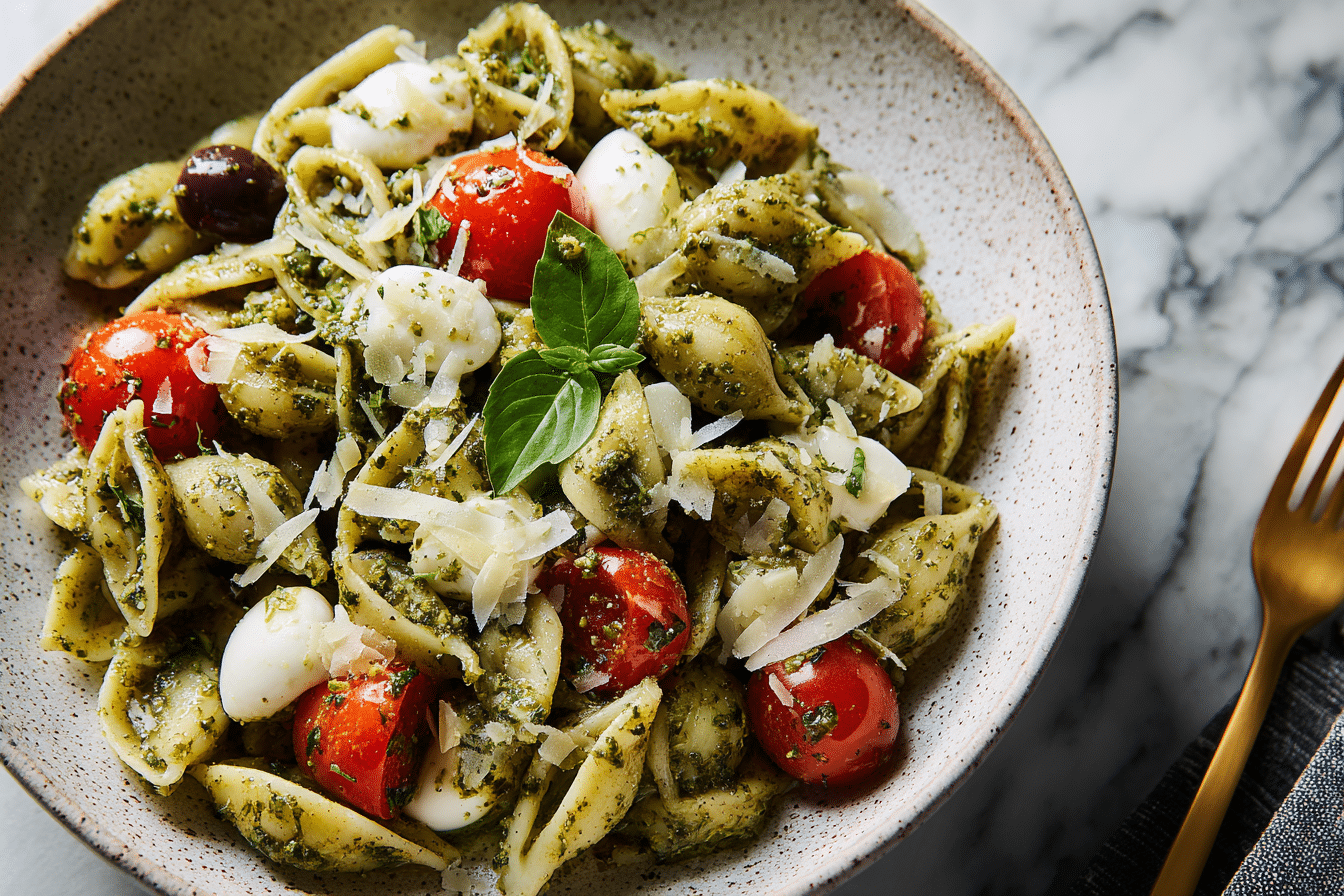
For added protein, grilled chicken, shrimp, or chickpeas can be mixed into the salad. These additions turn the dish into a more filling option without changing its core flavor.
Switching the vegetables allows for variety. Sun-dried tomatoes offer a deeper, slightly tangy taste, while spinach or arugula can introduce leafy freshness. Roasted vegetables such as zucchini or eggplant add a warm, slightly smoky element.
If a lighter version is preferred, reduce the cheese and add extra lemon juice for brightness. A dairy-free pesto can be prepared using nutritional yeast instead of Parmesan.
Whole wheat or legume-based pasta provides additional fiber and a slightly nutty flavor. These alternatives hold up well when combined with pesto and vegetables.
For a creamier texture, a spoonful of Greek yogurt can be stirred into the pesto before mixing. This creates a smoother coating without overwhelming the herb flavor.
Serving Ideas & Occasions
Pesto pasta salad fits perfectly into casual gatherings, picnics, and potlucks. It pairs well with grilled dishes such as chicken, steak, or fish, offering a refreshing contrast to smoky flavors.
As a side dish, it complements sandwiches and wraps, adding a colorful and flavorful element to the plate. It can also stand alone as a light lunch, especially when paired with a simple green salad.
For drinks, sparkling water with citrus or a crisp white beverage pairs nicely, balancing the richness of the pesto. The salad is also suitable for meal preparation, as it stores well and maintains its texture for a couple of days when refrigerated.
Nutritional & Health Notes
Pesto pasta salad provides a balanced combination of carbohydrates, healthy fats, and moderate protein. The olive oil and nuts in pesto contribute heart-friendly fats, while vegetables add fiber and essential nutrients.
The dish can be adjusted to suit different dietary preferences. Reducing cheese lowers saturated fat content, while adding more vegetables increases fiber and micronutrients.
Portion control plays a role, as pesto is naturally rich due to its oil and nut content. Pairing the salad with lean protein or additional vegetables can create a more balanced meal.
Using fresh ingredients contributes to both flavor and nutritional value, making this salad a practical option for everyday meals.
FAQs
Can pesto pasta salad be prepared ahead of time?
Yes, pesto pasta salad can be prepared several hours or even a day in advance. In fact, allowing it to rest in the refrigerator helps the flavors blend more fully. Store it in an airtight container and stir before serving. If the pasta absorbs too much dressing, add a small amount of olive oil or extra pesto to refresh the texture.
How long does pesto pasta salad last in the refrigerator?
When stored properly in a sealed container, pesto pasta salad typically stays fresh for up to three days. The vegetables may soften slightly over time, but the overall flavor remains enjoyable. Stirring before serving helps redistribute the dressing evenly.
Can I freeze pesto pasta salad?
Freezing is not recommended for pesto pasta salad. The pasta and fresh vegetables tend to lose their texture once thawed, resulting in a softer consistency. It is best enjoyed fresh or within a few days of preparation.
What type of pasta works best for this recipe?
Short pasta shapes like rotini, fusilli, or penne work particularly well. Their ridges and curves hold onto the pesto, allowing for even coating. Long pasta varieties are less practical for this style of salad.
How can I keep the pasta from sticking together?
After cooking, rinsing the pasta briefly with cool water helps remove excess starch and stops further cooking. Tossing it with a small amount of olive oil while cooling also prevents sticking and keeps the texture pleasant.
Can I use store-bought pesto?
Store-bought pesto is a convenient option and works well in this recipe. Choosing a high-quality version with simple ingredients often results in a more balanced flavor. Homemade pesto can offer a fresher taste if time allows.
What proteins can be added to this salad?
Grilled chicken, shrimp, or even tofu can be added to increase protein content. These options blend well with the pesto flavor and turn the salad into a more filling dish suitable for lunch or dinner.
PrintPESTO PASTA SALAD: 7 Amazing Fresh Flavor Ideas
A fresh and herb-filled pasta salad featuring basil pesto, tender pasta, and crisp vegetables, perfect for gatherings or light meals.
Ingredients
12 ounces rotini pasta
1 cup basil pesto
1 cup cherry tomatoes, halved
1 cup cucumber, diced
1/2 cup red bell pepper, chopped
1/4 cup red onion, finely sliced
1/2 cup mozzarella pearls
1/4 cup grated Parmesan cheese
2 tablespoons olive oil
1 tablespoon lemon juice
1/2 teaspoon salt
1/4 teaspoon black pepper
2 tablespoons fresh basil leaves, chopped
Instructions
- Cook pasta in salted boiling water until just tender, then drain and cool.
- Prepare vegetables by chopping tomatoes, cucumber, bell pepper, and onion.
- In a large bowl, combine cooled pasta with pesto and mix gently.
- Add vegetables and mozzarella, then toss to combine.
- Stir in olive oil and lemon juice for balance.
- Season with salt and pepper, then mix again.
- Chill for 30 minutes before serving and garnish with fresh basil.
Notes
Cool pasta fully before adding pesto for better flavor. Adjust consistency with olive oil if needed.