
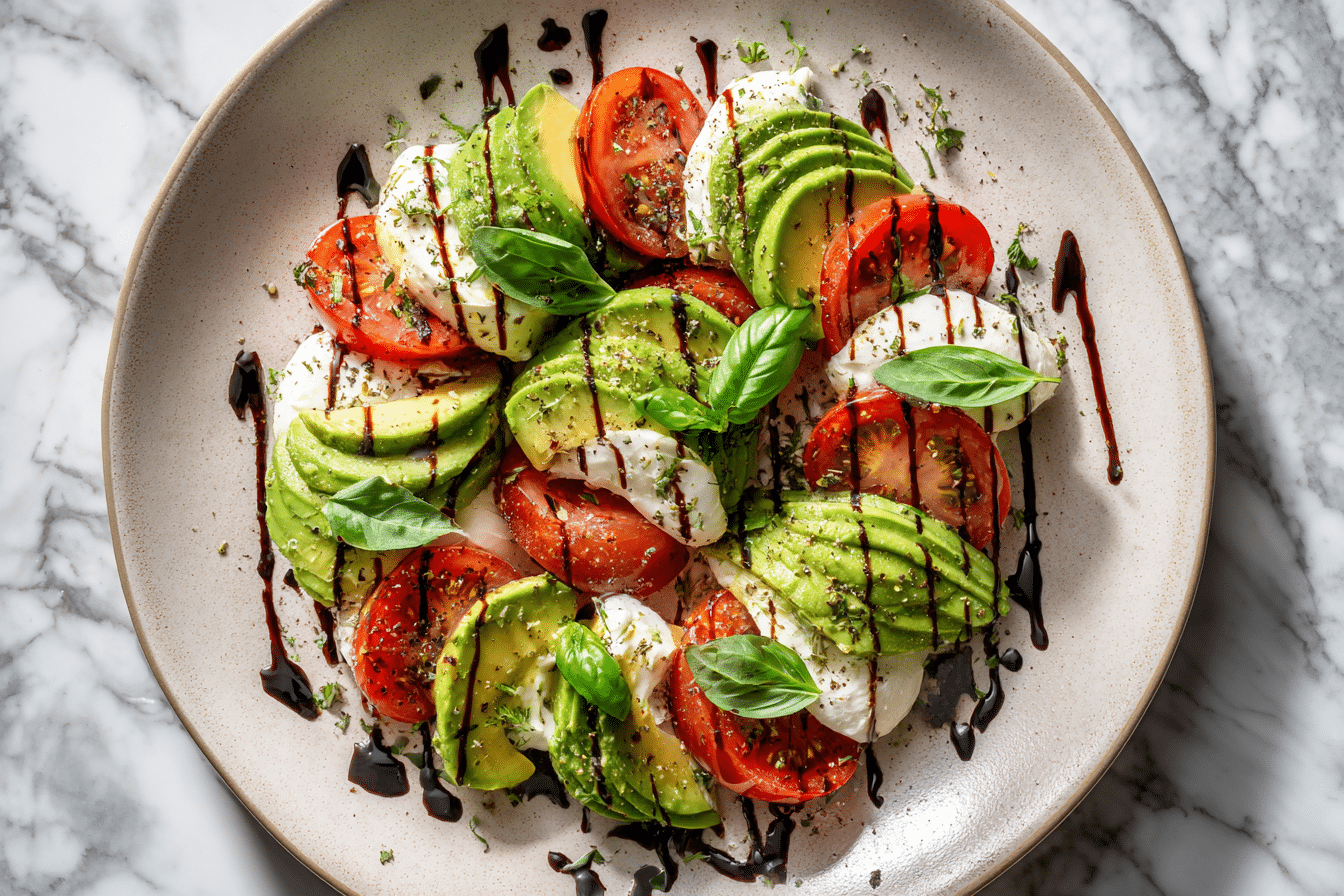
Light Avocado Caprese Salad 5 Simple Fresh Recipes
A bowl centered on ripe tomato slices, creamy avocado, and soft mozzarella offers a calm balance of texture and flavor. Light Avocado Caprese Salad follows a classic arrangement with a gentle twist from avocado, creating a smooth contrast against juicy tomatoes and tender cheese.
This dish fits well in casual meals, shared plates, or quick midday portions. Basil leaves bring an aromatic lift that ties the components together without heaviness.
A light dressing of olive oil and a mild acid adds structure to the salad while keeping each ingredient distinct. The combination stays flexible, allowing adjustments based on available produce.
The result is a layered salad that feels composed yet relaxed, relying on freshness of ingredients rather than complex preparation steps.
Ingredients Overview
Tomatoes serve as the core of this salad. Varieties such as Roma, heirloom, or cherry tomatoes each provide different levels of sweetness and juiciness. Firm tomatoes hold shape well when sliced, while softer varieties release more natural juice that blends with the dressing.
Avocado introduces a creamy texture that softens the sharper notes from tomatoes and basil. A ripe avocado should yield slightly under gentle pressure, offering a smooth interior that slices or cubes cleanly.
Fresh mozzarella contributes a mild dairy richness. It is typically used in small balls or sliced portions. Its soft texture balances the firmness of tomatoes and the creaminess of avocado.
Basil leaves add aromatic depth. Their slightly pepper-like character enhances the overall profile of the salad without overpowering the other ingredients. Whole leaves or torn pieces distribute fragrance evenly.
Olive oil forms the base of the dressing. A light drizzle coats the ingredients and helps carry flavor across the salad. A mild balsamic reduction or vinegar can be used for subtle acidity.
Salt and black pepper provide simple seasoning that highlights natural flavors without masking them. A light hand keeps the salad balanced.
Optional additions include cucumber slices for extra crunch or a small amount of red onion for sharper contrast. These additions should remain minimal so the core ingredients remain central.
Ingredients
2 medium ripe tomatoes, sliced
1 ripe avocado, sliced or cubed
6 ounces fresh mozzarella, sliced or torn
1/2 cup fresh basil leaves
2 tablespoons olive oil
1 tablespoon balsamic vinegar or reduction
1/4 teaspoon salt
1/8 teaspoon black pepper
1/2 small cucumber, sliced (optional)
2 tablespoons red onion, thinly sliced (optional)
Step-by-Step Instructions
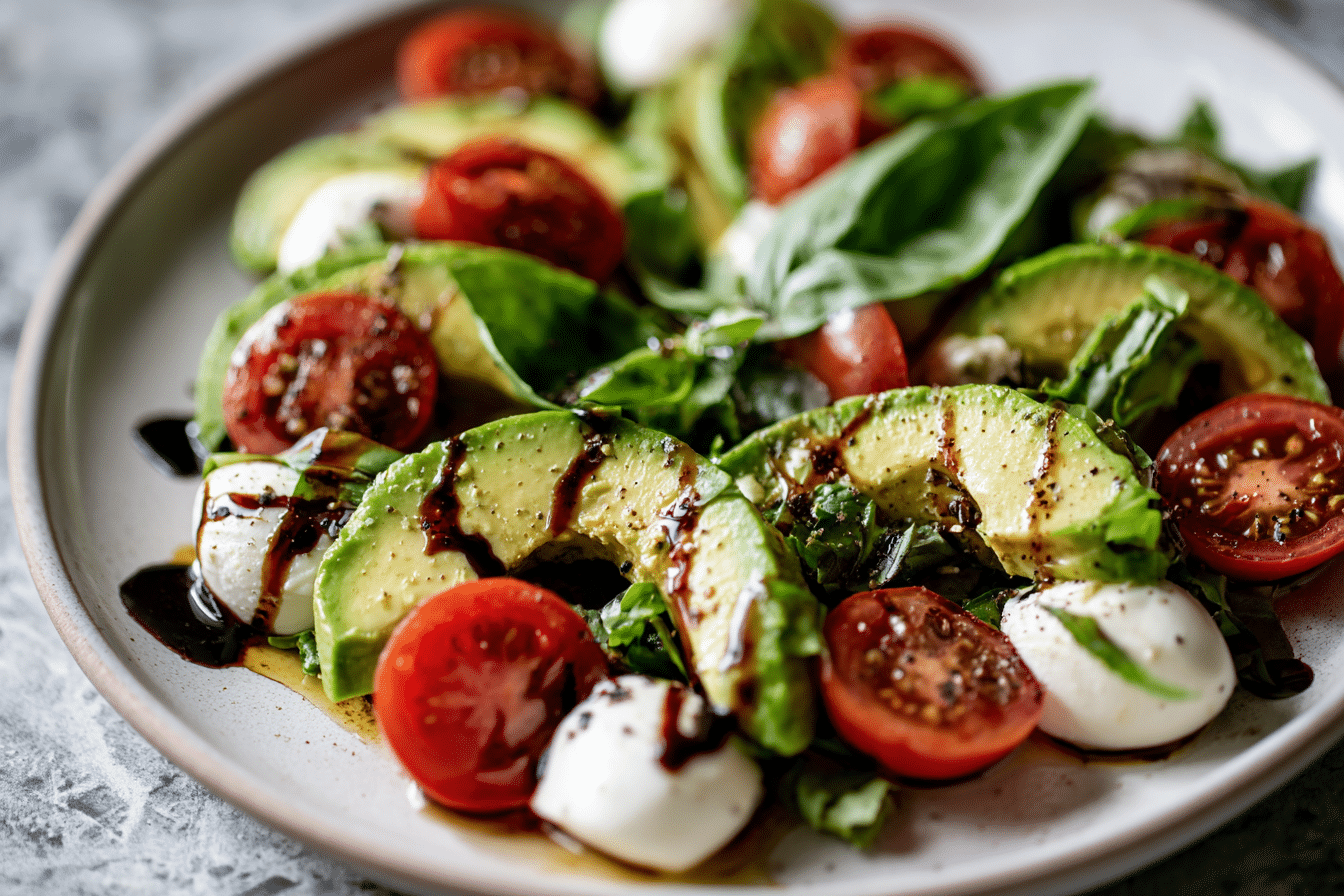
Start by preparing the tomatoes. Rinse them under cool water and slice them into even rounds or wedges depending on preference. Place them on a flat serving plate or shallow bowl to form the base layer.
Slice the avocado in half, remove the pit, and carefully remove the skin. Cut the avocado into slices or cubes. Arrange these pieces around and between the tomato slices so the textures alternate across the plate.
Prepare the mozzarella by slicing it into even pieces or gently tearing it into smaller portions. Distribute it evenly across the tomatoes and avocado so each portion contains a mix of components.
Wash the basil leaves and pat them dry. Leave them whole or tear them slightly before placing them across the salad. This helps release aroma without overwhelming the other ingredients.
If using cucumber or red onion, slice them thinly and distribute sparingly across the dish. These elements should remain subtle additions rather than dominant features.
Drizzle olive oil evenly across the entire salad. Follow with balsamic vinegar or a light reduction, ensuring coverage remains balanced rather than concentrated in one area.
Sprinkle salt and black pepper lightly across the surface. Adjust seasoning based on the natural sweetness of the tomatoes and creaminess of the avocado.
Allow the salad to rest briefly so flavors settle together. Serve at room temperature so textures remain soft and balanced.
Avoid pressing or stirring heavily, as this can break the structure of the avocado and mozzarella. Gentle arrangement preserves visual layering and texture contrast.
Tips, Variations & Substitutions
Different tomato varieties can shift the character of the salad. Cherry tomatoes offer concentrated sweetness, while heirloom types bring a broader flavor range. Mixing varieties adds visual contrast.
For a sharper flavor profile, a small amount of red onion can be included. It should be sliced thinly so it blends smoothly without dominating the dish.
A citrus-based dressing can replace balsamic vinegar. Lemon juice or lime juice offers a brighter tone that pairs well with avocado and basil.
Grilled corn kernels or roasted peppers can be added for extra texture. These elements should remain secondary so the main trio of tomato, avocado, and mozzarella stays central.
For a dairy-free version, mozzarella can be omitted or replaced with soft plant-based alternatives. Avocado already provides a creamy base that supports the structure of the salad.
Herb variations are also possible. While basil remains traditional, small amounts of mint or parsley can shift the aromatic profile in subtle ways.
Olive oil quality affects overall flavor. A mild or medium variety works well so it does not overpower delicate ingredients.
Serving Ideas & Occasions
Light Avocado Caprese Salad fits well alongside grilled vegetables, roasted chicken, or simple pasta dishes. It also pairs with crusty bread for a more filling plate.
It suits casual meals, shared platters, and relaxed gatherings. Its visual arrangement also fits well on larger serving boards where multiple small dishes are presented together.
Chilled beverages such as sparkling water, herbal tea, or light fruit drinks pair well with its soft textures and mild seasoning.
It can be prepared shortly before serving to maintain structure and color. Ingredients hold their texture best when assembled close to serving.
Nutritional & Health Notes
This salad contains a mix of healthy fats from avocado and olive oil, along with vitamins from tomatoes and basil. Mozzarella contributes protein and calcium.
Avocado provides a creamy texture along with monounsaturated fats, while tomatoes add hydration and natural plant compounds.
Olive oil supports satiety through its fat content. When used in moderate amounts, it complements the other ingredients without heaviness.
Portion size can be adjusted easily depending on dietary preference. Increasing vegetables and reducing cheese creates a lighter profile, while adding more mozzarella increases protein content.
FAQs
What type of avocado works well in this salad?
Avocados with a slightly soft texture and even green interior work well for this salad. They should hold shape when sliced while still offering a creamy bite. If the avocado feels too firm, slicing becomes difficult and texture becomes dense. If overly soft, it can lose structure when arranged with tomatoes and mozzarella. A balanced ripeness level helps maintain clean presentation and smooth texture contrast throughout the dish.
Can this salad be prepared ahead of serving?
Preparation ahead of serving is possible, but ingredients should remain separate until close to serving. Tomatoes, avocado, and mozzarella can be sliced and stored individually. Basil should stay dry and whole until final assembly. Combining ingredients too early may lead to softening of textures and excess moisture release. Final arrangement shortly before serving helps preserve structure and visual clarity.
Which tomato varieties suit this salad most?
Firm tomatoes such as Roma or vine-ripened types hold shape well and provide balanced moisture. Cherry tomatoes offer concentrated sweetness and work well when halved. Heirloom tomatoes introduce varied color and flavor profiles, creating visual contrast. Mixing two or more types adds depth without altering the simple structure of the salad.
Can a different cheese replace mozzarella?
Mozzarella can be replaced with soft cheeses such as burrata or fresh ricotta in small portions. These alternatives offer a creamier texture but may introduce more moisture. If a firmer cheese is preferred, mild feta can be used, though it introduces a saltier profile that shifts the overall balance of the salad.
How should avocado be sliced for best presentation?
Avocado can be sliced into even wedges or small cubes depending on presentation style. Wedges maintain structure and create a layered visual effect alongside tomato slices. Cubes distribute more evenly throughout the salad and allow more uniform bites. In both cases, clean slicing helps maintain shape and prevents uneven texture.
Is it possible to skip olive oil?
Olive oil can be reduced or omitted if preferred. Without it, the salad relies more on natural moisture from tomatoes and avocado. A small amount of citrus juice can be used instead to add brightness. However, olive oil helps carry flavor and supports smoother texture distribution across ingredients.
How can basil be replaced if unavailable?
If basil is unavailable, parsley or arugula can be used in small amounts. Parsley offers a mild herbal note, while arugula introduces a slightly pepper-like tone. Both alternatives change the aromatic profile but still complement tomato and avocado without overwhelming the dish.
PrintLight Avocado Caprese Salad is a fresh and simple dish made with tomatoes, avocado, mozzarella, basil, and olive oil.
Ingredients
2 cups cherry tomatoes
1 avocado
1 1/2 cups mozzarella
1/4 cup basil
2 tablespoons olive oil
1 tablespoon balsamic glaze
1/2 teaspoon salt
1/4 teaspoon pepper
Instructions
- Slice tomatoes, avocado, and mozzarella.
- Arrange ingredients in a bowl or plate.
- Add fresh basil.
- Drizzle olive oil and balsamic glaze.
- Season and serve fresh.
Notes
Best served immediately for freshness. Add avocado just before serving.
Prep Time: 10 minutes
Cook Time: 0 minutes
Total Time: 10 minutes
Yield: 2–4 servings
Calories: 290 per serving
Course: Salad
Cuisine: Italian-inspired