
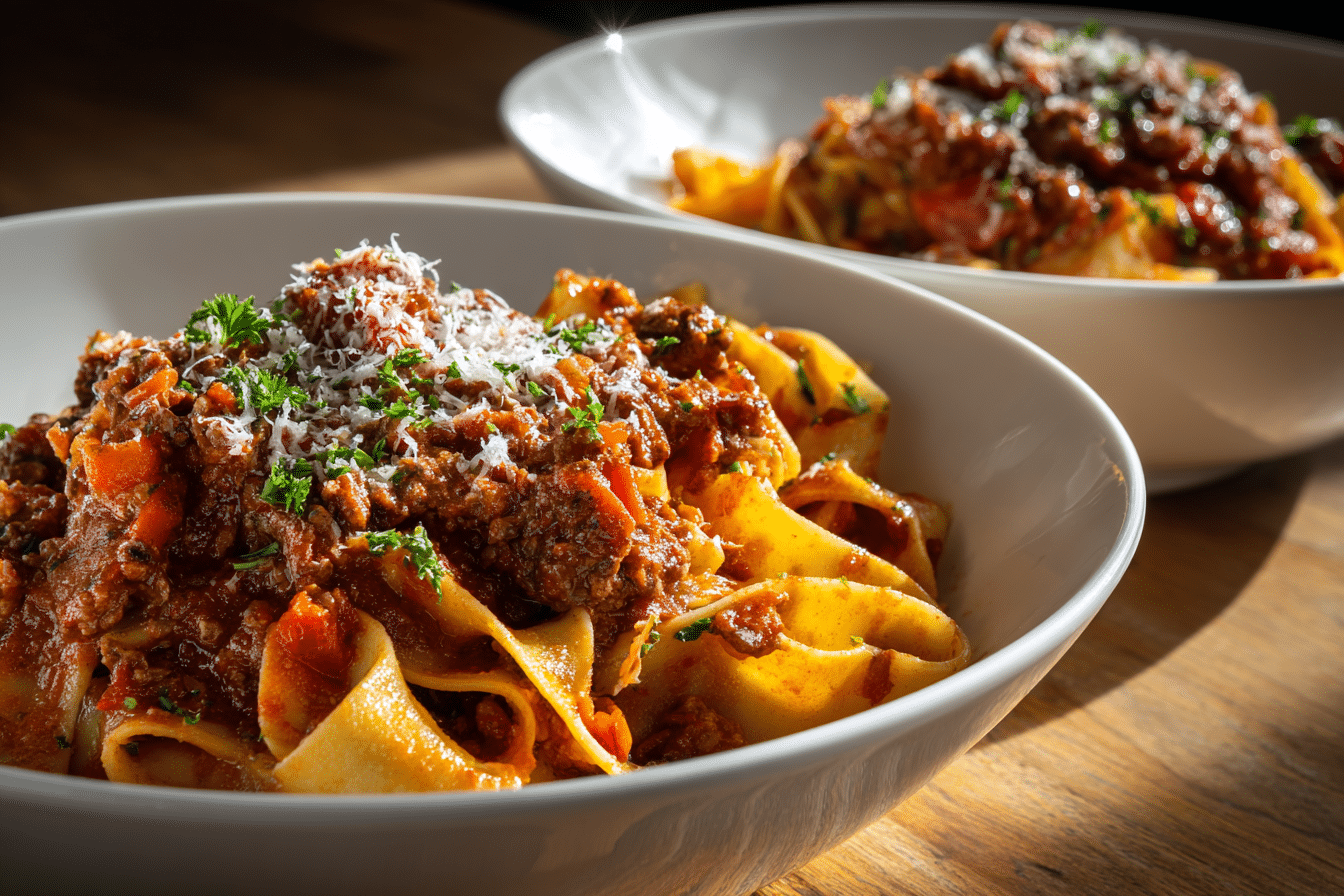
Few dishes capture the soul of Italian cooking like Beef Bolognese Sauce. Deeply flavorful, silky, and slow-simmered to perfection, this traditional meat sauce originates from Bologna, the culinary capital of Emilia-Romagna in northern Italy.
Authentic Bolognese isn’t just a meat sauce — it’s a labor of love, layered with finely chopped aromatics, quality ground beef, and a slow reduction of wine, tomato, and milk. It’s rich without being heavy, rustic yet refined. When served over tagliatelle or tucked into fresh lasagna sheets, it becomes the kind of comforting meal that lingers in memory long after the last bite.
Whether you’re cooking for Sunday dinner or preparing ahead for the week, this sauce is a hearty, flavorful staple that turns any pasta dish into something extraordinary.
Ingredients Overview
A true Italian Bolognese relies on patience and high-quality ingredients. Here’s a breakdown of what you’ll need — and why each component matters.
Ground Beef (80/20)
Choose a well-marbled ground beef with 20% fat for a tender, flavorful base. The fat slowly renders during cooking, creating a luscious texture.
Alternative: Blend with ground pork or veal for extra depth and authenticity, or substitute with ground turkey for a lighter version.
Onion, Carrot & Celery (Soffritto)
This aromatic trio forms the foundation. Diced finely and sautéed gently in olive oil or butter, they offer sweetness, earthiness, and a subtle backbone to the sauce.
Tip: Dice as small as possible for a smoother texture that melts into the meat.
Tomato Paste & Crushed Tomatoes
Tomato paste adds richness and umami, while a small amount of crushed tomatoes provides balance without overwhelming the meat.
Authentic note: Traditional Bolognese isn’t overly “tomatoey.” Use a light hand.
Dry White or Red Wine
Wine helps deglaze the pan and introduces acidity that balances the richness. White wine is more traditional in Bologna, but red adds a bold depth.
Substitution: For non-alcoholic versions, use beef stock with a splash of red wine vinegar.
Whole Milk or Heavy Cream
A defining feature of classic Bolognese. Milk softens the acidity of tomatoes and tenderizes the meat, giving the sauce its velvety finish.
Dairy-free option: Use unsweetened oat or cashew milk, though richness may vary.
Garlic, Nutmeg & Bay Leaf
Garlic adds warmth, nutmeg offers a hint of spice, and bay leaf infuses subtle herbaceous depth during the long simmer.
Salt & Freshly Ground Black Pepper
Season gradually during cooking, not just at the end. Black pepper enhances the beef’s flavor beautifully.
Step-by-Step Instructions
A slow-simmered Bolognese is all about timing, layering, and low heat. Here’s how to make it the Italian way.
-
Start with the soffritto.
Heat olive oil (or a mix of oil and butter) in a large Dutch oven over medium heat. Add the finely chopped onion, carrot, and celery. Sauté slowly for 8–10 minutes until soft and fragrant but not browned. -
Brown the beef.
Add ground beef to the pan, breaking it up with a wooden spoon. Cook until browned and most of the moisture has evaporated, about 10 minutes. Patience here prevents the meat from steaming. -
Deglaze with wine.
Pour in the wine and let it simmer until almost fully reduced. This step brings complexity and lifts the fond from the pan — those golden bits are full of flavor. -
Add tomato paste and crushed tomatoes.
Stir in tomato paste and let it toast slightly, darkening in color. Then add crushed tomatoes and bay leaf. Simmer gently for 5 minutes. -
Pour in milk.
Slowly stir in the milk or cream. It may look strange at first, but it creates a silky, mellow sauce once fully integrated. -
Simmer low and slow.
Reduce the heat to low and partially cover. Let the sauce gently simmer for 1.5 to 2.5 hours, stirring occasionally. It should thicken into a rich, cohesive ragù. -
Season to taste.
Add a pinch of nutmeg, then salt and pepper as needed. Remove the bay leaf before serving. -
Serve hot.
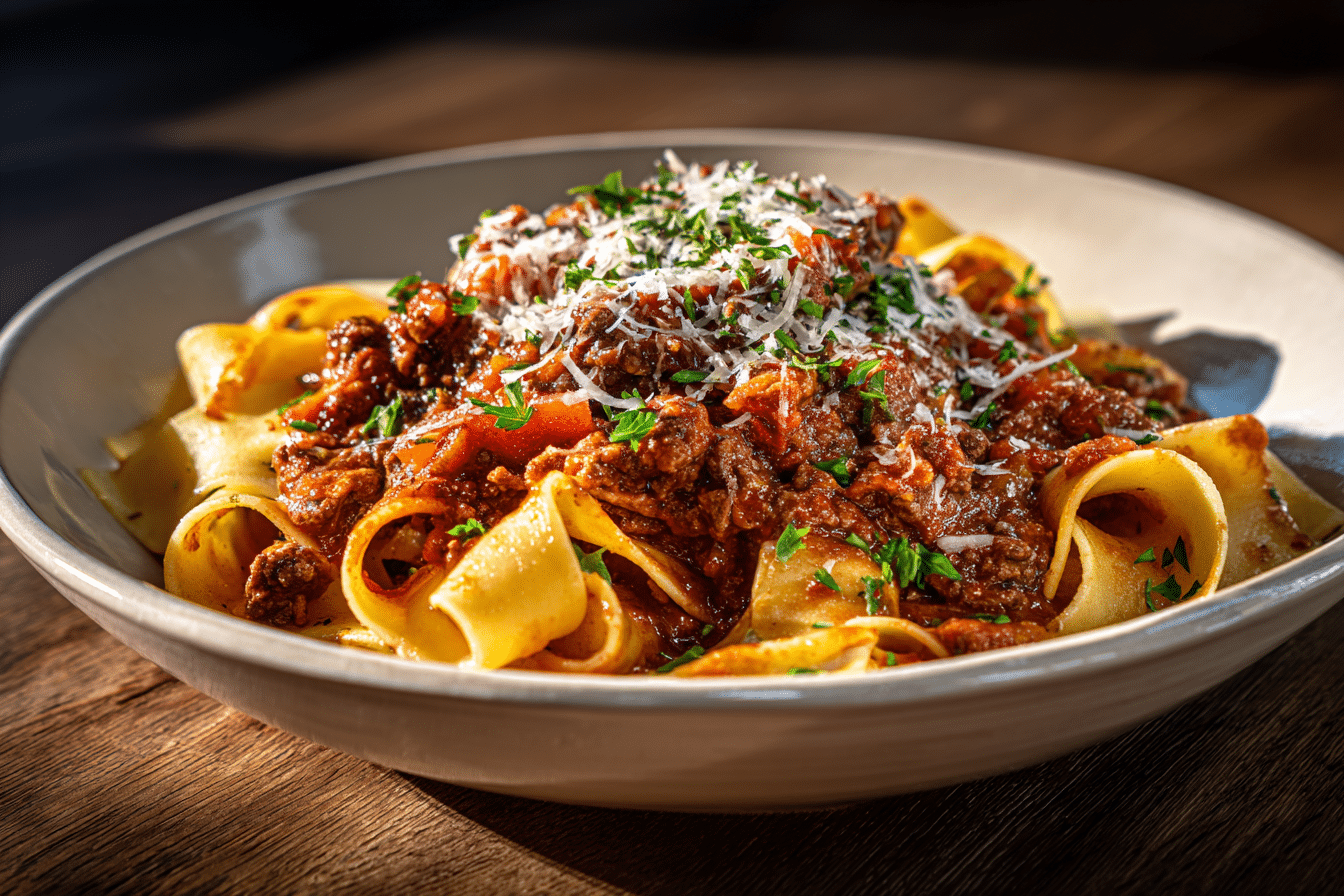
Toss with wide pasta like tagliatelle or pappardelle, or layer into homemade lasagna. Finish with freshly grated Parmigiano-Reggiano.
Tips, Variations & Substitutions
Chef’s Tips:
-
Use a heavy pot (like a Dutch oven) for even heat and better flavor development.
-
Cook slowly. A rushed Bolognese lacks depth. Low heat = better results.
-
Don’t oversalt early. Wait until the sauce has reduced before final seasoning.
Regional Variations:
-
Neapolitan ragù includes more tomato and sometimes sausage.
-
Tuscan versions may add pancetta or red pepper flakes for a spicier bite.
Dietary Options:
-
Gluten-free: Serve over gluten-free pasta or polenta.
-
Low-carb: Spoon over roasted zucchini noodles or cauliflower mash.
-
Dairy-free: Sub the milk with cashew cream or unsweetened oat milk.
 Serving Ideas & Occasions
This Bolognese is rich, savory, and perfect for:
-
Sunday family dinners with tagliatelle and crusty Italian bread.
-
Date nights with a bottle of Chianti and shaved Parmigiano.
-
Meal prep — it freezes beautifully and tastes even better the next day.
-
Lasagna al Forno — layer it with béchamel and pasta for a true comfort food classic.
Try serving it with:
-
A crisp green salad dressed with lemon and olive oil.
-
Garlic-roasted broccolini or sautéed spinach.
-
Polenta or mashed potatoes as a rustic alternative to pasta.
Nutritional & Health Notes
Bolognese sauce is surprisingly balanced. Thanks to the soffritto and milk, it offers fiber and calcium, while the beef provides a strong source of protein, iron, and B12.
To keep it leaner:
-
Use grass-fed beef or mix in ground turkey.
-
Drain excess fat before adding wine.
-
Opt for milk instead of cream.
Portion control is key — serve about ¾ cup of sauce per pasta portion. Pair with whole-grain or legume-based pasta for added fiber.
FAQs
Q1: Can I make Bolognese ahead of time?
Yes. In fact, it’s even better the next day. Let it cool, then refrigerate for up to 4 days or freeze for up to 3 months. Reheat gently on the stove with a splash of broth or water.
Q2: What pasta is best with Bolognese?
Traditionally, it’s served with tagliatelle, a wide, egg-based pasta. Pappardelle or fettuccine work beautifully, too. Avoid thin noodles like spaghetti — they don’t hold the sauce as well.
Q3: Can I use ground pork or veal instead of beef?
Absolutely. Many Italian families use a blend of beef, pork, and veal for deeper flavor. Pork adds richness, and veal brings tenderness.
Q4: Why is milk added to Bolognese sauce?
Milk tenderizes the meat and cuts the acidity of tomatoes. It creates the sauce’s signature velvety finish and sets it apart from a typical meat sauce.
Q5: Is it okay to use canned tomatoes?
Yes, but choose low-acid varieties like San Marzano or opt for crushed tomatoes. Don’t overdo it — traditional Bolognese only uses a small amount of tomato.
Q6: How long should Bolognese simmer?
At least 90 minutes, but 2 to 3 hours is ideal. Slow simmering builds depth, thickens the sauce, and allows the flavors to fully develop.
Q7: Can I make it in a slow cooker?
Yes. After browning the beef and aromatics, transfer to a slow cooker with the remaining ingredients. Cook on low for 6–8 hours. Finish on the stove to reduce if needed.
Authentic Italian Beef Bolognese Sauce – A Rich, Slow-Simmered Classic
A rich and authentic Italian Bolognese sauce made with ground beef, aromatics, tomato, wine, and milk. Slow-simmered for deep flavor and velvety texture.
- Prep Time: 15 minutes
- Cook Time: 2.5 hours
- Total Time: 2 hours 45 minutes
- Yield: 6 servings 1x
Ingredients
-
2 tbsp olive oil or butter
-
1 medium onion, finely diced
-
1 carrot, finely diced
-
1 celery stalk, finely diced
-
1 lb ground beef (80/20)
-
½ cup dry white or red wine
-
2 tbsp tomato paste
-
¾ cup crushed tomatoes
-
1 cup whole milk or heavy cream
-
2 garlic cloves, minced
-
1 bay leaf
-
Pinch of ground nutmeg
-
Salt and black pepper, to taste
-
Fresh grated Parmigiano-Reggiano, for serving
Instructions
-
Heat oil in a large pot. Add onion, carrot, and celery; sauté 8–10 minutes until soft.
-
Add ground beef; cook until browned and liquid evaporates, about 10 minutes.
-
Deglaze with wine; simmer until reduced.
-
Stir in tomato paste and cook 2 minutes. Add crushed tomatoes and bay leaf.
-
Pour in milk and bring to a gentle simmer.
-
Reduce heat to low, partially cover, and simmer 2–3 hours, stirring occasionally.
-
Season with salt, pepper, and nutmeg. Discard bay leaf.
-
Serve with pasta and grated cheese.
Notes
-
Substitute ground beef with a blend of pork and veal for added richness.
-
Freeze leftovers in airtight containers for up to 3 months.
-
Ideal for pasta, lasagna, or polenta.