
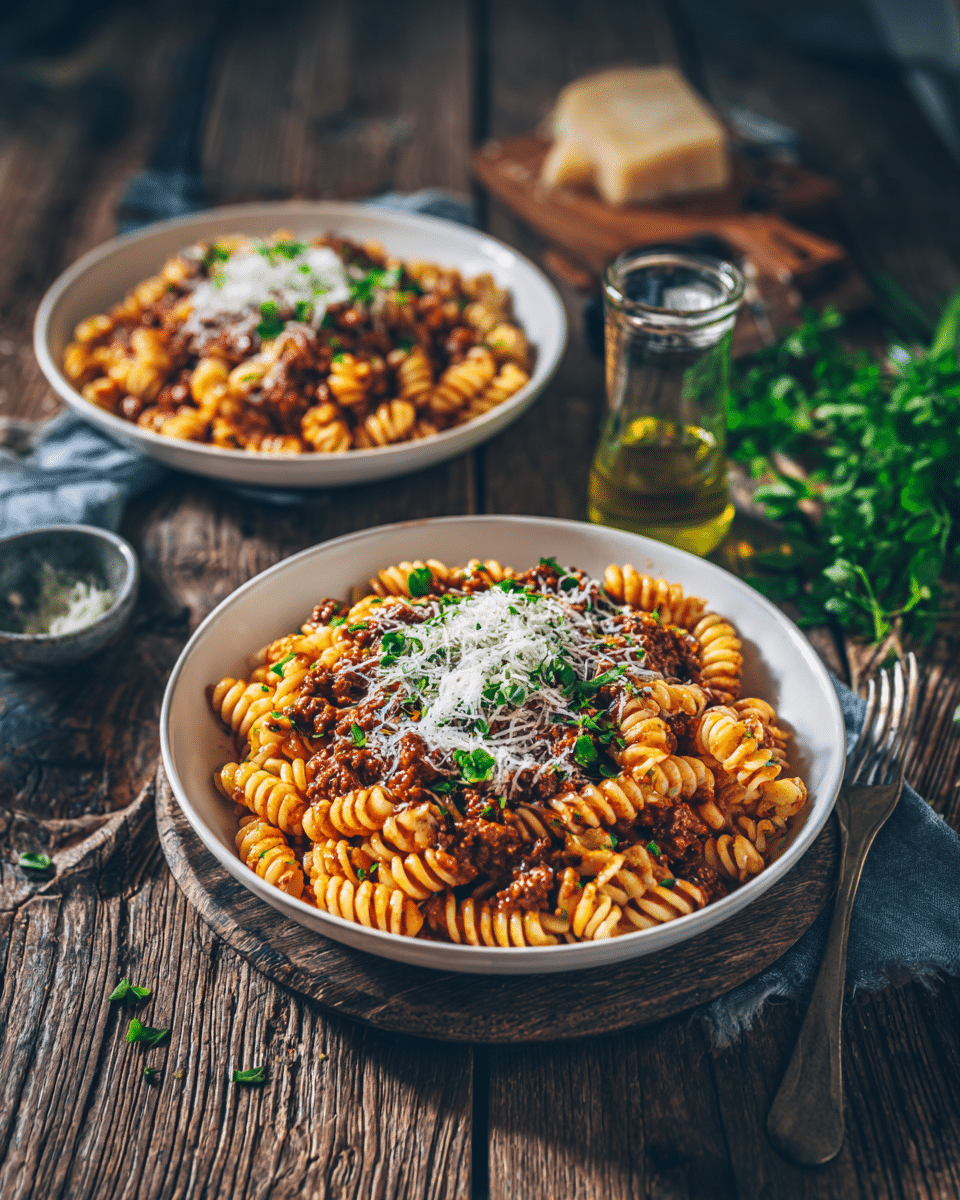
Few sauces capture the essence of traditional Italian comfort like a slow-cooked Beef Bolognese. This hearty meat sauce has its roots in Bologna, Italy, where it’s known as “Ragù alla Bolognese.” A true Bolognese isn’t simply meat and tomatoes—it’s a delicate, savory blend of ground beef, aromatic vegetables, wine, milk, and tomato paste, slowly simmered into a deeply rich and complex sauce.
Unlike the quick tomato sauces often labeled “Bolognese” abroad, the authentic version is less about acidity and more about depth. With just the right balance of fat, sweetness, and umami, a traditional beef Bolognese clings to ribbons of tagliatelle or nests beautifully inside a lasagna.
This article takes you through the origins, ingredients, steps, and tips to prepare a true Italian Beef Bolognese sauce at home—with expert detail and culinary care.
Ingredients Overview: What Makes Bolognese So Rich and Complex?
Each element of Bolognese has a purpose, and the final sauce is greater than the sum of its parts. Here’s a breakdown of the essential ingredients and their roles:
Ground Beef (80/20 or 85/15)
The beef forms the heart of the sauce. Choose ground chuck with some fat—this adds richness and helps the meat stay tender after hours of cooking. Leaner cuts risk drying out or becoming crumbly.
Aromatic Base (Onion, Celery, Carrot)
This combination is known as soffritto in Italian cuisine. It provides a savory-sweet background flavor that’s foundational in many slow-cooked dishes. The finely diced vegetables melt into the sauce, infusing it with earthy notes.
Tomato Paste
Unlike tomato sauce or crushed tomatoes, paste adds depth and concentration without overwhelming acidity. Traditional Bolognese uses just enough for balance.
Dry White Wine
White wine helps deglaze the pan after browning the meat and vegetables. It lifts up the browned bits (called fond) and adds acidity and aromatic complexity.
Whole Milk
Adding milk might surprise some cooks, but it’s essential. Milk softens the meat and rounds out the acidity from the wine and tomato paste. It also lends a subtle sweetness and creamy texture.
Beef Stock or Broth
A splash of stock boosts the meaty intensity and keeps the sauce moist as it simmers. Homemade or low-sodium versions work best to control saltiness.
Olive Oil and Butter
This combo supports both sautéing and richness. Butter adds creaminess while olive oil handles higher heat during the initial browning.
Bay Leaf and Nutmeg
A traditional Bolognese includes one or both. Bay leaf adds floral, herbal undertones, and a grating of nutmeg contributes warmth.
Step-by-Step Instructions: How to Make Authentic Beef Bolognese Sauce
Making a real Bolognese takes time—but every stage adds nuance. Here’s how to build a sauce that would make a Bologna nonna proud.
1. Prepare Your Soffritto
Finely chop:
-
1 medium yellow onion
-
1 medium carrot
-
1 celery stalk
Heat 2 tablespoons of olive oil and 2 tablespoons of unsalted butter in a heavy-bottomed pot or Dutch oven over medium heat. Add the vegetables and cook slowly for 8–10 minutes until softened and translucent but not browned.
2. Brown the Beef
Add 1 pound of ground beef (80/20) to the pot. Season lightly with salt and break the meat up with a spoon. Let it brown slowly for 10–15 minutes. The goal isn’t to sear the meat hard, but to develop a gentle caramelization.
3. Deglaze with White Wine
Pour in ½ cup dry white wine, scraping the bottom of the pan to release flavorful browned bits. Simmer until most of the liquid has evaporated, about 5–7 minutes.
4. Stir in Tomato Paste
Add 2 tablespoons tomato paste. Stir to coat the beef and cook for 2–3 minutes to deepen its flavor. It should turn a darker, rustier shade.
5. Add Milk and Simmer
Pour in ¾ cup whole milk, a little at a time, stirring constantly. Allow it to simmer gently until absorbed—about 10 minutes. Add a small grating of fresh nutmeg here.
6. Add Broth and Bay Leaf
Add 1 cup of beef broth or stock and 1 bay leaf. Bring to a gentle simmer, then reduce heat to low.
7. Slow Simmer (The Magic Step)
Let the sauce simmer uncovered for 2 to 3 hours, stirring occasionally. The liquid should reduce slowly, and the texture should become thick and luscious. If the sauce dries out too much, add a splash of broth or water.
8. Final Seasoning
Taste the sauce and adjust salt and pepper. Remove the bay leaf before serving.
Tips, Variations, and Substitutions
Chef’s Tips:
-
Low and slow is key: Rushing the simmering process will result in a flat sauce.
-
Use a wide pot: A larger surface area allows for better evaporation and caramelization.
-
Don’t oversalt early: Wait until the end for the final seasoning since broth reduces and concentrates.
Variations:
-
Pancetta: Add 2–3 oz of finely diced pancetta to the soffritto for even more depth.
-
Veal or Pork: Swap part of the beef with ground pork or veal for a softer, sweeter flavor.
-
Tomato Addition: Some regional versions add a small amount of crushed tomatoes or passata, but don’t overdo it—it’s not a tomato sauce.
Dietary Substitutions:
-
Lactose-Free: Use lactose-free whole milk or a rich plant milk like unsweetened oat.
-
Gluten-Free: Pair it with gluten-free pasta or polenta.
 Serving Ideas & Occasions
Bolognese is incredibly versatile and serves as the cornerstone of many Italian favorites:
-
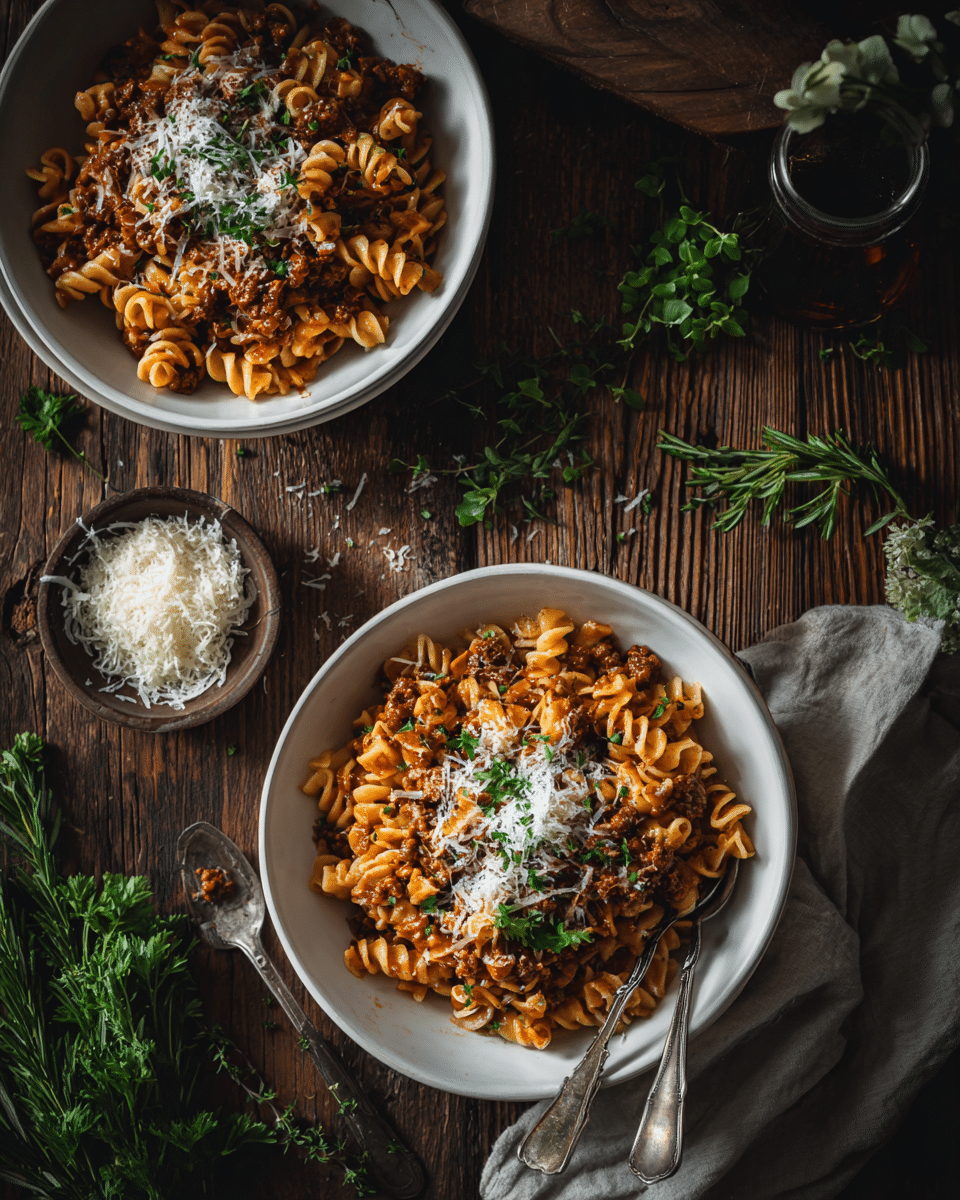
With Tagliatelle: The traditional choice in Bologna. Its wide ribbons hold the sauce beautifully.
-
Lasagna alla Bolognese: Layer this sauce with béchamel and pasta sheets for a rich, traditional lasagna.
-
Weeknight Comfort: Make a batch on the weekend and reheat for effortless dinners.
-
Dinner Party Favorite: Serve with fresh pasta, shaved Parmigiano-Reggiano, and red wine for a classic Italian meal.
-
Freezer-Friendly: Bolognese stores well and tastes even better the next day.
Nutritional & Health Notes
While Beef Bolognese is indulgent, it can be part of a balanced diet when portioned thoughtfully:
-
Protein-Rich: Thanks to the beef and milk, a serving delivers 20–25g of protein.
-
Moderate Carbs: Most carbs come from the pasta, so serve over zucchini noodles or spaghetti squash for a low-carb meal.
-
Vitamins: The soffritto base contributes vitamin A (carrots), C (celery), and antioxidants.
-
Healthy Fats: Olive oil and milk fat provide satiating fats that support digestion and nutrient absorption.
A small portion paired with a green salad or roasted vegetables makes for a well-rounded, satisfying dinner.
FAQ
1. What’s the difference between Bolognese and meat sauce?
Traditional Bolognese uses less tomato and includes milk, giving it a smoother, richer texture. American-style meat sauce typically relies heavily on tomato sauce and garlic and is quicker to prepare.
2. Can I use red wine instead of white?
Yes, but red wine gives the sauce a slightly more robust and tannic flavor. White wine keeps it lighter and more traditional.
3. Why is there milk in Bolognese?
Milk tenderizes the meat and balances the acidity of the wine and tomato paste. It also adds subtle sweetness and creaminess.
4. How long does Bolognese sauce last in the fridge?
It keeps for up to 4 days in an airtight container. Reheat gently over low heat with a splash of water or broth to loosen.
5. Can I freeze Bolognese sauce?
Absolutely. Cool the sauce completely and freeze in portions for up to 3 months. Thaw in the fridge overnight and reheat gently.
6. What’s the best pasta for Bolognese?
Tagliatelle, pappardelle, or fettuccine are ideal. Their wide surfaces cling to the thick sauce better than spaghetti or angel hair.
7. Can I make it in a slow cooker?
Yes! After browning the ingredients on the stovetop, transfer to a slow cooker and cook on low for 6–8 hours. This method helps develop the rich flavor with less supervision.
PrintAuthentic Italian Beef Bolognese Sauce: Slow-Simmered Classic for Rich Flavor
This authentic Italian Beef Bolognese sauce is a slow-simmered meat ragù made with ground beef, soffritto, milk, wine, and tomato paste for a deeply flavorful, traditional dish from Bologna.
- Prep Time: 15 minutes
- Cook Time: 2.5–3 hours
- Total Time: 3 hours
- Yield: 4–6 servings 1x
Ingredients
-
1 lb ground beef (80/20)
-
1 medium onion, finely chopped
-
1 medium carrot, finely chopped
-
1 celery stalk, finely chopped
-
2 tbsp olive oil
-
2 tbsp unsalted butter
-
½ cup dry white wine
-
2 tbsp tomato paste
-
¾ cup whole milk
-
1 cup beef stock or broth
-
1 bay leaf
-
Pinch freshly grated nutmeg
-
Salt and black pepper, to taste
Instructions
-
In a large pot, heat olive oil and butter over medium heat. Add onion, carrot, and celery. Sauté until softened, about 8–10 minutes.
-
Add ground beef. Break up with a spoon and cook until browned, about 10–15 minutes.
-
Pour in white wine. Simmer until mostly evaporated, 5–7 minutes.
-
Stir in tomato paste. Cook for 2–3 minutes.
-
Add milk slowly, stirring constantly. Simmer until absorbed.
-
Add beef stock and bay leaf. Bring to a low simmer.
-
Simmer uncovered for 2–3 hours, stirring occasionally. Add broth as needed to prevent drying.
-
Season with salt, pepper, and nutmeg. Remove bay leaf before serving.
Notes
-
For deeper flavor, add pancetta or substitute part of the beef with pork.
-
Stores in fridge up to 4 days or freeze up to 3 months.
-
Perfect over tagliatelle, in lasagna, or spooned over polenta.