
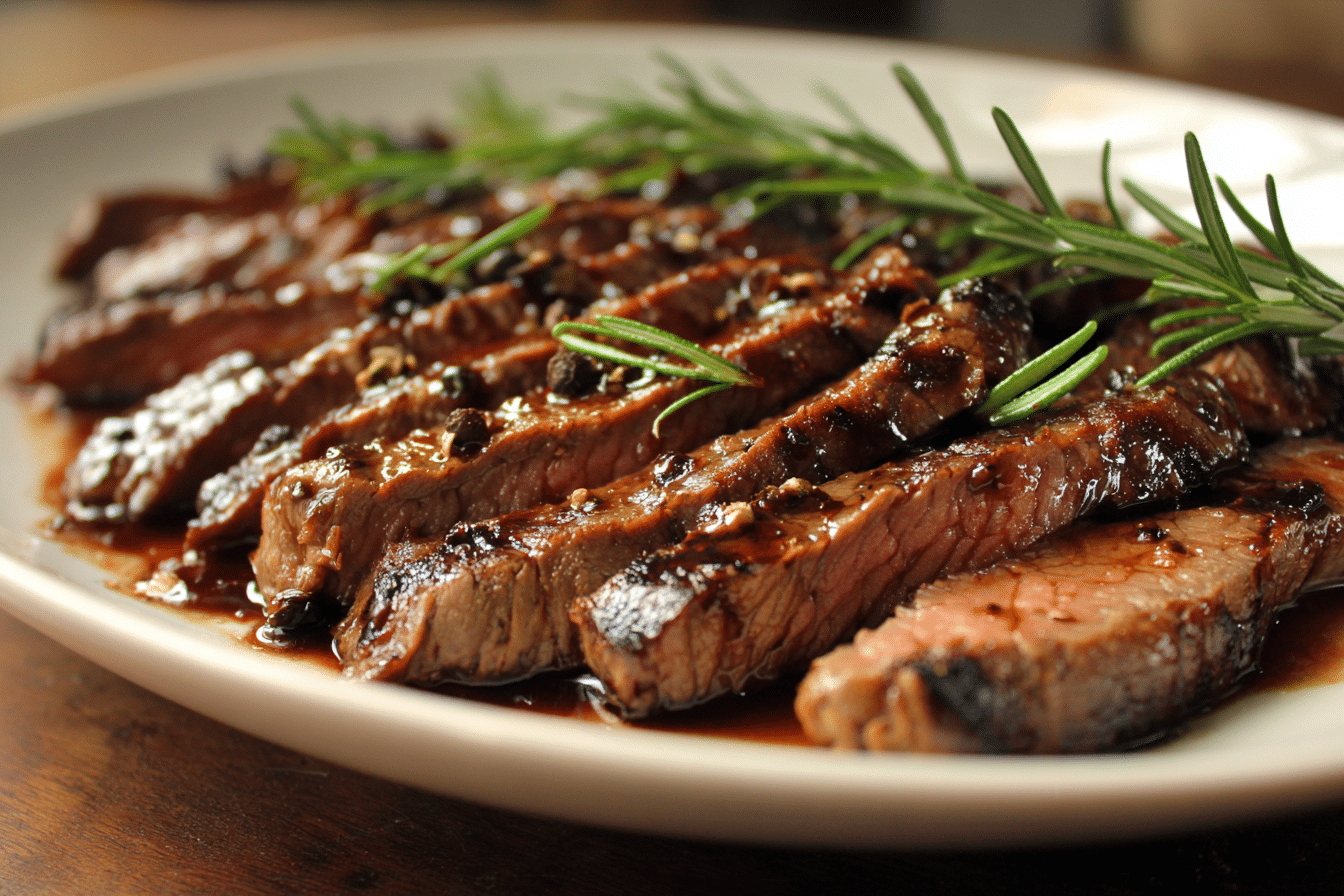
Balsamic Flank Steak is the kind of dinner that fills the kitchen with a rich, savory aroma long before it reaches the table. The deep tang of balsamic vinegar mingles with garlic and herbs, creating a glossy glaze that clings to every slice of tender beef. Each bite offers a balance of bright acidity and hearty flavor, with a satisfying chew that makes flank steak so beloved.
This cut of beef is known for its bold character and lean texture. When paired with a well-balanced marinade, it transforms into something deeply flavorful without requiring complicated techniques. Balsamic Flank Steak is equally suited for a relaxed weeknight meal or a casual gathering where a beautifully sliced platter becomes the centerpiece.
The contrast of caramelized edges and juicy interior makes this recipe stand out. Once rested and sliced thinly against the grain, the steak delivers tenderness and depth in every forkful.
Ingredients Overview
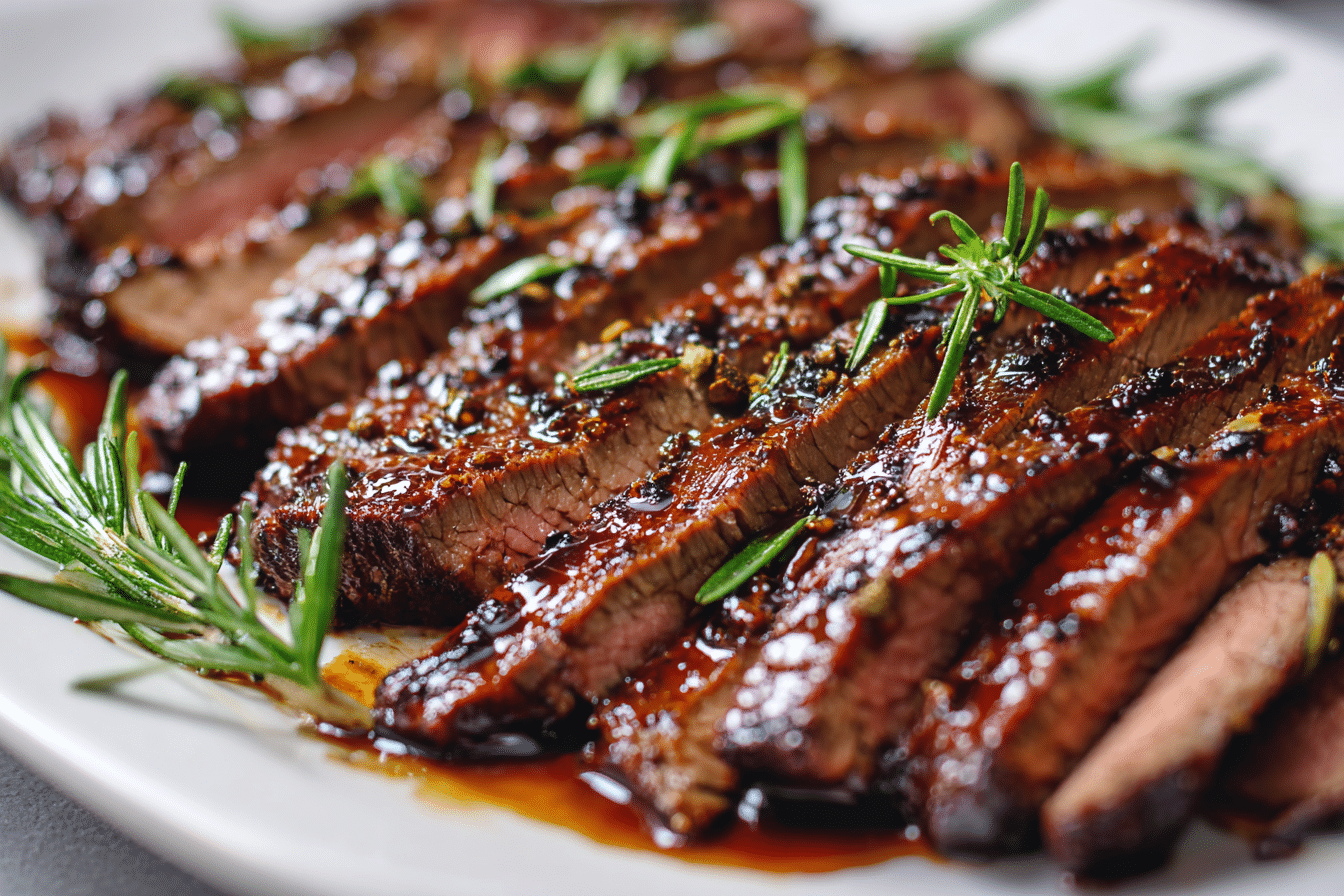
Flank steak is a long, flat cut taken from the abdominal muscles of the cow. It is lean with pronounced muscle fibers, which means it benefits greatly from marinating. A marinade not only adds flavor but also helps soften the texture, making each slice more tender.
Balsamic vinegar is the defining ingredient in Balsamic Flank Steak. Its sweet-tart profile provides acidity that gently breaks down the meat fibers while adding a subtle molasses-like richness. Choose a quality balsamic vinegar that is balanced and smooth rather than overly sharp.
Olive oil rounds out the marinade by adding richness and helping distribute flavors evenly. It also supports browning during cooking. Fresh garlic brings depth and warmth, while a touch of honey balances the vinegar’s acidity and encourages caramelization.
Soy sauce adds a savory backbone and light saltiness. Freshly ground black pepper provides mild heat without overpowering the glaze. Fresh rosemary or thyme introduces an earthy aroma that complements the beef beautifully.
If you need substitutions, red wine vinegar can replace balsamic in a pinch, though the flavor will be sharper and less sweet. Maple syrup can stand in for honey, and dried herbs may replace fresh—use half the quantity since dried herbs are more concentrated.
Step-by-Step Instructions
Start by preparing the marinade. In a medium bowl, whisk together 1/3 cup balsamic vinegar, 2 tablespoons olive oil, 2 tablespoons soy sauce, 1 tablespoon honey, 3 minced garlic cloves, and 1 teaspoon chopped fresh rosemary or thyme. Add freshly ground black pepper to taste. The mixture should smell balanced—tangy with a hint of sweetness.
Place the flank steak in a shallow dish or resealable bag. Pour the marinade over the steak, turning it to coat thoroughly. Cover and refrigerate for at least 2 hours, though 6 to 8 hours will yield deeper flavor. Avoid marinating longer than 12 hours, as too much acidity can alter the texture.
Remove the steak from the refrigerator about 30 minutes before cooking. Allowing it to come closer to room temperature helps it cook evenly. Preheat a grill or cast-iron skillet over medium-high heat. The cooking surface should be hot enough to sear immediately upon contact.
Lift the steak from the marinade, letting excess drip off. Discard the used marinade or boil it separately for several minutes if you plan to use it as a glaze. Place the steak on the hot grill or skillet. Cook for about 4 to 5 minutes per side for medium-rare, depending on thickness. An internal temperature of 130 to 135°F indicates medium-rare.
Resist the urge to move the steak too often. Allowing it to sear undisturbed creates a flavorful crust. Flip only once during cooking. If using a skillet, you may spoon a small amount of fresh marinade over the top during the final minute for added shine.
Once cooked to your desired doneness, transfer the steak to a cutting board. Let it rest for 10 minutes. Resting allows juices to redistribute throughout the meat, keeping slices moist.
To serve, slice the Balsamic Flank Steak thinly against the grain. Cutting against the muscle fibers shortens them, resulting in more tender bites. Arrange slices on a platter and drizzle lightly with any reserved, boiled glaze.
Tips, Variations & Substitutions
For deeper caramelization, pat the steak dry before placing it on the grill. Moisture on the surface can prevent proper browning. If grilling outdoors, lightly oil the grates to prevent sticking.
If you prefer a sweeter glaze, add an extra teaspoon of honey to the marinade. For a sharper edge, incorporate a teaspoon of Dijon mustard. Crushed red pepper flakes can introduce subtle heat without overpowering the balsamic notes.
Balsamic Flank Steak can also be broiled in the oven. Position the rack about 4 inches from the heating element and broil for 4 to 6 minutes per side, watching closely to prevent burning.
For a lower-sodium version, reduce the soy sauce and replace part of it with low-sodium beef broth. If flank steak is unavailable, skirt steak is a suitable alternative, though cooking time may vary slightly.
Serving Ideas & Occasions
Balsamic Flank Steak pairs beautifully with roasted vegetables such as asparagus, Brussels sprouts, or carrots. The sweetness of roasted produce complements the tangy glaze.
Creamy mashed potatoes or garlic-infused rice offer a comforting base that absorbs the savory juices. For a lighter option, serve thin slices over mixed greens with cherry tomatoes and shaved Parmesan.
This dish works well for backyard cookouts, casual dinner parties, or a satisfying family meal. Presented on a large platter with fresh herbs sprinkled over the top, it becomes an inviting centerpiece that encourages sharing.
Nutritional & Health Notes
Flank steak is a lean cut of beef, providing high-quality protein with relatively moderate fat content compared to fattier cuts. It is a source of iron, zinc, and B vitamins, all important for energy metabolism and overall well-being.
Using balsamic vinegar and herbs adds flavor without heavy cream or butter-based sauces. Olive oil contributes heart-healthy monounsaturated fats when used in moderation.
To keep the dish balanced, pair it with fiber-rich vegetables and whole grains. Portion control is helpful since red meat is best enjoyed as part of a varied diet that includes poultry, fish, legumes, and plant-based proteins.
FAQs
How long should I marinate Balsamic Flank Steak?
Marinate Balsamic Flank Steak for at least 2 hours to allow the flavors to penetrate the surface. For deeper flavor, 6 to 8 hours is ideal. Avoid exceeding 12 hours because the acidity in balsamic vinegar can begin to alter the meat’s texture too much, leading to a softer exterior. Always marinate in the refrigerator, and turn the steak occasionally if possible so all sides absorb the marinade evenly.
Can I cook Balsamic Flank Steak without a grill?
Yes, a cast-iron skillet works very well for Balsamic Flank Steak. Heat the skillet over medium-high heat until very hot before adding the meat. You can also broil the steak in the oven, placing it a few inches from the heating element. Both methods create a flavorful crust while keeping the interior tender. Proper preheating is key for achieving good browning.
What is the best doneness for flank steak?
Medium-rare to medium is generally preferred for flank steak. Cooking to an internal temperature of 130 to 135°F yields a tender and juicy result. Overcooking can make the meat tough due to its lean structure. Using a meat thermometer helps maintain accuracy. Remember that the temperature will rise slightly while the steak rests.
Why do I need to slice against the grain?
Flank steak has long, visible muscle fibers running in one direction. Slicing against the grain shortens these fibers, resulting in a more tender bite. If you cut with the grain, the fibers remain long and can feel chewy. Look closely at the direction of the lines in the meat and slice perpendicular to them for best texture.
Can I prepare Balsamic Flank Steak ahead of time?
You can marinate the steak in advance and keep it refrigerated until ready to cook. Cooked steak can also be prepared a few hours ahead and served at room temperature. If reheating, do so gently to avoid overcooking. Thin slices warm quickly and retain moisture better than reheating the whole piece.
Is it possible to freeze marinated flank steak?
Yes, you can freeze flank steak in its marinade. Place the steak and marinade in a freezer-safe bag, removing as much air as possible. Freeze for up to 2 months. Thaw overnight in the refrigerator before cooking. Freezing in the marinade allows the flavors to continue developing as it thaws.
What can I do with leftovers?
Leftover Balsamic Flank Steak is versatile. Thin slices can be added to salads, tucked into sandwiches, or layered into wraps with fresh greens and a light spread. You can also chop the steak and fold it into grain bowls with roasted vegetables. Store leftovers in an airtight container in the refrigerator for up to 3 days.
Print
Balsamic Flank Steak is a savory, tangy main dish featuring lean beef marinated in balsamic vinegar, garlic, herbs, and a touch of honey, then grilled or seared to juicy perfection and sliced thin.
Ingredients
1 1/2 pounds flank steak
1/3 cup balsamic vinegar
2 tablespoons olive oil
2 tablespoons soy sauce
1 tablespoon honey
3 garlic cloves, minced
1 teaspoon chopped fresh rosemary or thyme
1/2 teaspoon freshly ground black pepper
1/2 teaspoon salt
Instructions
-
In a bowl, whisk together balsamic vinegar, olive oil, soy sauce, honey, garlic, rosemary or thyme, pepper, and salt.
-
Place flank steak in a shallow dish or resealable bag and pour marinade over the meat, coating evenly.
-
Cover and refrigerate for 2 to 8 hours.
-
Remove steak from refrigerator 30 minutes before cooking.
-
Preheat grill or cast-iron skillet over medium-high heat.
-
Remove steak from marinade and discard used marinade.
-
Cook steak for 4 to 5 minutes per side for medium-rare, or until internal temperature reaches 130 to 135°F.
-
Transfer steak to a cutting board and let rest for 10 minutes.
-
Slice thinly against the grain and serve.