
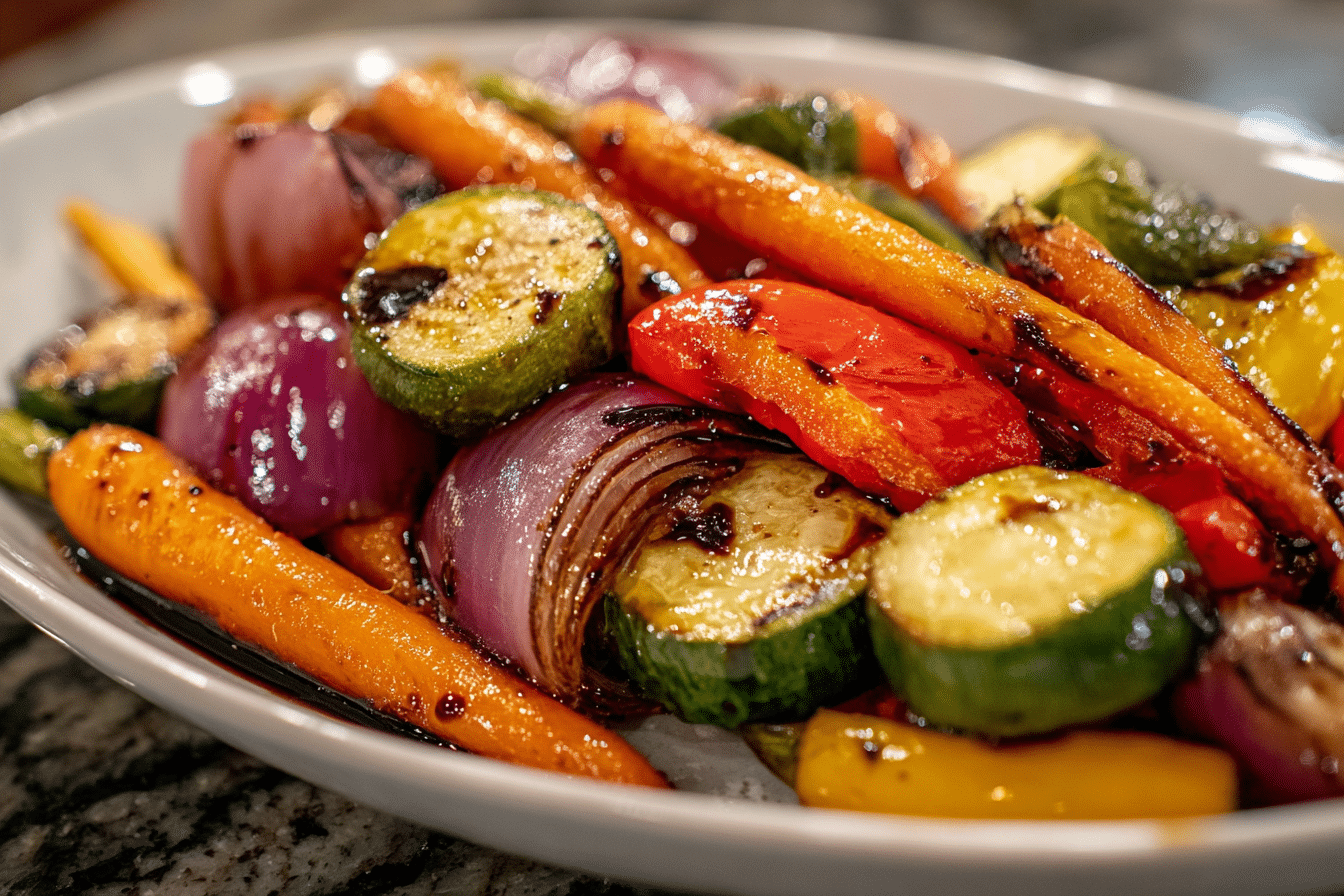
Balsamic Glazed Roasted Vegetables bring together rich caramelization and tangy depth in a way that turns simple produce into a deeply satisfying dish. As the vegetables roast, their natural sugars develop golden edges while the balsamic glaze thickens into a glossy coating that clings to every bite.
This recipe works beautifully with a variety of vegetables, making it adaptable for different seasons or what you already have in your kitchen. The balance of sweet, savory, and slightly acidic notes makes Balsamic Glazed Roasted Vegetables a dependable side dish that pairs well with everything from roasted meats to grain bowls.
The process is straightforward, yet the result feels thoughtfully prepared. With just a few pantry staples and fresh vegetables, you can create a dish that feels both comforting and refined.
Ingredients Overview
The success of Balsamic Glazed Roasted Vegetables comes down to selecting the right combination of vegetables and balancing them with a well-prepared glaze. Root vegetables like carrots and potatoes provide a hearty base, while softer vegetables such as zucchini or bell peppers add contrast in texture.
Balsamic vinegar is the key ingredient that defines the dish. As it cooks, it reduces and thickens, developing a slightly sweet and tangy profile. Choosing a good-quality balsamic vinegar makes a noticeable difference, as it will have a more rounded flavor and less harsh acidity.
Olive oil plays an important role in roasting. It helps the vegetables brown evenly and prevents them from drying out. Garlic adds depth, while herbs like thyme or rosemary bring a warm, earthy aroma that complements the glaze.
Salt and pepper are essential for bringing out the natural flavor of the vegetables. A small touch of honey or maple syrup can be added to the balsamic mixture to encourage caramelization and soften the acidity.
Substitutions are easy to make. Sweet potatoes can replace regular potatoes, Brussels sprouts can stand in for broccoli, and red onions can add a mild sweetness. The flexibility of this recipe allows you to work with what is available while still achieving a balanced and satisfying result.
Ingredients
2 cups carrots, peeled and cut into 1-inch pieces
2 cups baby potatoes, halved
1 red bell pepper, chopped
1 zucchini, sliced into thick rounds
1 red onion, cut into wedges
3 tablespoons olive oil
3 tablespoons balsamic vinegar
1 tablespoon honey or maple syrup
3 cloves garlic, minced
1 teaspoon dried thyme or 1 tablespoon fresh thyme
1/2 teaspoon salt
1/4 teaspoon black pepper
Step-by-Step Instructions
Preheat your oven to 425°F (220°C). A high temperature is essential for achieving proper browning and slight crisp edges on the vegetables. Line a large baking sheet with parchment paper or lightly grease it to prevent sticking.
Prepare all the vegetables so they are cut into similar-sized pieces. This step is important because uneven pieces will cook at different rates, leaving some undercooked while others become too soft.
In a large bowl, combine the carrots, potatoes, bell pepper, zucchini, and red onion. Drizzle with olive oil and toss thoroughly so every piece is lightly coated. This helps promote even roasting and prevents dryness.
In a small bowl, whisk together the balsamic vinegar, honey, minced garlic, thyme, salt, and black pepper. Pour this mixture over the vegetables and toss again until everything is evenly coated.
Spread the vegetables in a single layer on the prepared baking sheet. Avoid overcrowding, as this can cause steaming instead of roasting. If necessary, use two baking sheets.
Roast in the preheated oven for 25 minutes. Remove the tray and gently stir the vegetables to promote even browning. Return to the oven and roast for another 15–20 minutes.
The vegetables are done when they are tender inside and slightly crisp on the edges. The balsamic glaze should appear thickened and lightly caramelized, coating the vegetables without being watery.
Watch closely during the final minutes to avoid burning, as the sugars in the glaze can darken quickly. If needed, rotate the pan for even cooking.
Remove from the oven and let the vegetables rest for a few minutes before serving. This allows the glaze to settle and cling better to the vegetables.
Tips, Variations & Substitutions
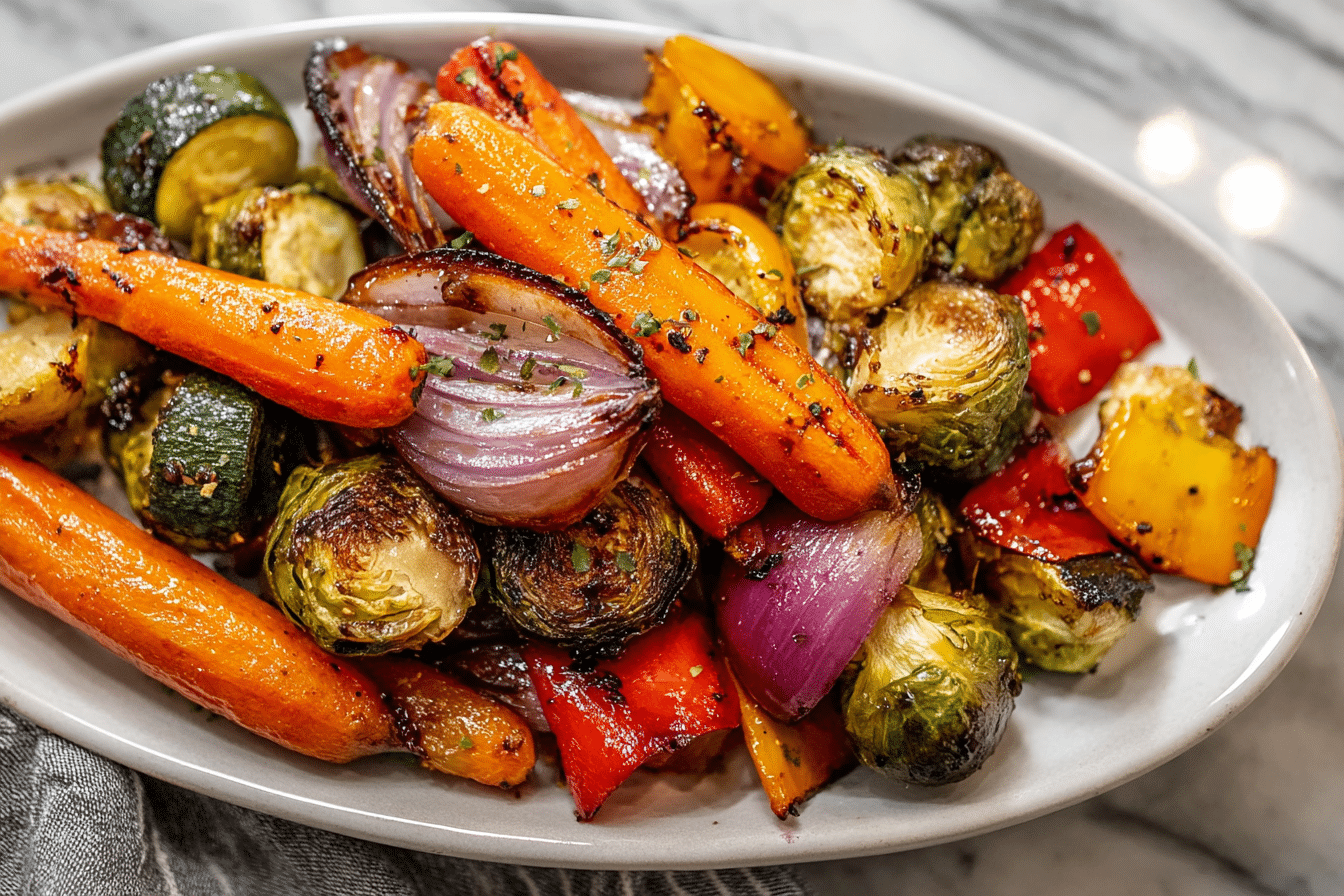
For the best texture, always cut vegetables into uniform sizes. This prevents uneven cooking and helps achieve a consistent finish. Hard vegetables like carrots and potatoes may need slightly smaller cuts compared to softer vegetables.
If you prefer deeper caramelization, roast the vegetables for an extra 5 minutes, but keep a close eye on the glaze to prevent scorching. A light toss halfway through cooking is usually enough to maintain even browning.
You can switch up the flavor by adding a pinch of red pepper flakes for gentle heat or a sprinkle of grated Parmesan during the last few minutes of roasting for a savory finish.
For a vegan version, use maple syrup instead of honey. If you want a lower-sugar option, you can reduce or skip the sweetener, though the glaze will be more tangy.
Seasonal variations work well. In fall, add butternut squash. In spring, try asparagus or green beans, adjusting the roasting time since these cook faster.
Serving Ideas & Occasions
Balsamic Glazed Roasted Vegetables pair well with roasted chicken, grilled steak, or baked fish. They also work as a hearty addition to grain bowls with quinoa or rice.
Serve them alongside holiday meals where their rich flavor complements traditional dishes. They are also suitable for weeknight dinners when you want something simple yet satisfying.
For a lighter option, serve these vegetables over mixed greens with a sprinkle of nuts or seeds. The glaze acts as a built-in dressing, adding depth without extra effort.
They can also be served warm or at room temperature, making them convenient for gatherings or meal prep.
Nutritional & Health Notes
This dish offers a balanced mix of fiber, vitamins, and healthy fats. The variety of vegetables provides nutrients such as vitamin A from carrots and vitamin C from bell peppers.
Olive oil contributes heart-friendly fats, while balsamic vinegar adds flavor without excessive calories. Using a moderate amount of sweetener keeps the dish balanced without becoming overly sugary.
Roasting helps retain nutrients while enhancing flavor, making vegetables more appealing and easier to incorporate into regular meals.
This recipe is naturally gluten-free and can be adjusted to suit different dietary needs with simple substitutions.
FAQs
Can I make Balsamic Glazed Roasted Vegetables ahead of time?
Yes, you can prepare Balsamic Glazed Roasted Vegetables in advance. Roast them fully, allow them to cool, and store in an airtight container in the refrigerator for up to three days. When reheating, use an oven rather than a microwave to maintain their texture. Spread them on a baking sheet and warm at 375°F until heated through. This helps restore some of the crisp edges while keeping the glaze intact. Avoid overheating, as this can make the vegetables too soft.
Which vegetables work best for this recipe?
A mix of root and soft vegetables works best for Balsamic Glazed Roasted Vegetables. Carrots, potatoes, and onions provide structure, while zucchini and bell peppers add contrast. You can also include Brussels sprouts, cauliflower, or sweet potatoes. The key is to combine vegetables with similar roasting times or adjust the size of the cuts accordingly. This helps everything finish cooking at the same time without compromising texture.
How do I prevent the vegetables from becoming soggy?
To avoid soggy vegetables, make sure they are spread in a single layer on the baking sheet. Overcrowding traps moisture and leads to steaming instead of roasting. Use a high oven temperature and avoid adding too much liquid. Tossing the vegetables halfway through cooking also helps release steam and promotes browning. Proper spacing and heat are the most important factors.
Can I freeze Balsamic Glazed Roasted Vegetables?
Freezing is possible, but it may affect the texture. Roasted vegetables tend to soften after thawing, especially those with high water content like zucchini. If you plan to freeze them, slightly undercook the vegetables so they retain some structure when reheated. Store in airtight containers and use within one to two months. Reheat in the oven to improve texture.
What type of balsamic vinegar should I use?
A good-quality balsamic vinegar with a slightly thick consistency works best. It should have a balanced flavor that is not overly sharp. Avoid very thin or overly acidic varieties, as they may not produce a rich glaze. A mid-range option is usually sufficient for cooking, as it will reduce and concentrate during roasting.
Can I add protein to this dish?
Yes, you can turn Balsamic Glazed Roasted Vegetables into a complete meal by adding protein. Chicken pieces, tofu, or chickpeas can be roasted alongside the vegetables. Make sure to adjust cooking times depending on the protein used. For example, cubed chicken may need a bit longer, while chickpeas can be added halfway through roasting.
How do I know when the vegetables are done?
The vegetables are ready when they are tender when pierced with a fork and have lightly browned edges. The glaze should appear thickened and slightly sticky, coating the vegetables evenly. If the vegetables are soft but lack browning, they may need a few extra minutes at a higher heat. Visual cues and texture are the best indicators.
PrintBalsamic Glazed Roasted Vegetables – 7 Amazing Flavorful Ideas
Balsamic Glazed Roasted Vegetables are a savory and slightly tangy side dish featuring caramelized vegetables coated in a rich balsamic glaze.
Ingredients
2 cups carrots, peeled and cut into pieces
2 cups baby potatoes, halved
1 red bell pepper, chopped
1 zucchini, sliced
1 red onion, wedged
3 tablespoons olive oil
3 tablespoons balsamic vinegar
1 tablespoon honey or maple syrup
3 cloves garlic, minced
1 teaspoon dried thyme
1/2 teaspoon salt
1/4 teaspoon black pepper
Instructions
- Preheat oven to 425°F (220°C).
- Prepare and chop all vegetables evenly.
- Toss vegetables with olive oil in a large bowl.
- Mix balsamic vinegar, honey, garlic, thyme, salt, and pepper.
- Pour mixture over vegetables and toss well.
- Spread vegetables on a baking sheet in a single layer.
- Roast for 25 minutes, stir, then roast another 15–20 minutes.
- Remove when tender and slightly caramelized.
Notes
Cut vegetables evenly for consistent cooking. Avoid overcrowding the pan for best roasting results.