
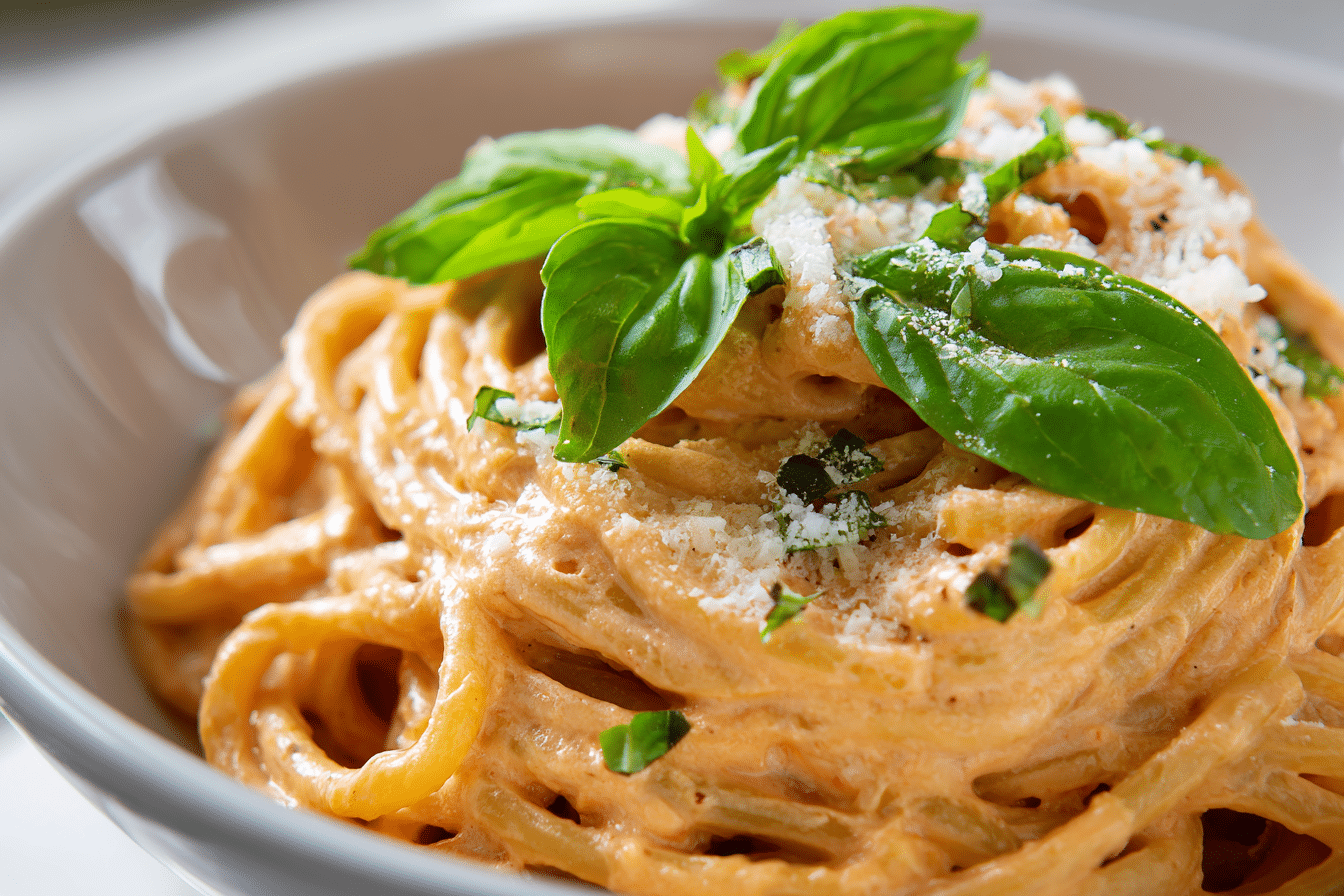
Creamy Basil Tomato Pasta is the kind of dish that brings warmth and depth to the table with very little fuss. The balance of ripe tomato, fresh basil, and silky cream creates a sauce that clings to every strand of pasta, giving each bite a smooth and comforting texture.
This pasta feels both rustic and satisfying. The tomato base gives gentle acidity while the cream softens the edges, creating a mellow sauce with a velvety finish. Fresh basil adds a fragrant green note that brightens the entire bowl without overwhelming the other ingredients.
One reason Creamy Basil Tomato Pasta remains a household favorite is how naturally the flavors work together. Tomato and basil have long been paired in Italian cooking, and when cream joins the mix, the sauce becomes rich without feeling heavy.
It also fits easily into everyday cooking. The ingredients are common, the steps are straightforward, and the result tastes like something that simmered much longer than it actually did.
Served with warm bread or a crisp salad, Creamy Basil Tomato Pasta turns an ordinary meal into something deeply satisfying. It is a dish that welcomes both quiet weeknight dinners and relaxed gatherings around the table.
Ingredients Overview
The success of Creamy Basil Tomato Pasta depends on a small group of ingredients that work together to create a balanced sauce. Each element contributes flavor, body, and aroma.
Tomatoes form the foundation of the sauce. Crushed canned tomatoes are often the most reliable choice because they provide consistent flavor and thickness. They cook down into a smooth base that holds the cream beautifully. If fresh tomatoes are used, they should be fully ripe and peeled before cooking so the sauce remains smooth.
Heavy cream gives the dish its signature texture. It softens the natural acidity of tomatoes and creates a smooth, rounded finish. Half-and-half can work in place of heavy cream for a lighter sauce, though the texture will be slightly thinner.
Garlic adds gentle depth. When sautéed in olive oil, garlic releases a mellow aroma that blends easily with tomato. It should cook just until fragrant to avoid bitterness.
Olive oil starts the sauce and helps carry flavor throughout the dish. A mild extra-virgin olive oil works well because it adds richness without overpowering the tomato.
Fresh basil provides the bright herbal note that defines the dish. The leaves should be torn or thinly sliced so their fragrance spreads evenly through the sauce. If fresh basil is unavailable, a small amount of dried basil can work, though the flavor will be less vivid.
Parmesan cheese adds saltiness and a subtle nutty quality. Finely grated cheese melts quickly into the sauce and also works as a finishing garnish.
Pasta shapes that hold sauce well are ideal. Penne, fettuccine, rigatoni, and spaghetti are all good options. Their surface area allows the creamy tomato sauce to coat each bite evenly.
Salt and freshly ground black pepper round out the seasoning, bringing balance to the sauce without masking the natural flavor of the tomatoes and herbs.
Step-by-Step Instructions
Begin by bringing a large pot of salted water to a steady boil. The water should taste lightly seasoned, similar to broth. This step gives the pasta flavor from the inside while it cooks.
Add the pasta and cook according to the package directions until it reaches an al dente texture. The pasta should be tender but still hold slight firmness in the center. Before draining, reserve about one cup of the pasta cooking water. This starchy liquid can help adjust the sauce later.
While the pasta cooks, begin the sauce. Heat two tablespoons of olive oil in a wide skillet over medium heat. Add finely chopped garlic and cook gently for about 30 seconds. The garlic should release a warm aroma but remain pale in color.
Pour in the crushed tomatoes and stir well. Allow the mixture to simmer for 8 to 10 minutes so the tomato flavor deepens slightly. During this stage, stir occasionally to prevent sticking.
Reduce the heat to low and slowly add the heavy cream. Stir continuously as the cream blends with the tomatoes. The sauce will gradually shift from bright red to a soft orange tone, indicating that the cream has fully incorporated.
Season the sauce with salt and black pepper. Taste and adjust as needed. If the sauce seems too thick, add a small splash of the reserved pasta water and stir until the texture becomes smooth and spoonable.
Add freshly torn basil leaves and let them wilt gently in the warm sauce. Their aroma will become noticeable almost immediately.
Transfer the drained pasta directly into the skillet with the sauce. Toss the pasta carefully so each piece becomes coated in the creamy tomato mixture. If needed, add another splash of pasta water to loosen the sauce and help it cling to the pasta.
Sprinkle grated Parmesan cheese over the pasta and toss again. The cheese will melt into the sauce, adding subtle richness.
Serve the Creamy Basil Tomato Pasta immediately while the sauce is smooth and warm. Finish each bowl with extra basil leaves and another light shower of Parmesan.
Tips, Variations & Substitutions
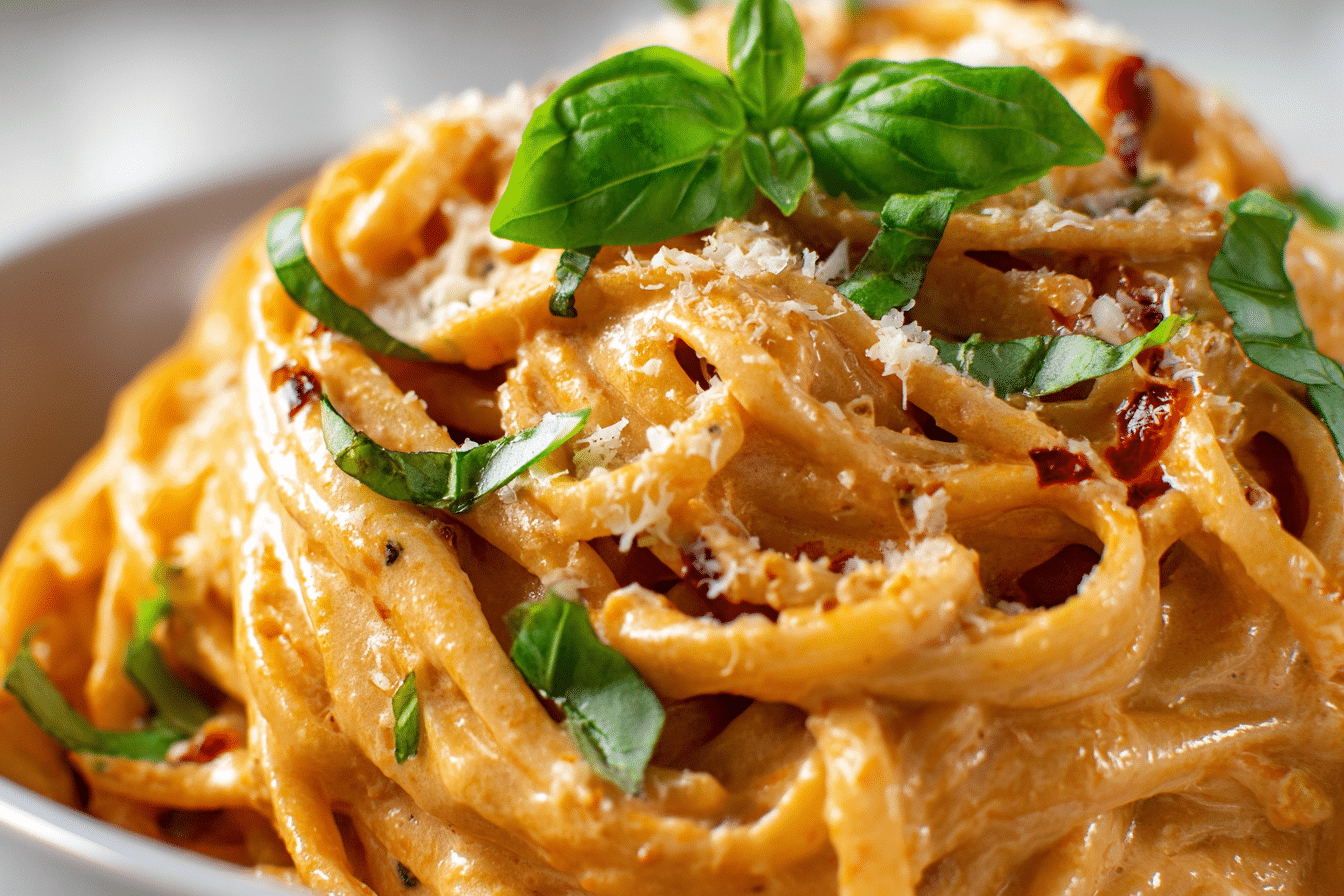
Small adjustments can change the character of Creamy Basil Tomato Pasta while keeping the core flavors intact.
For a deeper tomato flavor, allow the crushed tomatoes to simmer a few extra minutes before adding the cream. This reduces excess liquid and concentrates the natural sweetness of the tomatoes.
If a lighter version is preferred, substitute half-and-half or whole milk for the heavy cream. The sauce will still be smooth but slightly less thick.
Protein additions can turn the pasta into a more filling meal. Grilled chicken, sautéed shrimp, or cooked Italian sausage blend well with the creamy tomato base. These ingredients should be cooked separately and stirred into the pasta at the end.
Vegetables also fit naturally in this dish. Spinach, mushrooms, roasted zucchini, or peas add texture and color. They can be sautéed in the skillet before the tomatoes are added.
For a subtle kick of heat, add a pinch of red pepper flakes while the garlic cooks in the olive oil.
Those who prefer dairy alternatives can use unsweetened oat cream or cashew cream. These substitutes keep the sauce smooth while maintaining a mild flavor.
Fresh basil should always be added near the end of cooking so its aroma remains bright and green.
Serving Ideas & Occasions
Creamy Basil Tomato Pasta works well in many dining settings, from relaxed family dinners to casual weekend gatherings.
A simple green salad with lemon vinaigrette pairs nicely with the creamy sauce. The crisp texture and light acidity contrast with the pasta’s smooth richness.
Warm garlic bread or a crusty baguette also complements the dish. Bread can be used to soak up the extra sauce left in the bowl.
For a slightly more complete meal, roasted vegetables such as broccoli, asparagus, or carrots can be served alongside the pasta.
The dish also works well for small dinner parties because the sauce can be prepared in advance and gently reheated before tossing with freshly cooked pasta.
When served in wide bowls with a scattering of basil leaves and Parmesan, Creamy Basil Tomato Pasta presents beautifully while remaining simple and comforting.
Nutritional & Health Notes
Creamy Basil Tomato Pasta provides a balanced combination of carbohydrates, fats, and moderate protein.
Pasta supplies energy through complex carbohydrates. When paired with tomato and herbs, it forms the base of a satisfying meal. Whole-grain pasta can be used for additional fiber.
Tomatoes contain vitamin C, potassium, and beneficial plant compounds such as lycopene. These nutrients contribute to overall dietary balance when included regularly in meals.
Basil contributes trace nutrients and adds fresh herbal aroma without additional calories.
The cream and Parmesan introduce richness and flavor while also supplying calcium. Because these ingredients are more concentrated sources of fat, moderate portions help keep the dish balanced.
Adding vegetables such as spinach or mushrooms increases fiber and micronutrients while maintaining the comforting character of the pasta.
Served alongside fresh salad or vegetables, Creamy Basil Tomato Pasta can be part of a well-rounded meal.
FAQs
Can Creamy Basil Tomato Pasta be prepared ahead of time?
Creamy Basil Tomato Pasta can be partially prepared ahead by cooking the sauce in advance. The tomato and cream mixture can be refrigerated for up to two days. When ready to serve, warm the sauce slowly over low heat while stirring. Cook the pasta fresh and combine it with the reheated sauce just before serving. This approach keeps the pasta from absorbing too much liquid and becoming soft. If the sauce thickens during storage, a small splash of milk or pasta cooking water can restore the smooth texture. Fresh basil should be added during reheating so the herbal flavor stays vibrant.
What pasta shapes work best with this sauce?
Creamy Basil Tomato Pasta pairs well with several pasta shapes that hold sauce effectively. Tube shapes such as penne or rigatoni trap the creamy tomato mixture inside their hollow centers. Long noodles like fettuccine or spaghetti also work nicely because the sauce coats their surface evenly. Short ridged pasta varieties are especially useful because the ridges help the sauce cling to each piece. The main goal is choosing pasta with enough texture or surface area to carry the creamy sauce in every bite. Smooth, delicate pasta shapes can work, but sturdier varieties typically provide a more satisfying result.
How can the sauce be thickened if it seems too thin?
If the sauce becomes thinner than desired, there are several simple adjustments that can help. Allowing the sauce to simmer for a few additional minutes will naturally reduce excess liquid. Stirring in a small amount of grated Parmesan cheese can also thicken the sauce because the cheese melts and binds with the cream. Another option is adding a small spoonful of cream cheese, which blends smoothly into the tomato base. It is usually best to avoid flour or starch thickeners because they may change the smooth character of the sauce.
Is it possible to freeze Creamy Basil Tomato Pasta?
Freezing the fully prepared pasta is not usually recommended because pasta can soften significantly after thawing. However, the creamy tomato sauce itself can be frozen successfully. Allow the sauce to cool completely before placing it in airtight containers. When reheated, warm it slowly over low heat while stirring to bring the ingredients back together. Adding a splash of cream or milk during reheating can refresh the texture. Once the sauce is warm and smooth, combine it with freshly cooked pasta for the best flavor and consistency.
Can fresh tomatoes replace canned tomatoes?
Fresh tomatoes can be used in place of canned tomatoes when they are ripe and full of flavor. Plum or Roma tomatoes are often the best choice because they contain fewer seeds and less water. To prepare them, score the skins, blanch briefly in boiling water, and remove the skins before chopping. The chopped tomatoes should simmer slightly longer than canned tomatoes so excess liquid evaporates and the sauce thickens. While fresh tomatoes offer seasonal flavor, canned tomatoes remain a reliable option because they provide consistent sweetness and acidity year-round.
How can extra protein be added to the dish?
Several ingredients can add protein while complementing the creamy tomato flavor. Grilled chicken breast sliced into strips blends well with the pasta and keeps the dish balanced. Sautéed shrimp is another excellent option because it cooks quickly and absorbs the sauce nicely. Italian sausage can also be used for a richer variation, adding savory depth to the tomato base. Plant-based choices such as white beans or chickpeas work well too, providing texture and mild flavor without overwhelming the basil and tomato combination.
What herbs pair well with basil in this pasta?
Basil remains the central herb in Creamy Basil Tomato Pasta, but several others can support its flavor. Fresh parsley adds brightness and color when sprinkled over the finished dish. A small amount of oregano contributes earthy depth that pairs naturally with tomatoes. Thyme can introduce gentle warmth when used sparingly. When combining herbs, basil should remain the most noticeable flavor so the dish keeps its classic character. Using herbs fresh whenever possible helps maintain a lively aroma and balanced taste.
PrintCreamy Basil Tomato Pasta: 30-Minute Simple Comfort Dish
Creamy Basil Tomato Pasta is a comforting pasta dish featuring a smooth tomato and cream sauce infused with fresh basil and finished with Parmesan cheese. The sauce coats each piece of pasta with a silky texture and balanced flavor.
Ingredients
12 ounces pasta (penne, rigatoni, or spaghetti)
2 tablespoons olive oil
3 cloves garlic, finely chopped
1 can (14 ounces) crushed tomatoes
1 cup heavy cream
1/2 cup grated Parmesan cheese
1/2 cup fresh basil leaves, torn
Salt to taste
Black pepper to taste
Instructions
-
Bring a large pot of salted water to a boil and cook pasta until al dente. Reserve 1 cup of pasta cooking water before draining.
-
Heat olive oil in a large skillet over medium heat. Add garlic and cook briefly until fragrant.
-
Stir in crushed tomatoes and allow the sauce to simmer for about 8 to 10 minutes.
-
Reduce heat to low and slowly add the heavy cream while stirring until the sauce becomes smooth.
-
Season the sauce with salt and black pepper.
-
Add torn basil leaves and stir gently.
-
Add the drained pasta to the skillet and toss to coat evenly in the sauce.
-
Stir in grated Parmesan cheese and add a splash of reserved pasta water if the sauce needs loosening.
-
Serve warm with extra basil and Parmesan if desired.
Notes
Fresh basil should be added at the end of cooking for the best aroma. Reserve pasta water helps adjust the consistency of the sauce.