
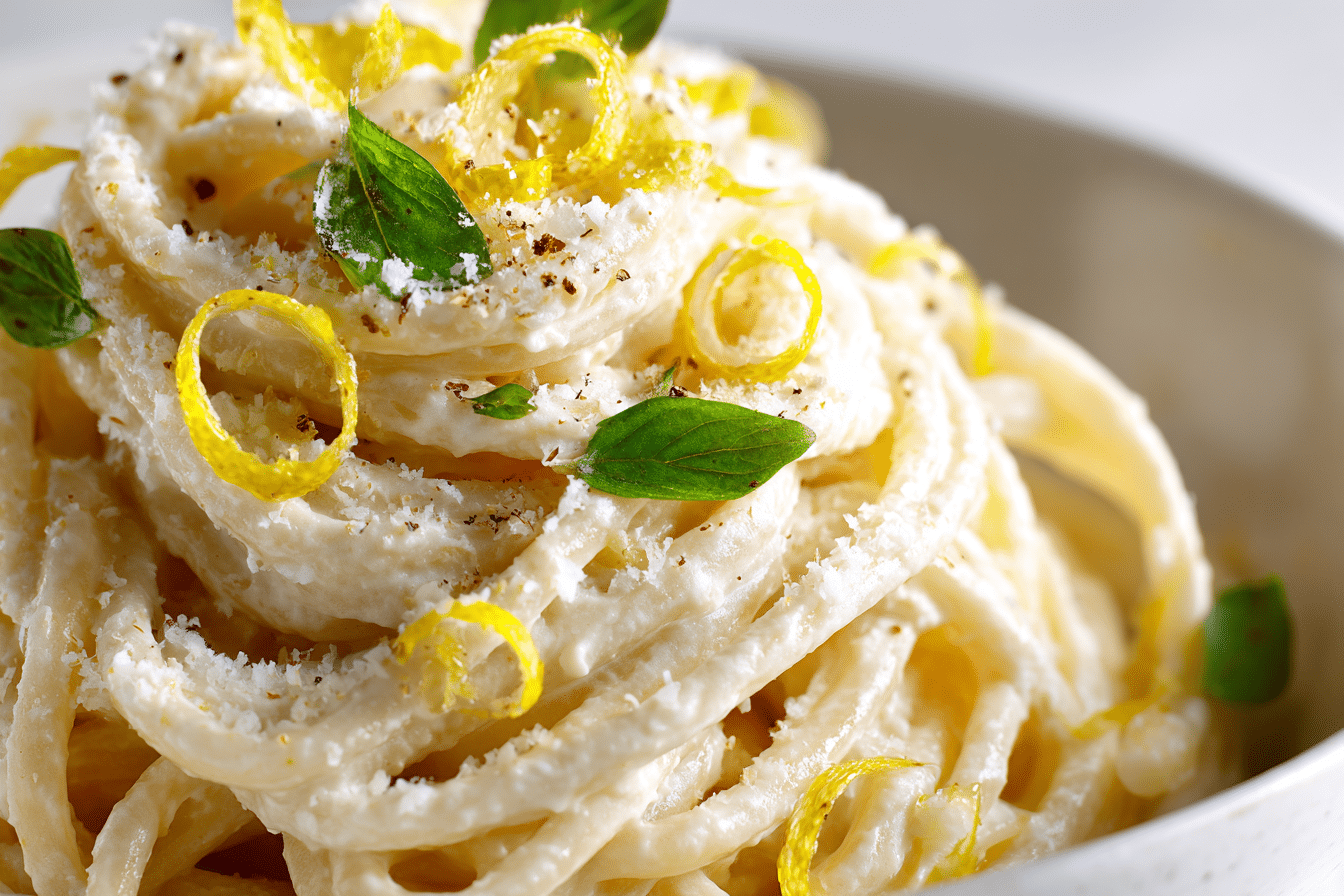
Creamy Lemon Ricotta Pasta is a bright and comforting dish that blends smooth ricotta cheese with the fresh citrus flavor of lemon. The result is a silky sauce that lightly coats every strand of pasta while maintaining a clean and refreshing taste.
This pasta highlights the beauty of simple ingredients working together naturally. Ricotta creates a soft and creamy base, while lemon zest and juice add a lively citrus note that keeps the dish balanced rather than heavy. The contrast between creamy cheese and gentle acidity gives the pasta a refreshing character that stands out from richer cream-based sauces.
Another reason Creamy Lemon Ricotta Pasta is widely loved is how quickly it comes together. With only a handful of ingredients and a short cooking time, it fits easily into busy evenings without sacrificing flavor or comfort.
Fresh herbs and Parmesan add depth and aroma, creating layers of flavor that feel both light and satisfying. When the warm pasta meets the ricotta mixture, the sauce becomes silky and smooth, clinging to each piece beautifully.
Served warm with extra lemon zest and a sprinkle of cheese, Creamy Lemon Ricotta Pasta delivers a delicate balance of richness and brightness that makes it an inviting meal for any occasion.
Ingredients Overview
The charm of Creamy Lemon Ricotta Pasta comes from a short list of ingredients that combine to create a smooth and flavorful sauce. Each component has an important role in the overall balance of the dish.
Ricotta cheese is the heart of the sauce. Its mild flavor and soft texture create a naturally creamy base without needing heavy cream. Whole milk ricotta is often preferred because it produces a richer and smoother consistency. When mixed with warm pasta and a bit of pasta water, it forms a velvety coating that clings to the noodles.
Lemon provides the signature brightness of the dish. Both lemon zest and fresh lemon juice are important. The zest holds fragrant citrus oils that give the pasta aroma, while the juice adds gentle acidity that balances the richness of the ricotta.
Olive oil contributes subtle richness and helps blend the sauce ingredients smoothly. A mild extra-virgin olive oil works well because it complements the lemon without overpowering it.
Garlic adds depth and a mild savory note. It should be finely minced and lightly sautéed so its flavor softens and blends with the other ingredients.
Parmesan cheese introduces a savory and slightly nutty element. Finely grated Parmesan melts easily into the sauce and deepens the flavor without dominating the dish.
Pasta provides the structure that carries the creamy lemon ricotta sauce. Long noodles such as spaghetti or fettuccine work particularly well because they allow the smooth sauce to coat evenly.
Fresh herbs such as parsley or basil bring color and gentle freshness. They add contrast to the creamy texture and highlight the lemon flavor.
Salt and freshly ground black pepper complete the seasoning, balancing the flavors and allowing the citrus and cheese to stand out.
Step-by-Step Instructions
Begin by bringing a large pot of salted water to a boil. The salt seasons the pasta as it cooks and improves the overall flavor of the dish. Add the pasta and cook until al dente according to the package instructions.
Before draining the pasta, reserve about one cup of the pasta cooking water. This starchy water is important because it helps create a smooth sauce when combined with the ricotta mixture.
While the pasta cooks, prepare the ricotta sauce. In a mixing bowl, combine ricotta cheese, lemon zest, fresh lemon juice, olive oil, and finely grated Parmesan cheese. Stir until the mixture becomes smooth and creamy.
In a large skillet, warm a tablespoon of olive oil over medium heat. Add minced garlic and cook briefly until fragrant. The garlic should soften and release aroma without turning brown.
Once the pasta is cooked, transfer it directly into the skillet with the garlic. Add a small amount of the reserved pasta water and stir gently.
Lower the heat and add the ricotta mixture to the skillet. Toss the pasta continuously so the ricotta melts into the warm noodles. Add more pasta water a little at a time until the sauce becomes smooth and silky.
The pasta should appear lightly coated rather than overly thick. The heat from the noodles helps transform the ricotta mixture into a creamy sauce.
Taste the pasta and adjust seasoning with salt and freshly ground black pepper.
Finish by stirring in chopped fresh herbs and an additional sprinkle of Parmesan cheese. The herbs brighten the dish while the cheese adds savory depth.
Serve the Creamy Lemon Ricotta Pasta immediately while the sauce remains smooth and warm. Garnish with extra lemon zest and herbs for added fragrance.
Tips, Variations & Substitutions
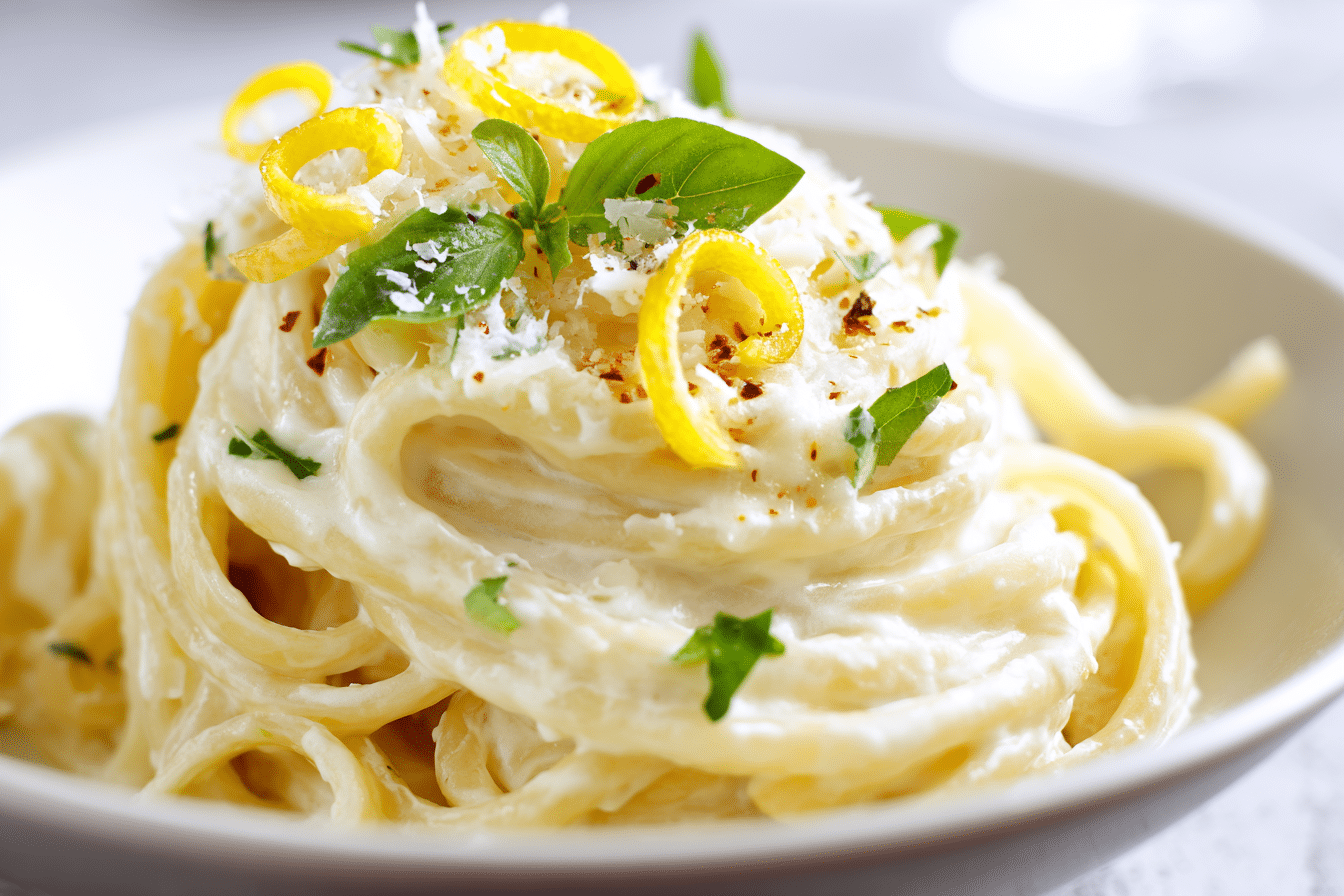
Creamy Lemon Ricotta Pasta is flexible and easy to adjust depending on personal preferences or available ingredients.
For a slightly richer sauce, add a small knob of butter to the pasta while tossing it with the ricotta mixture. The butter blends with the cheese and lemon to create a smoother finish.
If the ricotta seems thick, whisking it briefly before mixing it with the pasta can improve the final texture. Adding a spoonful of pasta water directly into the ricotta mixture also helps loosen it.
Protein additions can transform the dish into a more substantial meal. Grilled chicken, sautéed shrimp, or roasted salmon pair especially well with the bright lemon flavor.
Vegetables can also be added for color and variety. Peas, spinach, asparagus, or zucchini blend naturally into the creamy sauce while keeping the dish light.
Whole wheat pasta can be used for added fiber. Its slightly nutty flavor complements the lemon and ricotta combination.
If ricotta is unavailable, mascarpone or cottage cheese can be used as alternatives. Mascarpone creates a richer sauce, while blended cottage cheese produces a lighter texture.
Fresh lemon juice is strongly recommended because bottled juice often lacks the vibrant flavor needed for the dish.
Serving Ideas & Occasions
Creamy Lemon Ricotta Pasta works well in many settings, from quick weekday dinners to relaxed weekend meals.
A simple green salad with a light vinaigrette pairs nicely with the creamy pasta. The crisp vegetables provide contrast to the smooth sauce while reinforcing the citrus notes.
Roasted vegetables such as broccoli, asparagus, or carrots also complement the pasta beautifully. Their slightly caramelized flavor balances the brightness of the lemon.
For a heartier meal, grilled chicken or shrimp can be served alongside the pasta or mixed directly into the dish.
The pasta also works well as part of a larger spread for casual gatherings. When served in a large bowl with fresh herbs and lemon zest sprinkled on top, it becomes a vibrant centerpiece for the table.
Because of its refreshing citrus flavor, Creamy Lemon Ricotta Pasta is especially enjoyable during warmer seasons.
Nutritional & Health Notes
Creamy Lemon Ricotta Pasta provides a balanced combination of carbohydrates, protein, and fats.
Pasta supplies complex carbohydrates that provide steady energy. Choosing whole grain pasta increases fiber content and can help support digestive health.
Ricotta cheese contributes protein and calcium while also creating the creamy texture of the sauce. Compared to heavy cream sauces, ricotta-based sauces often feel lighter while still providing richness.
Lemon juice and zest provide vitamin C and natural citrus oils that contribute both flavor and nutrients.
Olive oil supplies monounsaturated fats that support heart health when used in moderate amounts.
Fresh herbs add small amounts of vitamins and antioxidants while enhancing aroma and color.
When served with vegetables or lean protein, Creamy Lemon Ricotta Pasta can become a well-rounded and satisfying meal that balances comfort and freshness.
FAQs
Can Creamy Lemon Ricotta Pasta be made ahead of time?
This pasta is best served immediately after cooking because the ricotta sauce is at its smoothest when freshly mixed with warm pasta. However, the ricotta mixture itself can be prepared in advance and stored in the refrigerator for up to one day. When ready to cook, simply prepare the pasta and combine it with the chilled ricotta mixture using warm pasta water to loosen the sauce. This approach helps maintain the creamy texture while saving preparation time.
What pasta shapes work best with this recipe?
Long pasta shapes such as spaghetti, linguine, and fettuccine work particularly well because their smooth surface allows the creamy ricotta sauce to coat evenly. Short pasta shapes like penne or rigatoni can also be used, especially if vegetables or proteins are added. The most important factor is choosing pasta with enough surface area to hold the creamy sauce in each bite.
How can the sauce be made smoother?
If the sauce appears slightly grainy, whisk the ricotta before mixing it with the pasta. This helps create a smoother base. Adding warm pasta cooking water gradually while tossing the pasta also improves the texture. The starch in the water helps the sauce bind together, producing a silky consistency that coats the pasta evenly.
Can the dish be made dairy-free?
Yes, a dairy-free version can be prepared using plant-based ricotta alternatives made from almonds or cashews. These substitutes mimic the creamy texture of traditional ricotta while maintaining a mild flavor. Nutritional yeast can also be sprinkled over the pasta to provide a savory note similar to Parmesan cheese.
What vegetables pair well with this pasta?
Several vegetables complement the lemon and ricotta combination. Spinach wilts easily into the warm pasta and adds gentle color and nutrients. Peas provide a mild sweetness that balances the lemon. Asparagus and zucchini also work nicely, contributing light texture without overpowering the sauce.
How can protein be added to the dish?
Lean proteins blend naturally with Creamy Lemon Ricotta Pasta. Grilled chicken breast is a popular option because it absorbs the citrus flavors well. Shrimp also pairs beautifully with lemon-based sauces and cooks quickly. For plant-based options, chickpeas or white beans can be added for extra protein and texture.
Can leftovers be reheated?
Leftover Creamy Lemon Ricotta Pasta can be reheated gently on the stove or in the microwave. Adding a splash of milk or water before reheating helps restore the creamy texture. The pasta should be warmed slowly to prevent the ricotta from separating. Stirring occasionally during reheating will help maintain a smooth sauce.
PrintCreamy Lemon Ricotta Pasta: 20-Minute Amazing Comfort Dish
Creamy Lemon Ricotta Pasta is a light and comforting pasta dish made with ricotta cheese, fresh lemon, garlic, olive oil, and Parmesan for a smooth and bright sauce.
Ingredients
12 ounces spaghetti or fettuccine
1 cup whole milk ricotta cheese
1 lemon (zest and juice)
2 tablespoons olive oil
2 cloves garlic, minced
1/2 cup grated Parmesan cheese
2 tablespoons chopped fresh parsley or basil
Salt to taste
Black pepper to taste
Instructions
-
Bring a large pot of salted water to a boil and cook pasta until al dente. Reserve 1 cup pasta water before draining.
-
In a bowl, mix ricotta cheese, lemon zest, lemon juice, olive oil, and Parmesan until smooth.
-
Heat olive oil in a large skillet and sauté garlic briefly until fragrant.
-
Add the cooked pasta to the skillet and stir gently.
-
Add the ricotta mixture and toss the pasta until coated.
-
Gradually add reserved pasta water until the sauce becomes smooth and creamy.
-
Season with salt and black pepper.
-
Stir in fresh herbs and additional Parmesan cheese if desired.
-
Serve warm with extra lemon zest on top.
Notes
Adding pasta water slowly helps create a silky sauce that coats the pasta evenly.