
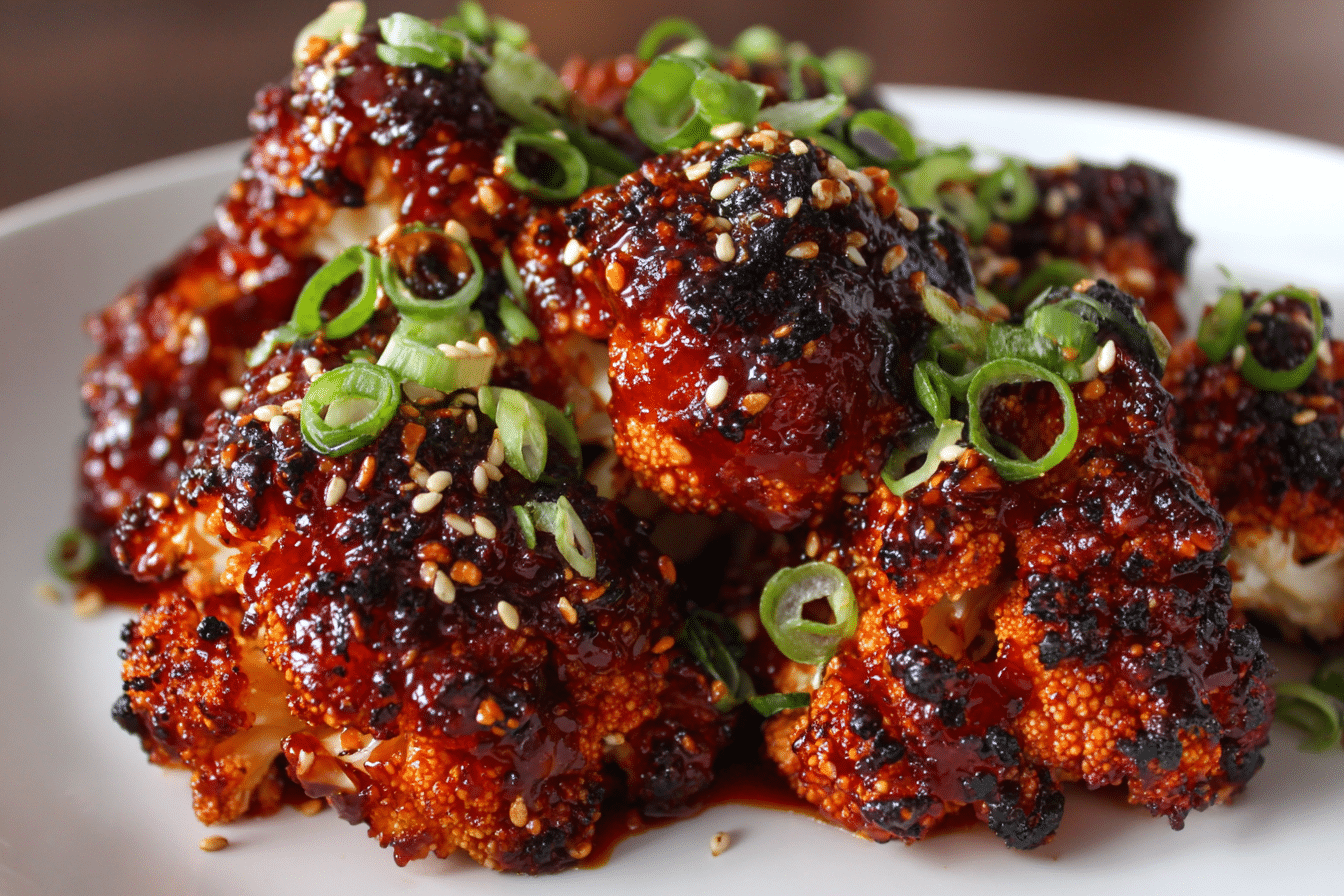
Korean-Style Baked Cauliflower: Crispy, Spicy, and Irresistible brings vibrant heat and deep savoriness to an everyday vegetable. Roasting transforms humble cauliflower into caramelized florets with crisp edges and a tender center, while a glossy chili sauce clings to every crevice. The contrast between crunch and sticky glaze creates a dish that feels indulgent yet balanced.
This recipe draws inspiration from classic Korean flavors—garlic, ginger, soy sauce, and gochujang—blended into a sauce that is smoky, spicy, and slightly sweet. Baking instead of frying keeps preparation straightforward while still delivering a satisfying texture. Whether served as a plant-based main or a shareable appetizer, this cauliflower offers layered flavor and an eye-catching presentation straight from the oven.
Ingredients Overview
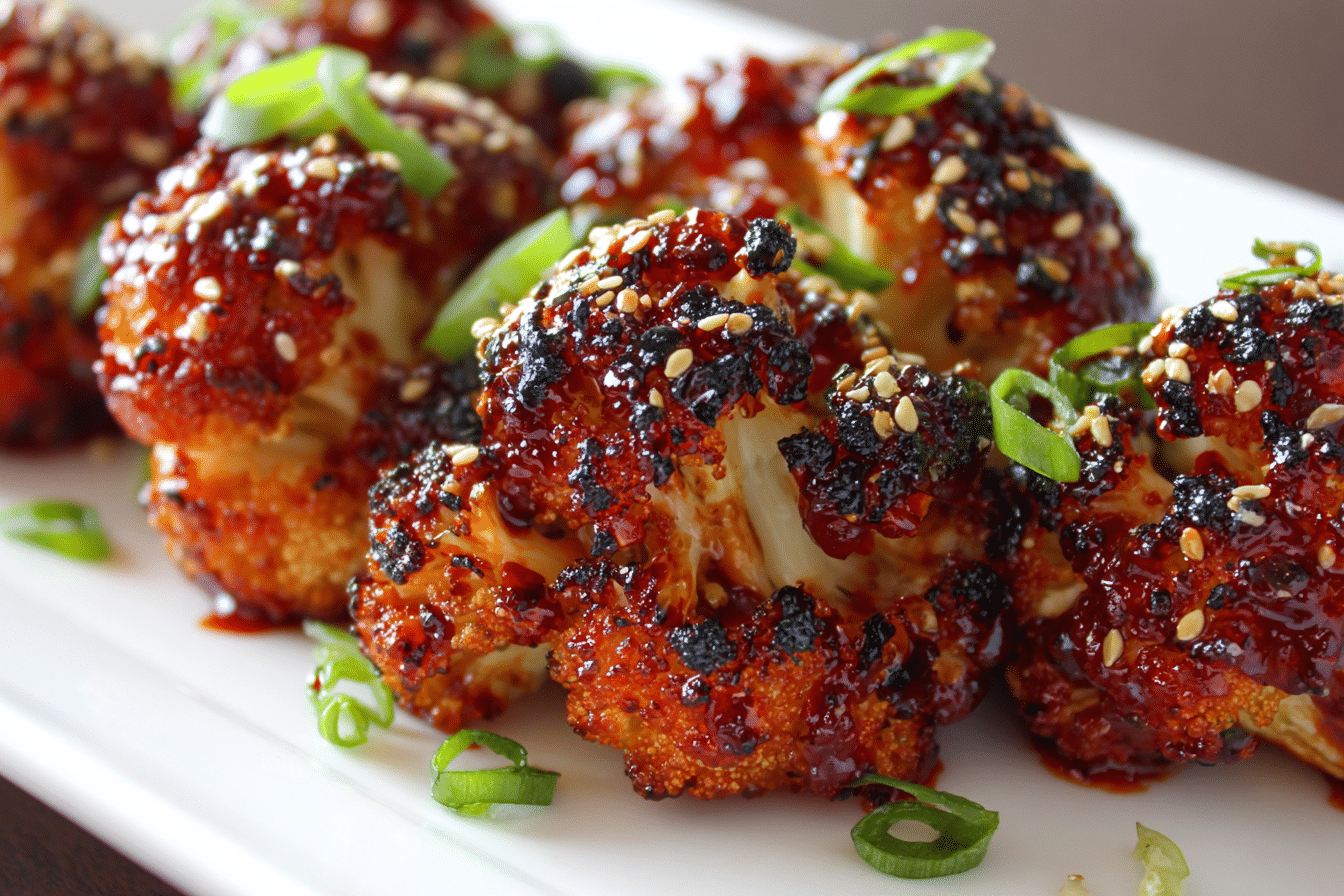
Cauliflower is the star of Korean-Style Baked Cauliflower. Choose a firm head with tightly packed florets and creamy white color. When cut into evenly sized pieces, it roasts uniformly, allowing the edges to brown while the interior stays tender. If fresh cauliflower is unavailable, high-quality frozen florets can work, though they should be thawed and thoroughly dried to avoid excess moisture.
Cornstarch plays a quiet yet essential role. A light coating helps the exterior crisp during baking, forming a delicate shell that later holds the sauce. All-purpose flour can substitute, though cornstarch delivers a lighter finish. For gluten-free preparation, rice flour is a reliable alternative.
Gochujang, a fermented Korean chili paste, provides depth and gentle heat. Its savory complexity defines the sauce. If gochujang cannot be sourced, combine miso paste with a touch of chili garlic sauce and a small spoon of honey for a similar balance.
Soy sauce contributes saltiness and umami. Tamari or coconut aminos can replace traditional soy sauce for gluten-free or soy-free diets. Fresh garlic and grated ginger add aromatic sharpness that cuts through the sweetness of the glaze.
Rice vinegar brightens the sauce, preventing it from tasting heavy. Brown sugar balances the chili heat and supports caramelization in the oven. Sesame oil adds nutty fragrance, while toasted sesame seeds and sliced green onions finish the dish with texture and color.
Step-by-Step Instructions
Begin by preheating the oven to 425°F. Line a large baking sheet with parchment paper to prevent sticking and promote even browning. Cut the cauliflower into medium florets, aiming for uniform size so each piece roasts at the same pace.
In a mixing bowl, whisk cornstarch with a pinch of salt and black pepper. Add the florets and toss thoroughly until each piece carries a thin, even coating. If the cauliflower seems dry, drizzle a tablespoon of neutral oil over the florets before tossing again. Spread them in a single layer on the prepared baking sheet, leaving space between pieces. Crowding leads to steaming rather than crisping.
Bake for 20 to 25 minutes, turning halfway through. The florets should develop golden edges and a slightly crisp exterior. Watch closely during the final minutes to prevent scorching.
While the cauliflower roasts, prepare the sauce. In a small saucepan over medium heat, combine gochujang, soy sauce, brown sugar, rice vinegar, minced garlic, grated ginger, and a teaspoon of sesame oil. Stir continuously as the mixture warms. After about three to five minutes, the sauce should thicken slightly and appear glossy. Remove from heat once it coats the back of a spoon.
When the cauliflower is evenly browned, transfer it to a large bowl. Pour the warm sauce over the florets and gently toss until fully coated. Work carefully to preserve the crisp crust.
Return the sauced cauliflower to the baking sheet and bake for an additional 8 to 10 minutes. This step allows the glaze to set and cling tightly to the surface. The edges may darken slightly, which intensifies flavor.
Remove from the oven and allow the cauliflower to rest briefly. Sprinkle with toasted sesame seeds and sliced green onions just before serving. Serve while hot for maximum contrast between crisp coating and sticky glaze.
Common mistakes include skipping the cornstarch, which reduces crispness, or applying sauce too early in the roasting process. Adding sauce before initial browning prevents proper caramelization. Another frequent error involves overcrowding the pan; use two baking sheets if necessary.
Tips, Variations & Substitutions
For extra crunch, add a tablespoon of panko breadcrumbs to the cornstarch mixture. This creates a slightly thicker coating without overwhelming the vegetable. A light spray of oil before baking also encourages browning.
To adjust heat levels, reduce the amount of gochujang or add a spoonful of ketchup to soften the spice. For stronger heat, include a pinch of red pepper flakes. Those seeking a sweeter glaze can add a teaspoon of honey or maple syrup.
This dish adapts easily for different diets. Use tamari for gluten-free preparation, and confirm that the gochujang brand used contains no wheat. Replace brown sugar with coconut sugar if preferred.
For a heartier meal, toss the baked cauliflower with steamed broccoli or roasted sweet potatoes. The same sauce works beautifully with crispy tofu or roasted Brussels sprouts, allowing flexibility while keeping the Korean flavor profile intact.
Serving Ideas & Occasions
Korean-Style Baked Cauliflower pairs beautifully with steamed jasmine rice or short-grain rice that absorbs the extra glaze. Add quick-pickled cucumbers or shredded cabbage on the side for contrast and freshness.
This dish fits casual gatherings, weeknight dinners, or game-day spreads. Arrange the florets on a large platter with extra sesame seeds and green onions scattered across the top for visual appeal. For a party setting, insert toothpicks for easy serving.
It can also serve as a flavorful taco filling or grain bowl topping alongside avocado, shredded carrots, and a drizzle of spicy mayo. Its bold character complements mild sides, allowing the cauliflower to remain the centerpiece.
Nutritional & Health Notes
Cauliflower is rich in fiber and vitamin C, supporting digestion and immune function. Baking instead of frying reduces added fat while still delivering satisfying texture.
Gochujang contains fermented ingredients that contribute depth and complexity. While the sauce includes sugar, the quantity per serving remains moderate when distributed across the dish.
Using sesame oil and seeds adds healthy fats in modest amounts. For lower sodium content, choose reduced-sodium soy sauce. Overall, Korean-Style Baked Cauliflower offers a balanced combination of vegetables, spice, and controlled sweetness suitable for a variety of dietary preferences.
FAQs
-
Can I prepare Korean-Style Baked Cauliflower in advance?
Yes. Roast the cauliflower initially and store it in an airtight container for up to two days. Reheat in a hot oven until crisp, then coat with freshly warmed sauce and return to the oven briefly. Applying sauce too early during storage can soften the crust, so keep components separate until reheating.
-
Is this dish very spicy?
The heat level depends on the amount of gochujang used. As written, the spice is noticeable yet balanced by sweetness and acidity. For milder flavor, reduce the chili paste slightly. For stronger heat, add a pinch of red pepper flakes or extra gochujang.
-
Can I air fry instead of bake?
An air fryer works well. Cook the coated florets at 400°F for about 12 to 15 minutes, shaking halfway through. Once crisp, toss with sauce and return to the air fryer for two to three additional minutes to set the glaze.
-
How do I keep the cauliflower crispy?
Spread florets in a single layer and avoid overcrowding. High oven temperature encourages browning. Also, wait until after the initial roast before adding sauce. Serving immediately after glazing preserves texture.
-
What protein pairs well with this dish?
Grilled chicken, seared shrimp, or crispy tofu complement the spicy glaze. For a plant-based plate, serve alongside edamame or lentils for added protein without overshadowing the cauliflower.
-
Can frozen cauliflower be used?
Yes, though texture may differ slightly. Thaw completely and pat dry with paper towels before coating. Excess moisture prevents crisp edges. Increase roasting duration slightly if needed.
-
How long does leftovers storage last?
Store leftovers in an airtight container in the refrigerator for up to three days. Reheat in a hot oven rather than a microwave to revive crispness. The glaze may darken slightly during reheating, which intensifies flavor.
Print
Korean-Style Baked Cauliflower features roasted florets coated in a sticky, spicy gochujang glaze with crisp edges and tender centers.
- Prep Time: 10 minutes
- Cook Time: 20 minutes
- Total Time: 30 minutes
- Yield: 4 servings 1x
Ingredients
1 large head cauliflower cut into medium florets
3 tablespoons cornstarch
2 tablespoons neutral oil
1 teaspoon salt
1/2 teaspoon black pepper
3 tablespoons gochujang
2 tablespoons soy sauce
2 tablespoons brown sugar
1 tablespoon rice vinegar
3 cloves garlic minced
1 teaspoon fresh ginger grated
1 teaspoon sesame oil
1 tablespoon toasted sesame seeds
2 green onions thinly sliced
Instructions
-
Preheat oven to 425°F and line a baking sheet with parchment paper.
-
Toss cauliflower with cornstarch, salt, pepper, and oil until evenly coated.
-
Spread florets in a single layer and bake for 20 to 25 minutes, turning halfway, until golden and crisp.
-
In a saucepan over medium heat combine gochujang, soy sauce, brown sugar, rice vinegar, garlic, ginger, and sesame oil. Cook until slightly thickened.
-
Transfer roasted cauliflower to a bowl and toss with warm sauce.
-
Return to baking sheet and bake for 8 to 10 minutes until glaze sets.
-
Garnish with sesame seeds and green onions before serving.