
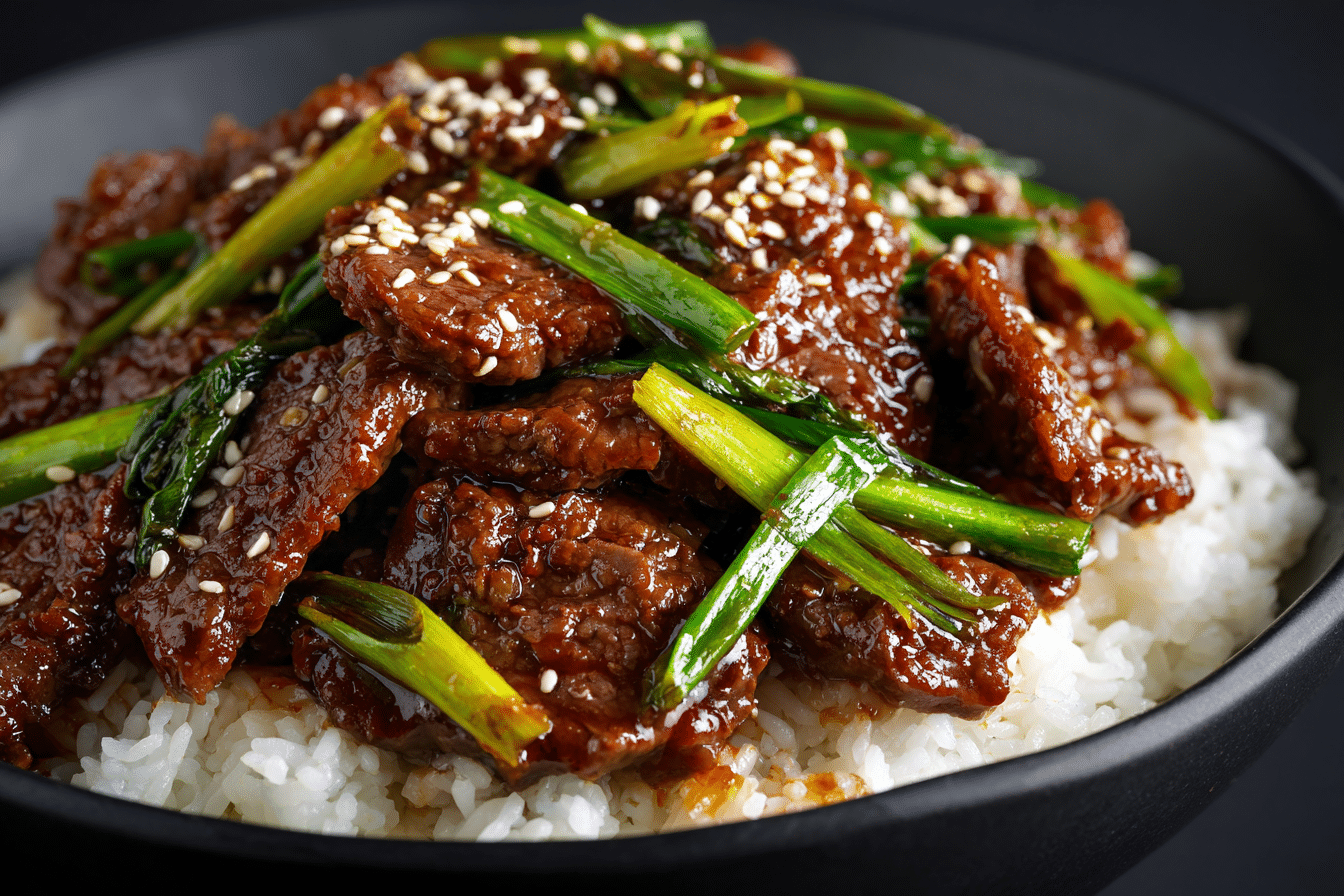
Mongolian Beef is one of those dishes that instantly brings to mind sizzling woks, glossy sauces, and tender strips of beef kissed by soy, garlic, and ginger. Despite its name, this flavorful favorite doesn’t actually hail from Mongolia. It’s a dish rooted in Chinese-American cuisine, crafted to appeal to the comforting flavors loved in Western-style stir-fries.
Known for its rich, savory-sweet sauce and succulent texture, Mongolian Beef has earned a permanent place on the menus of many Asian-inspired restaurants. But the best part? It’s incredibly easy to recreate at home. Whether you’re craving a quick weeknight dinner or a better-than-takeout treat, this dish delivers bold flavor in every bite.
Ingredients Overview
To make Mongolian Beef truly sing, it all starts with a careful selection of simple, high-impact ingredients. Each one plays a unique role in creating the signature flavor and texture balance.
-
Flank Steak: The traditional choice for Mongolian Beef. It’s lean but tender when sliced thin against the grain. Skirt steak or sirloin are good alternatives if needed. For a more budget-friendly option, try flat iron steak.
-
Cornstarch: This is key to creating that signature crispy edge on the beef. Coating the meat before pan-frying helps it brown beautifully and thicken the sauce later.
-
Soy Sauce: A mix of light and dark soy sauces adds both saltiness and a rich umami depth. Use tamari for a gluten-free version.
-
Brown Sugar: The essential counterpart to the salty soy. It gives the dish its characteristic sweet glaze and caramel-like stickiness. Dark brown sugar adds even more depth.
-
Garlic and Ginger: These aromatics form the heart of the sauce. Fresh is always best, but you can substitute with paste in a pinch.
-
Scallions (Green Onions): Added at the end for crunch and freshness. They cut through the rich sauce and brighten the entire dish.
-
Sesame Oil: A drizzle at the finish adds a subtle toasted flavor. Not essential, but highly recommended.
-
Neutral Oil for Frying: Choose something like vegetable, canola, or avocado oil for searing the beef without overpowering the flavor.
Optional Add-Ins and Swaps
-
Add red pepper flakes for heat.
-
Substitute coconut aminos for soy if you’re soy-free.
-
Use arrowroot starch instead of cornstarch for paleo-friendly prep.
-
For a veggie twist, swap the beef for portobello mushrooms or tofu, and stir-fry until crisp.
Step-by-Step Instructions
This recipe comes together quickly, so have everything prepped before you start. Stir-fries move fast!
-
Slice the Beef Thinly
Slice the flank steak against the grain into thin strips, about 1/4 inch thick. This ensures tenderness. Pat dry with a paper towel to remove excess moisture, which helps with browning. -
Coat with Cornstarch
Toss the beef strips in a bowl with cornstarch until evenly coated. Let them sit for 10 minutes. This light dusting creates a crisp outer layer when fried. -
Prepare the Sauce
In a small bowl, mix together soy sauce, brown sugar, minced garlic, grated ginger, and a splash of water. Stir until the sugar dissolves completely. -
Fry the Beef
Heat 2–3 tablespoons of neutral oil in a large skillet or wok over medium-high heat. Add the beef in a single layer and fry in batches to avoid overcrowding. Let it sear undisturbed for about 1 minute per side until golden and slightly crispy. Transfer cooked beef to a plate. -
Simmer the Sauce
In the same pan, reduce the heat slightly and pour in the sauce mixture. Bring it to a gentle simmer. The sugar will caramelize slightly, and the sauce will thicken within 2–3 minutes. -
Return Beef to the Pan
Add the fried beef back into the sauce and toss to coat thoroughly. Stir in sliced green onions and let cook for another 1–2 minutes. The beef should be glossy and richly coated. -
Finish and Serve
Remove from heat and drizzle with sesame oil for that toasty aroma. Serve immediately over steamed jasmine rice or with noodles.
Pro Tips
-
Always slice beef against the grain for tenderness.
-
Let the cornstarch sit on the meat before frying — this is the trick to that crispy bite.
-
Use a hot pan for proper searing. Overcrowding the pan causes steaming instead of browning.
-
If your sauce gets too thick, add a splash of water to loosen it.
Tips, Variations & Substitutions
Cooking Tips
-
Preheat your pan fully before adding beef — this helps with browning and avoids sticking.
-
For even crisper beef, use a shallow fry method with slightly more oil and drain on paper towels.
Variations
-
Spicy Mongolian Beef: Add dried red chilies or a dash of Sriracha.
-
Vegetable Boost: Stir in bell peppers, snap peas, or broccoli in the last 3 minutes of cooking.
-
Slow Cooker Version: Sear the beef and transfer to a slow cooker with the sauce ingredients. Cook on low for 4 hours.
Dietary Swaps
-
Gluten-Free: Use tamari and gluten-free cornstarch.
-
Low Carb: Replace brown sugar with a low-glycemic sweetener like monk fruit.
-
Vegan Option: Use tofu or mushrooms instead of beef and follow the same stir-fry method.
 Serving Ideas & Occasions
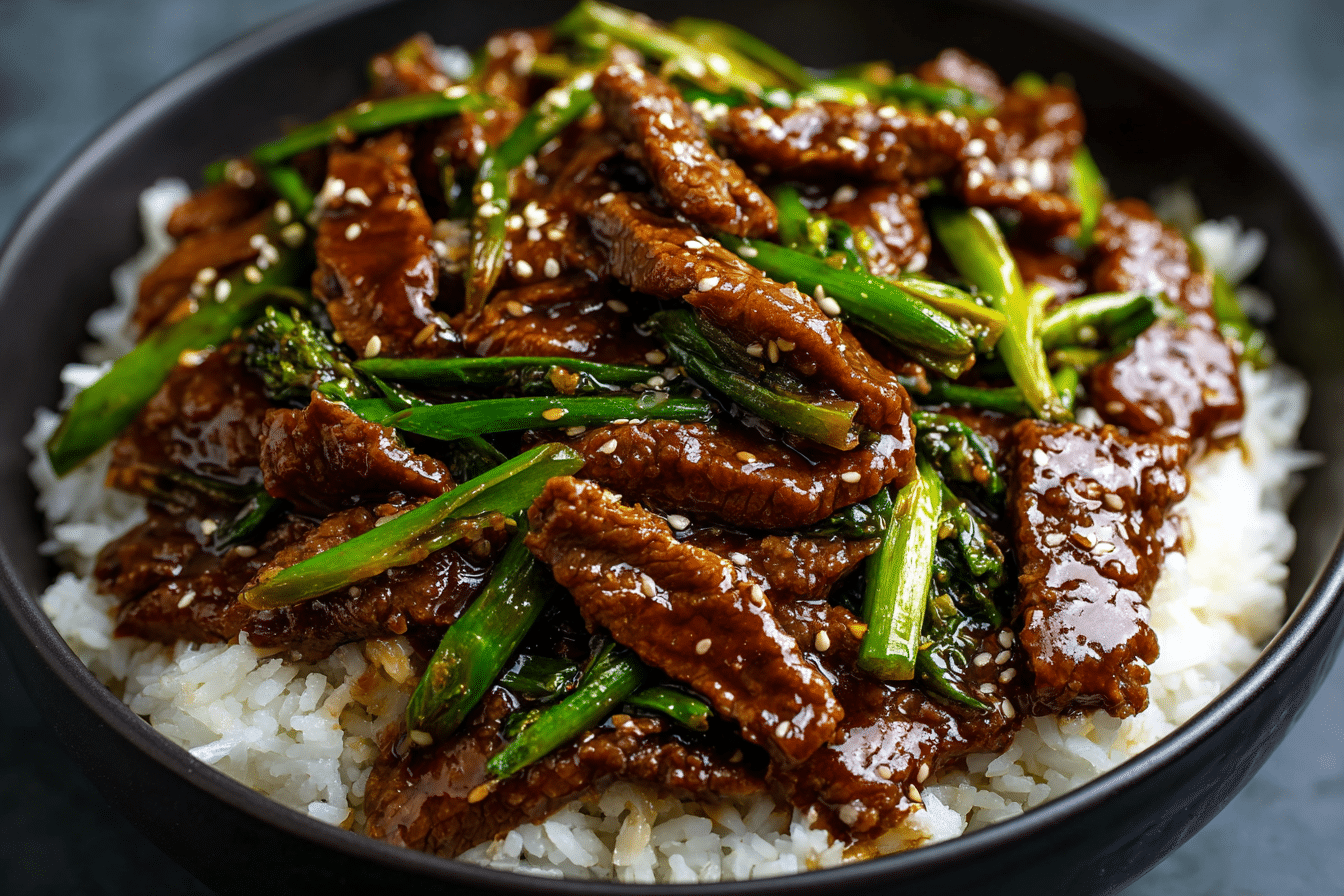
Mongolian Beef is best served piping hot, its glossy sauce clinging to every piece. Pair it with:
-
Steamed jasmine or basmati rice
-
Garlic noodles or rice noodles
-
Quick cucumber salad or steamed bok choy for freshness
It’s ideal for:
-
Weeknight dinners: Quick, flavorful, and better than takeout.
-
Meal prep: Holds up well for a few days in the fridge.
-
Dinner parties: Plate it beautifully with garnishes for a crowd-pleasing main dish.
The rich aroma and vibrant flavor make it feel like a celebration in a bowl — simple enough for busy evenings, special enough for guests.
Nutritional & Health Notes
Mongolian Beef is undeniably rich in flavor — and depending on how it’s made, it can also be reasonably balanced.
-
Protein: Flank steak provides high-quality, lean protein.
-
Carbs: Brown sugar and sauce ingredients contribute moderate carbs; you can reduce sugar for a lighter version.
-
Fats: Use moderate oil for pan-frying; sesame oil adds flavor in small amounts.
For lighter portions:
-
Serve over cauliflower rice or zoodles.
-
Reduce the amount of sugar or swap with a natural sweetener.
-
Use spray oil instead of deep pan-frying for less fat.
Portion control is key — pair with lots of vegetables to round out the meal without overloading on calories.
FAQs
Q1: Can I use a different cut of beef for Mongolian Beef?
A1: Yes! While flank steak is ideal for its texture and quick cooking, sirloin, ribeye, or flat iron steak also work well. Just make sure to slice thinly and against the grain to keep the meat tender.
Q2: How do I get the beef crispy without deep frying?
A2: Toss the beef in cornstarch and let it sit for 10–15 minutes before searing. Use a hot pan with a small amount of oil and avoid overcrowding — fry in batches for the best results.
Q3: Can I make Mongolian Beef ahead of time?
A3: Absolutely. You can cook the beef and sauce separately, then store and reheat when ready. For best texture, reheat in a pan rather than the microwave to maintain crispness.
Q4: Is Mongolian Beef spicy?
A4: Traditionally, it’s not spicy. However, you can easily add heat by tossing in chili flakes, chopped chilies, or a touch of hot sauce during the sauce-making step.
Q5: Can I freeze Mongolian Beef?
A5: Yes, it freezes fairly well. Let it cool completely, then freeze in an airtight container. Reheat in a skillet over low heat with a splash of water to revive the sauce.
Q6: What’s the best way to slice flank steak thinly?
A6: Place the steak in the freezer for 20 minutes before slicing. This firms it up slightly, making it easier to cut into uniform, thin strips.
Q7: Is this dish gluten-free?
A7: Not by default, as soy sauce contains wheat. To make it gluten-free, use tamari or a certified gluten-free soy sauce. Also check that your cornstarch brand is gluten-free.
PrintMongolian Beef – A Sweet and Savory Takeout Classic Made at Home
A savory-sweet stir-fry made with tender beef, garlic, and ginger in a glossy soy-based sauce. Better than takeout and ready in 30 minutes.
- Prep Time: 15 minutes
- Cook Time: 15 minutes
- Total Time: 30 minutes
- Yield: 4 servings 1x
Ingredients
-
1 lb flank steak, thinly sliced against the grain
-
1/4 cup cornstarch
-
3 tbsp vegetable oil
-
1/2 cup low-sodium soy sauce
-
1/3 cup brown sugar
-
3 cloves garlic, minced
-
1 tbsp fresh ginger, grated
-
1/4 cup water
-
4 green onions, sliced into 2-inch pieces
-
1 tsp sesame oil
Instructions
-
Toss sliced beef with cornstarch and let rest for 10 minutes.
-
In a small bowl, mix soy sauce, brown sugar, garlic, ginger, and water.
-
Heat oil in a skillet or wok over medium-high heat. Fry beef in batches until browned and crispy. Remove and set aside.
-
In the same pan, pour in the sauce and simmer until slightly thickened.
-
Add the cooked beef and toss to coat. Stir in green onions.
-
Drizzle with sesame oil and serve immediately over rice or noodles.
Notes
-
Add chili flakes for heat.
-
Substitute tofu for a vegetarian version.
-
Store leftovers in fridge for up to 3 days.