
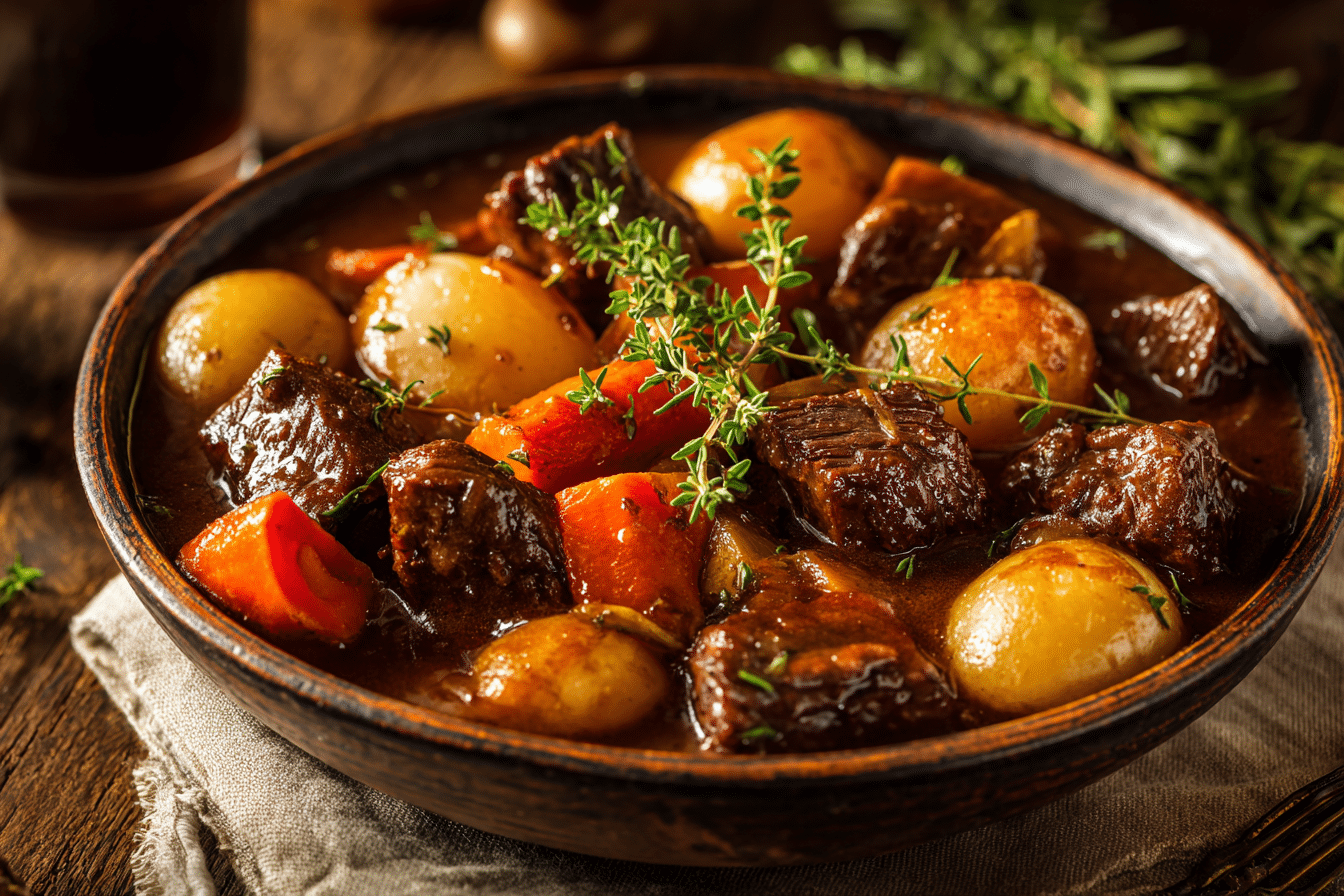
Old Fashioned Beef Stew brings a deep, slow-simmered richness that fills the kitchen with warmth. Tender chunks of beef rest in a thick, savory gravy layered with carrots, potatoes, and fragrant herbs. Each spoonful delivers soft vegetables, melt-in-your-mouth meat, and a broth that feels grounding and satisfying.
This dish traces back to traditional farmhouse cooking, where simple pantry staples transformed into a filling supper after hours over gentle heat. Old Fashioned Beef Stew relies on patience rather than complicated technique. Low heat coaxes flavor from every ingredient, allowing the broth to thicken naturally while the beef becomes fork-tender.
Whether prepared on a quiet weekend afternoon or simmered slowly for a family gathering, this stew offers steady comfort and familiar flavor that never feels dated.
Ingredients Overview
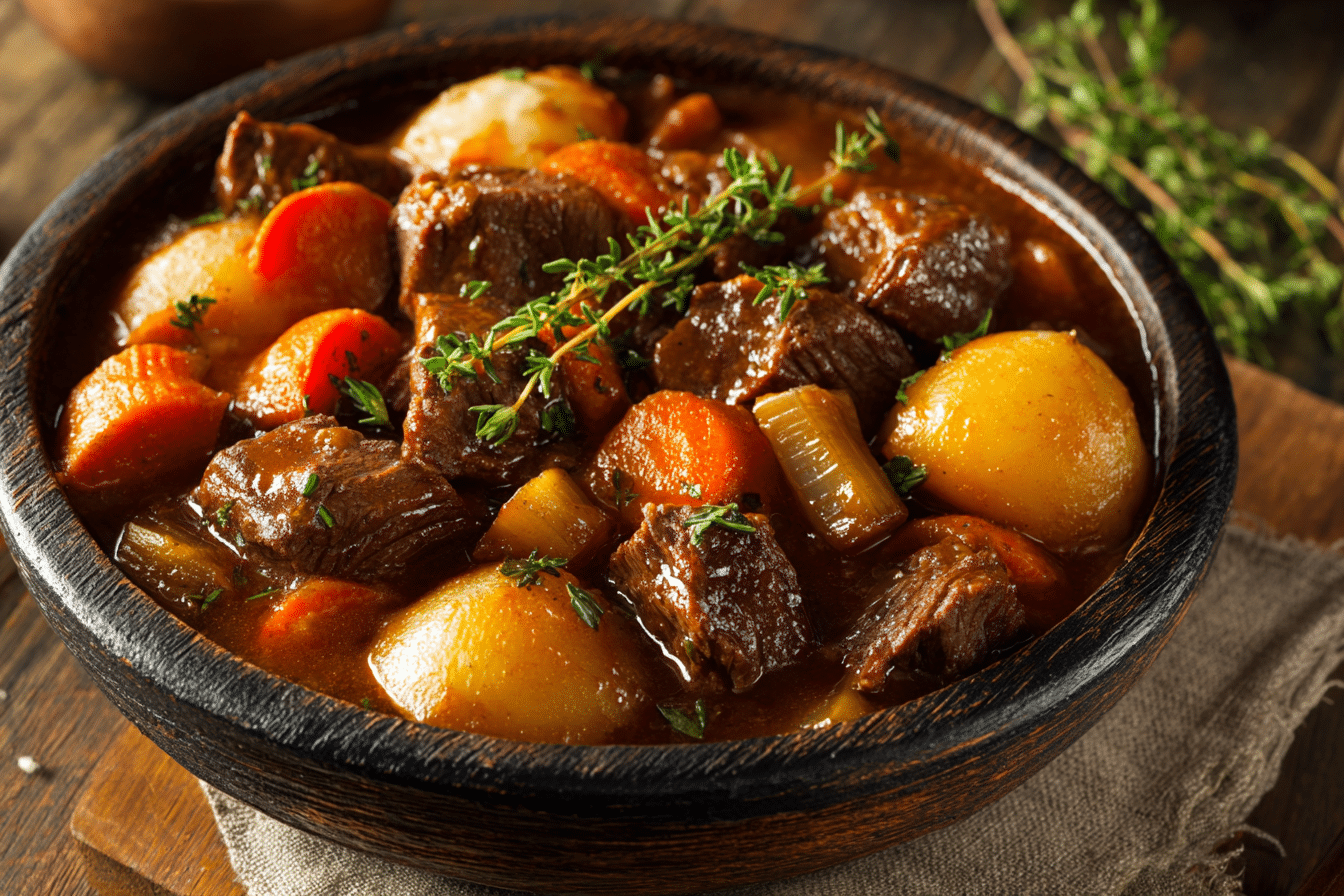
The foundation of Old Fashioned Beef Stew begins with well-marbled beef chuck. Chuck contains connective tissue that breaks down during long cooking, creating tenderness and body in the broth. Cut into even cubes, it cooks evenly and absorbs surrounding flavor.
Onions provide sweetness and depth as they soften and dissolve slightly into the base. Garlic adds a subtle aromatic note without overpowering the stew. Carrots contribute gentle sweetness and vibrant color, while Yukon Gold or russet potatoes supply starch that thickens the broth naturally.
Celery introduces mild earthiness and balances the sweetness from carrots and onions. Tomato paste adds concentrated savoriness and a hint of acidity, rounding out the richness of the beef. A splash of dry red wine deepens flavor, though additional beef broth can replace it if preferred.
Beef broth forms the liquid base. Choose a low-sodium option to control seasoning. Bay leaves and fresh thyme bring classic herbal notes associated with traditional stews. A small amount of flour coats the beef before browning, helping create a thicker consistency as the stew simmers.
Salt and freshly ground black pepper finish the seasoning. Fresh parsley sprinkled at serving adds brightness and color contrast.
Step-by-Step Instructions
Begin by patting the beef cubes dry with paper towels. Dry surfaces brown properly, which is essential for developing deep flavor. Season the beef with salt and pepper, then toss lightly with flour until coated.
Heat a heavy Dutch oven over medium-high heat and add a tablespoon of oil. Brown the beef in batches, leaving space between pieces. Overcrowding traps steam and prevents caramelization. Allow each side to develop a rich brown crust before turning. Transfer browned beef to a plate.
Reduce heat to medium and add diced onions and celery to the same pot. Stir and scrape up the browned bits from the bottom; these bits carry concentrated flavor. Cook until onions soften and turn translucent. Add minced garlic and cook briefly until fragrant.
Stir in tomato paste and cook for a minute to remove raw flavor. Pour in red wine, if using, and simmer for several minutes until slightly reduced. This step lifts remaining browned bits and builds depth.
Return the beef to the pot along with any accumulated juices. Add sliced carrots, bay leaves, thyme, and enough beef broth to cover everything by about an inch. Bring the mixture to a gentle simmer.
Lower heat to maintain a steady, slow bubble. Cover partially and cook for about two hours, stirring occasionally. Avoid rapid boiling, which can toughen the meat.
After two hours, add cubed potatoes. Continue simmering for another hour, or until the beef easily yields to a fork and the potatoes are tender. If the broth seems thin, remove the lid during the final thirty minutes to allow slight reduction. If too thick, add a small splash of warm broth.
Taste and adjust seasoning with additional salt and pepper. Remove bay leaves before serving. Let the stew rest for ten to fifteen minutes; this brief pause allows flavors to settle and the broth to thicken slightly.
Tips, Variations & Substitutions
For deeper flavor, brown the beef thoroughly and avoid rushing that stage. Proper browning creates the base character of Old Fashioned Beef Stew.
If flour is not desired, the stew can thicken naturally through potato starch and slow reduction. Alternatively, mix a tablespoon of cornstarch with cold water and stir it in during the final simmer.
Parsnips can replace part of the carrots for a slightly sweeter, earthy note. Turnips add subtle sharpness and hold shape well during long cooking. Mushrooms provide additional savory depth and can be added alongside the onions.
For a lighter version, trim visible fat from the beef and refrigerate the finished stew; once chilled, hardened fat can be lifted easily from the surface before reheating.
A slow cooker adaptation works well. Brown the beef and sauté aromatics on the stovetop, then transfer everything to the cooker and cook on low for eight hours.
Serving Ideas & Occasions
Old Fashioned Beef Stew pairs beautifully with crusty bread that soaks up the thick gravy. A simple green salad with a sharp vinaigrette balances the stew’s richness.
Serve it during cooler months, family dinners, or relaxed Sunday gatherings. It also reheats well, making it suitable for preparing a day ahead when hosting guests.
For a rustic presentation, ladle the stew into wide bowls and sprinkle with chopped parsley. A side of buttered peas or steamed green beans adds color contrast without competing flavors.
Nutritional & Health Notes
Old Fashioned Beef Stew provides protein from beef along with fiber and vitamins from root vegetables. Carrots supply beta-carotene, while potatoes contribute potassium and complex carbohydrates.
Using lean beef and controlling added salt helps maintain balance. The long simmer allows connective tissue to break down, creating a satisfying texture without relying on excessive fat.
Because the stew includes both protein and vegetables, it functions as a complete meal in a single bowl. Portion control and pairing with fresh vegetables can help keep the meal balanced within a varied diet.
FAQs
What cut of beef works best for Old Fashioned Beef Stew?
Beef chuck is widely preferred for Old Fashioned Beef Stew due to its marbling and connective tissue. During slow cooking, collagen breaks down and transforms into gelatin, giving the broth body and producing tender meat. Other suitable cuts include bottom round or brisket, though they may require slightly adjusted cooking periods. Lean cuts such as sirloin are less suitable because they can dry during extended simmering. Uniform cubes help the meat cook evenly and prevent some pieces from becoming overly soft while others remain firm.
Can Old Fashioned Beef Stew be prepared ahead of serving?
Yes, Old Fashioned Beef Stew often tastes even richer the following day. After cooking, allow it to cool completely before refrigerating in an airtight container. Chilling allows flavors to blend further and makes it simple to remove excess fat that solidifies on the surface. Reheat gently over low heat, stirring occasionally and adding a small splash of broth if the stew has thickened too much. Avoid rapid boiling during reheating to maintain tenderness.
How do I thicken the stew if the broth is too thin?
If the broth appears thin near the end of cooking, remove the lid and continue simmering so liquid reduces gradually. For quicker thickening, mix cornstarch with cold water and stir it into the simmering stew, allowing a few minutes for it to activate. Another option involves mashing a portion of the cooked potatoes directly into the broth, which releases natural starch and thickens the consistency without altering flavor.
Can I freeze Old Fashioned Beef Stew?
Old Fashioned Beef Stew freezes well when cooled fully before storage. Transfer to freezer-safe containers, leaving a small gap at the top for expansion. It can remain frozen for up to three months. Thaw overnight in the refrigerator before reheating gently on the stovetop. Potatoes may soften slightly after freezing, though flavor remains intact. Stirring during reheating helps restore an even texture.
Is wine necessary in this recipe?
Wine adds depth and slight acidity, but it is not mandatory. Additional beef broth can replace wine without compromising structure. A small splash of balsamic vinegar or Worcestershire sauce may provide comparable complexity if desired. When using wine, allow it to simmer briefly after adding so alcohol cooks off and concentrated flavor remains.
Why is my beef still tough after simmering?
Toughness usually results from insufficient cooking or heat that is too high. Beef chuck requires steady, gentle simmering so connective tissue can break down properly. Rapid boiling tightens muscle fibers, leading to firmness. Continue cooking at low heat and test periodically with a fork; properly cooked beef should yield easily without resistance.
What vegetables can I add without changing the classic character?
Traditional Old Fashioned Beef Stew typically includes carrots, potatoes, celery, and onions. However, parsnips, pearl onions, or mushrooms integrate smoothly while preserving its rustic identity. Add delicate vegetables during the final hour to prevent overcooking. Keeping vegetable pieces relatively large helps them maintain structure during long simmering.
Print
Old Fashioned Beef Stew is a slow-simmered dish featuring tender beef chuck, hearty root vegetables, and a rich savory broth infused with herbs.
Ingredients
2 pounds beef chuck, cut into 1 1/2 inch cubes
3 tablespoons all-purpose flour
1 teaspoon salt
1/2 teaspoon black pepper
2 tablespoons vegetable oil
1 large onion, diced
2 celery stalks, sliced
3 cloves garlic, minced
2 tablespoons tomato paste
1/2 cup dry red wine
4 cups low-sodium beef broth
3 carrots, sliced
3 medium Yukon Gold potatoes, cubed
2 bay leaves
2 teaspoons fresh thyme leaves
2 tablespoons chopped fresh parsley
Instructions
-
Pat beef dry, season with salt and pepper, and toss with flour.
-
Heat oil in a Dutch oven over medium-high heat and brown beef in batches. Remove and set aside.
-
Add onion and celery to the pot and cook until softened. Stir in garlic and tomato paste.
-
Pour in red wine and simmer for several minutes.
-
Return beef to the pot. Add carrots, bay leaves, thyme, and beef broth to cover.
-
Bring to a gentle simmer, partially cover, and cook for 2 hours.
-
Add potatoes and continue simmering for 1 hour until beef and vegetables are tender.
-
Adjust seasoning, remove bay leaves, and garnish with parsley before serving.