
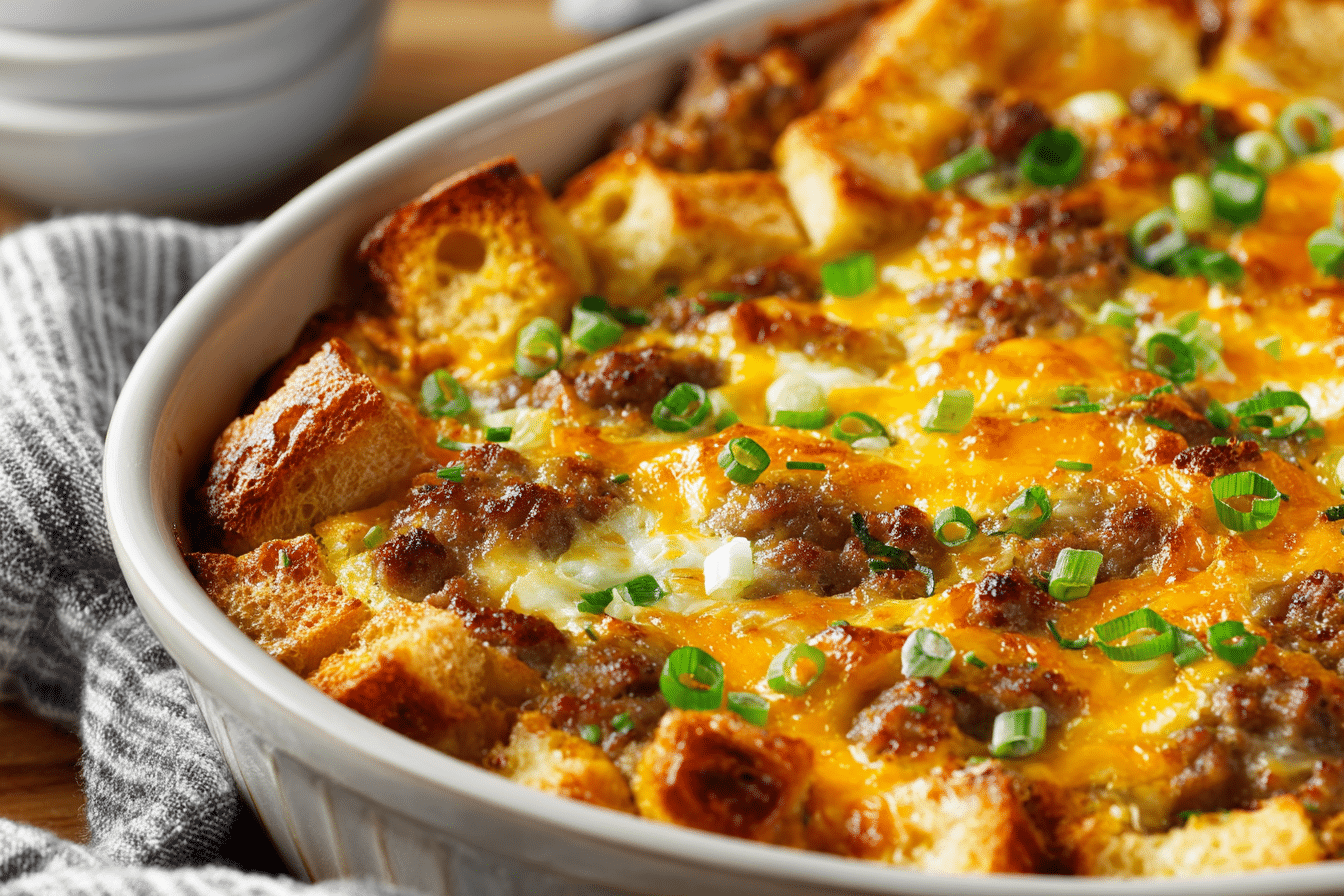
Overnight Breakfast Casserole is the kind of morning dish that turns a busy start into something calm and comforting. Prepared the night before and baked fresh in the morning, it fills the kitchen with the rich aroma of eggs, sausage, toasted bread, and melted cheese. Each bite is soft yet structured, savory yet balanced, with golden edges that add gentle texture.
This classic breakfast bake is especially loved for its convenience. Everything comes together in one dish, rests overnight in the refrigerator, and transforms in the oven into a warm, satisfying meal. Overnight Breakfast Casserole is ideal for holidays, weekend gatherings, or meal prep when you want a hearty breakfast without early-morning effort.
Ingredients Overview

The heart of Overnight Breakfast Casserole is sturdy bread. Day-old French bread or a rustic sandwich loaf works beautifully because it absorbs the egg mixture without becoming mushy. Slightly dry bread holds its shape better, creating a tender yet structured interior.
Eggs provide the rich custard base that binds everything together. Whole milk adds creaminess and helps create a soft, fluffy texture. For a richer result, half-and-half may replace part of the milk, though whole milk offers excellent balance.
Breakfast sausage delivers savory depth and satisfying flavor. Pork sausage is traditional, but turkey sausage can be substituted for a lighter version. Browning the sausage before assembling the casserole builds flavor and removes excess grease.
Shredded cheddar cheese brings sharpness and melts into creamy pockets throughout the bake. A blend of cheddar and Monterey Jack creates a smooth, slightly milder profile. Freshly shredded cheese melts more evenly than pre-shredded varieties.
A small amount of diced onion adds subtle sweetness, while salt and freshly ground black pepper round out the flavors. If desired, a pinch of paprika or dried mustard powder can gently deepen the savory notes without overpowering the dish.
Step-by-Step Instructions
Begin by lightly greasing a 9×13-inch baking dish. Cut the bread into 1-inch cubes and spread them evenly in the bottom of the dish. The cubes should fill the pan in a single, even layer.
In a skillet over medium heat, cook the breakfast sausage, breaking it apart with a spoon. Continue cooking until fully browned and no pink remains, about 7 to 8 minutes. Drain excess grease if necessary. Stir in the diced onion during the last 2 minutes of cooking so it softens slightly.
Evenly distribute the cooked sausage mixture over the bread cubes. Sprinkle shredded cheese across the top, allowing it to settle into the spaces between the bread pieces.
In a large bowl, whisk together the eggs, milk, salt, and pepper until smooth. Pour the mixture slowly and evenly over the bread and sausage layers. Gently press down with a spatula to help the bread absorb the liquid.
Cover the dish tightly with plastic wrap or foil and refrigerate for at least 8 hours or overnight. This resting period allows the custard to soak into the bread fully, creating a cohesive texture.
In the morning, remove the casserole from the refrigerator and let it sit at room temperature for about 20 minutes while the oven preheats to 350°F. This helps promote even baking.
Bake uncovered for 45 to 55 minutes, or until the center is set and a knife inserted into the middle comes out clean. The top should be lightly golden. If the surface begins to brown too quickly, loosely tent with foil during the final 15 minutes.
Allow the casserole to rest for 10 minutes before slicing. This brief cooling period helps it firm up for clean portions.
Tips, Variations & Substitutions
For added color and flavor, stir in diced bell peppers or sautéed mushrooms with the sausage. Spinach can also be folded in after wilting it briefly in a skillet to remove excess moisture.
Swap cheddar for Swiss or pepper jack for a different flavor profile. For a vegetarian version, omit the sausage and increase vegetables such as mushrooms, zucchini, or roasted potatoes.
If you prefer a lighter texture, use part egg whites in place of some whole eggs. For a dairy-free adaptation, substitute unsweetened almond milk and a plant-based cheese alternative that melts well.
Avoid using overly soft sandwich bread, as it can become too dense after soaking. Slightly dry or toasted bread yields the most pleasant texture.
Serving Ideas & Occasions
Overnight Breakfast Casserole shines during holiday mornings, family brunches, or weekend gatherings. Serve it alongside fresh fruit, yogurt parfaits, or a simple green salad for balance.
It pairs beautifully with crisp bacon, breakfast potatoes, or a light fruit compote. For beverages, coffee, tea, or freshly squeezed orange juice complement the savory richness of the dish.
This casserole also reheats well, making it suitable for weekday breakfasts when sliced into individual portions.
Nutritional & Health Notes
Overnight Breakfast Casserole provides protein from eggs and sausage, which supports fullness and sustained energy. Using whole milk contributes calcium and richness, while vegetables can add fiber and vitamins when included.
Choosing turkey sausage reduces saturated fat, and incorporating additional vegetables increases nutrient density. Portion size plays an important role, as the dish is hearty and filling.
Balancing this casserole with fresh fruit or a side of greens creates a well-rounded breakfast plate that feels satisfying without being overly heavy.
FAQs
-
Can I prepare Overnight Breakfast Casserole more than one night in advance?
It is best prepared the night before baking. While it can rest up to 24 hours in the refrigerator, longer soaking may cause the bread to break down excessively. For optimal texture, aim for 8 to 12 hours of refrigeration.
-
How do I know when the casserole is fully cooked?
The center should appear set and no longer jiggly. Insert a knife into the middle; if it comes out clean and the eggs are fully set, it is done. An internal temperature of 160°F confirms doneness.
-
Can I freeze Overnight Breakfast Casserole?
Yes. You can freeze it either before or after baking. If freezing before baking, thaw overnight in the refrigerator before placing in the oven. If freezing after baking, cool completely, wrap tightly, and freeze for up to two months.
-
Why did my casserole turn out soggy?
Soggy texture often results from using very soft bread or too much liquid. Sturdy bread and accurate measurement of milk help maintain structure. Allowing enough baking time also ensures proper setting.
-
Can I use bacon instead of sausage?
Yes. Cook and crumble bacon before layering it over the bread. Because bacon has less bulk than sausage, you may need a slightly larger quantity to achieve similar coverage and flavor.
-
Do I need to cover the casserole while baking?
Bake it uncovered to allow the top to brown gently. If it begins browning too quickly, loosely tent with foil during the last portion of baking.
-
How long will leftovers last?
Store leftovers covered in the refrigerator for up to four days. Reheat individual portions in the microwave or warm larger sections in the oven at 325°F until heated through.
Print
Overnight Breakfast Casserole is a hearty make-ahead breakfast made with bread, eggs, sausage, and cheese. It rests overnight and bakes into a golden, savory dish perfect for brunch or holiday mornings.
Ingredients
1 loaf day-old French bread, cut into 1-inch cubes (about 8 cups)
1 pound breakfast sausage
1/2 cup diced onion
8 large eggs
2 1/2 cups whole milk
2 cups shredded cheddar cheese
1 teaspoon salt
1/2 teaspoon black pepper
Instructions
-
Grease a 9×13-inch baking dish and spread bread cubes evenly inside.
-
Cook sausage in a skillet over medium heat until browned. Add onion during the last 2 minutes of cooking. Drain excess grease.
-
Spread sausage mixture over bread and sprinkle cheese evenly on top.
-
In a bowl, whisk eggs, milk, salt, and pepper. Pour evenly over the bread mixture.
-
Press gently to help the bread absorb the liquid. Cover and refrigerate overnight.
-
Remove from refrigerator 20 minutes before baking. Preheat oven to 350°F.
-
Bake uncovered for 45 to 55 minutes, until set and lightly golden.
-
Let rest 10 minutes before slicing and serving.