
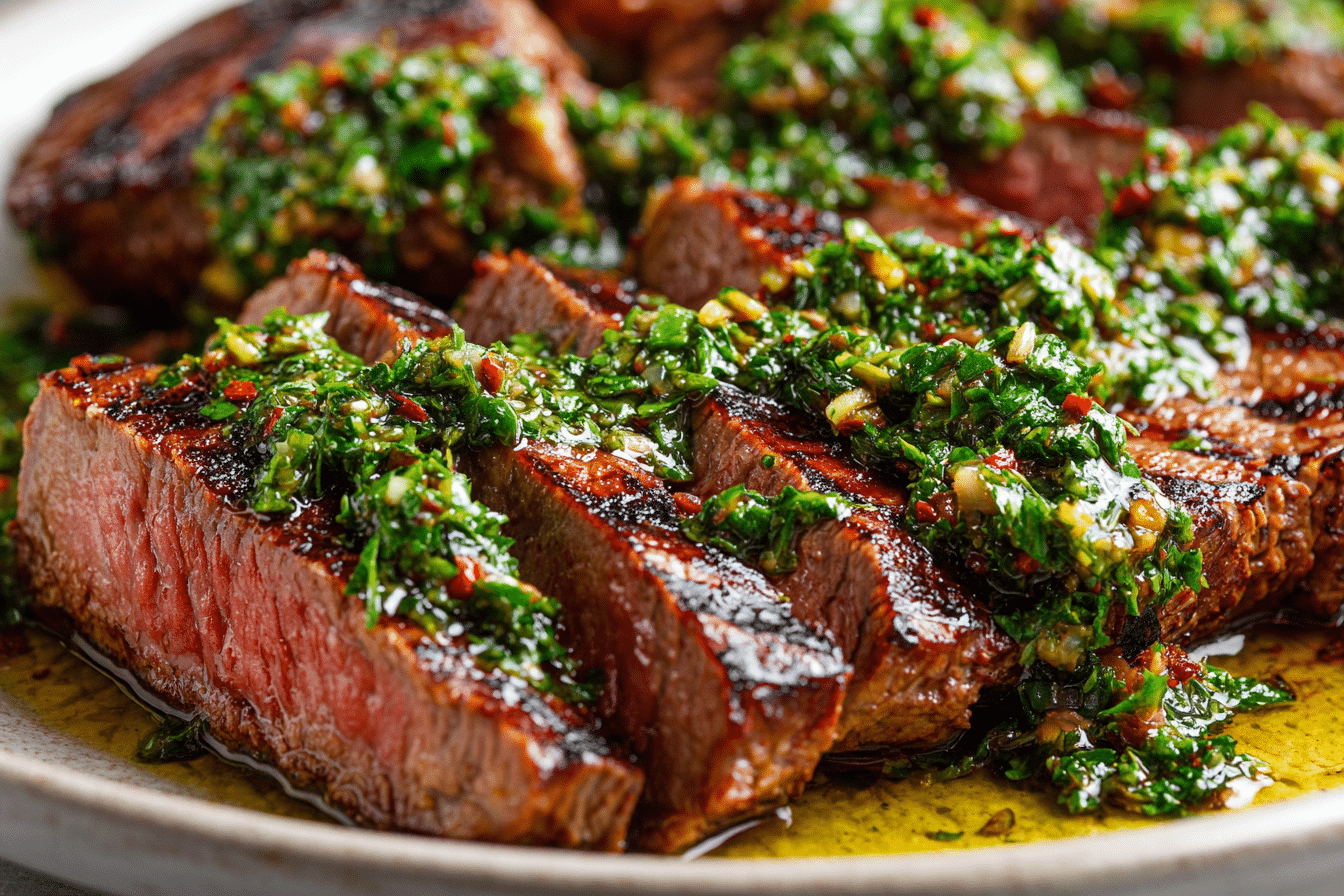
Quick & Easy Chimichurri Steak brings together juicy, pan-seared beef and a vibrant herb sauce that tastes fresh and lively. The contrast between charred crust and bright green chimichurri creates a plate that feels balanced and satisfying without requiring complicated preparation.
This dish draws inspiration from Argentine grilling traditions, where steak is cooked simply and paired with a punchy blend of parsley, garlic, olive oil, and vinegar. The sauce cuts through the richness of the meat, adding freshness and a gentle tang.
Whether prepared on a stovetop skillet or outdoor grill, Quick & Easy Chimichurri Steak fits into busy evenings while still delivering deep flavor. With a short ingredient list and clear technique, it is approachable for beginners yet refined enough for guests.
Ingredients Overview
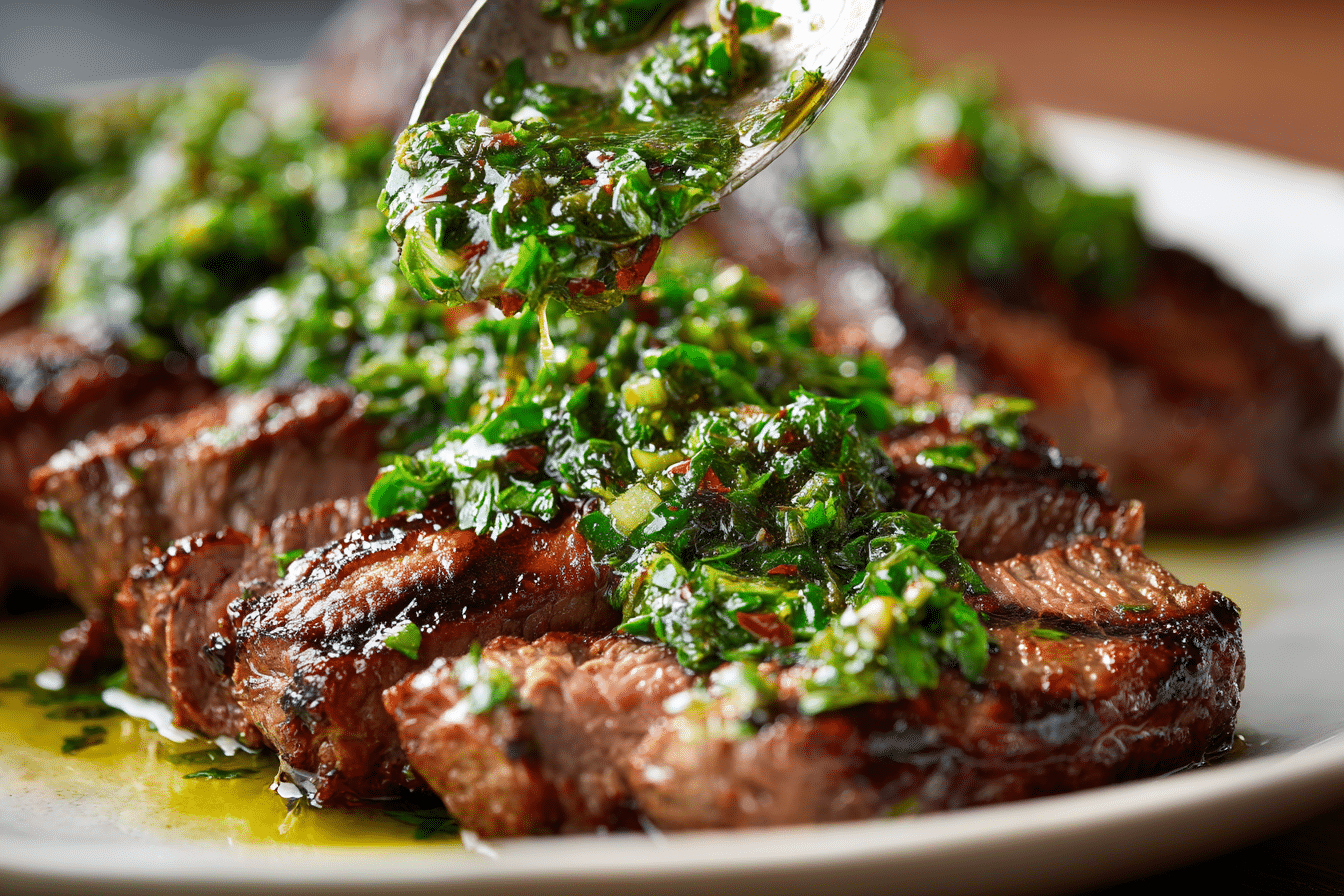
The star of Quick & Easy Chimichurri Steak is the steak itself. Flank steak, skirt steak, sirloin, or ribeye all work well. Flank and skirt offer rich beef flavor and benefit from slicing against the grain, while sirloin provides a leaner option. Ribeye delivers extra marbling and tenderness.
Fresh parsley forms the base of chimichurri. Flat-leaf parsley is preferred because of its clean, slightly peppery taste. Dried herbs are not recommended here, as the sauce relies on brightness and texture from fresh leaves.
Garlic adds sharp depth. It should be finely minced or grated so it blends smoothly into the sauce without overpowering each bite. Red wine vinegar contributes acidity that balances the oil and meat. If unavailable, white wine vinegar or fresh lemon juice can be substituted, though lemon will add a lighter citrus note.
Extra-virgin olive oil binds the sauce and carries flavor. Choose an oil with a mild to medium profile rather than an intensely bitter variety. Red pepper flakes provide gentle heat, which can be adjusted according to preference.
Kosher salt and freshly ground black pepper season both the steak and the sauce. A small amount of dried oregano gives chimichurri its traditional character. Fresh oregano may be used in smaller quantity, as it has a stronger presence.
Step-by-Step Instructions
Start by removing the steak from the refrigerator about 30 minutes before cooking. Allowing it to sit at room temperature promotes even cooking. Pat the surface dry with paper towels to help develop a proper crust.
Season both sides generously with kosher salt and black pepper. Press the seasoning lightly into the meat so it adheres.
Heat a heavy skillet, such as cast iron, over medium-high heat. Allow the pan to become fully hot before adding oil. Add a thin layer of neutral oil with a high smoke point, such as avocado or grapeseed oil.
Place the steak in the pan and avoid moving it for several minutes. This contact with high heat creates a browned crust. For flank or skirt steak about 1 inch thick, cook for 3 to 5 minutes per side for medium-rare. Adjust timing based on thickness and preferred doneness. An internal temperature of 130 to 135°F indicates medium-rare.
While the steak cooks, prepare the chimichurri. Finely chop fresh parsley and place it in a bowl. Add minced garlic, dried oregano, red pepper flakes, salt, and black pepper. Stir in red wine vinegar, then slowly pour in olive oil while mixing. The texture should be loose but not watery. Taste and adjust salt or vinegar as needed.
Once the steak reaches desired temperature, transfer it to a cutting board and tent loosely with foil. Resting for 5 to 10 minutes allows juices to redistribute, preventing dryness when sliced.
Slice the steak thinly against the grain. This shortens muscle fibers and results in tender bites. Arrange slices on a serving platter and spoon chimichurri generously over the top. Serve additional sauce on the side.
Common mistakes to avoid include overcrowding the pan, which lowers temperature and prevents browning, and skipping the resting step. Cutting too soon can cause juices to run out, leaving the meat less succulent.
Tips, Variations & Substitutions
For deeper flavor, marinate the steak briefly with olive oil, garlic, and a splash of vinegar for up to two hours. Avoid extended marinating with strong acids, as they can affect texture.
Grilling is another excellent option. Preheat the grill to high and cook the steak directly over the flame. This adds smoky notes that pair beautifully with chimichurri.
To adjust heat, increase or reduce red pepper flakes. For a milder sauce, omit them entirely. Fresh cilantro can replace part of the parsley for a slightly different herbal profile.
If preparing a lean cut such as sirloin, avoid overcooking. Leaner steaks become firm when cooked beyond medium. For a dairy-free, gluten-free meal, this recipe already fits naturally without modification.
Leftover chimichurri keeps in the refrigerator for up to three days. Bring it to room temperature before serving so the olive oil loosens and flavors become balanced again.
Serving Ideas & Occasions
Quick & Easy Chimichurri Steak pairs well with simple sides that allow the sauce to stand out. Roasted potatoes with crisp edges absorb the herby oil beautifully. Grilled vegetables such as zucchini, bell peppers, or asparagus complement the bright flavors.
For a lighter plate, serve sliced steak over mixed greens with cherry tomatoes and thinly sliced red onion. A spoonful of chimichurri doubles as dressing.
This dish suits casual weeknight dinners, backyard gatherings, or small dinner parties. It can also be tucked into warm tortillas with sliced avocado for a relaxed, hand-held meal.
Nutritional & Health Notes
Steak provides high-quality protein, iron, and vitamin B12. Choosing a leaner cut reduces saturated fat while still offering satisfying flavor.
Chimichurri, made primarily from fresh herbs and olive oil, contributes antioxidants and heart-healthy fats. Parsley contains vitamin K and vitamin C, while olive oil supplies monounsaturated fats associated with balanced diets.
Portion size plays an important role. Serving steak alongside vegetables and whole grains can create a plate that feels hearty yet balanced. Those monitoring sodium intake may reduce added salt slightly without sacrificing overall taste.
FAQs
What cut of beef works best for Quick & Easy Chimichurri Steak?
Flank steak and skirt steak are traditional choices because they cook quickly and absorb seasoning well. Both cuts have pronounced grain, so slicing against the grain is essential for tenderness. Sirloin is a practical alternative if you prefer a slightly leaner option, while ribeye offers additional marbling and richness. The key is to choose a cut that cooks quickly over high heat and benefits from a bright sauce. Thickness should be around 1 inch for balanced searing and interior doneness.
Can I prepare chimichurri in advance?
Yes, chimichurri can be prepared up to three days in advance. Store it in an airtight container in the refrigerator. Over time, the garlic flavor will intensify slightly. Before serving, allow the sauce to sit at room temperature for about 20 minutes so the olive oil loosens and the texture becomes spoonable again. Stir well before using to redistribute herbs and seasoning.
How do I know when the steak is done?
Using an instant-read thermometer is the most accurate method. For medium-rare, aim for 130 to 135°F. Medium falls between 135 and 145°F. If you prefer not to use a thermometer, press the center of the steak gently; it should feel slightly springy for medium-rare. Resting the steak after cooking will raise the temperature a few degrees and keep juices inside.
Can I use dried parsley instead of fresh?
Fresh parsley is strongly recommended because chimichurri relies on its bright flavor and leafy texture. Dried parsley lacks the vibrancy needed for this sauce and can taste flat. If fresh parsley is unavailable, consider substituting part of it with fresh cilantro or a mix of soft herbs, though the flavor profile will shift slightly from the traditional style.
Is Quick & Easy Chimichurri Steak spicy?
The heat level is mild and easily adjustable. Red pepper flakes add gentle warmth rather than intense heat. You can reduce or omit them for a completely mild sauce. If you prefer a stronger kick, increase the flakes gradually or add a small amount of finely chopped fresh chili. Taste as you adjust to maintain balance.
What is the proper way to slice the steak?
After resting, place the steak on a cutting board and identify the direction of the muscle fibers. Slice perpendicular to those fibers into thin strips. Cutting against the grain shortens the fibers and results in a tender bite. Using a sharp knife will create clean slices and preserve juices within the meat.
Can leftovers be reheated?
Leftover steak can be gently reheated in a skillet over low heat or enjoyed at room temperature. Overheating may cause the meat to become firm. Chimichurri can be spooned over reheated slices to restore moisture and flavor. Alternatively, use leftover steak in salads, grain bowls, or sandwiches for a quick meal the following day.