
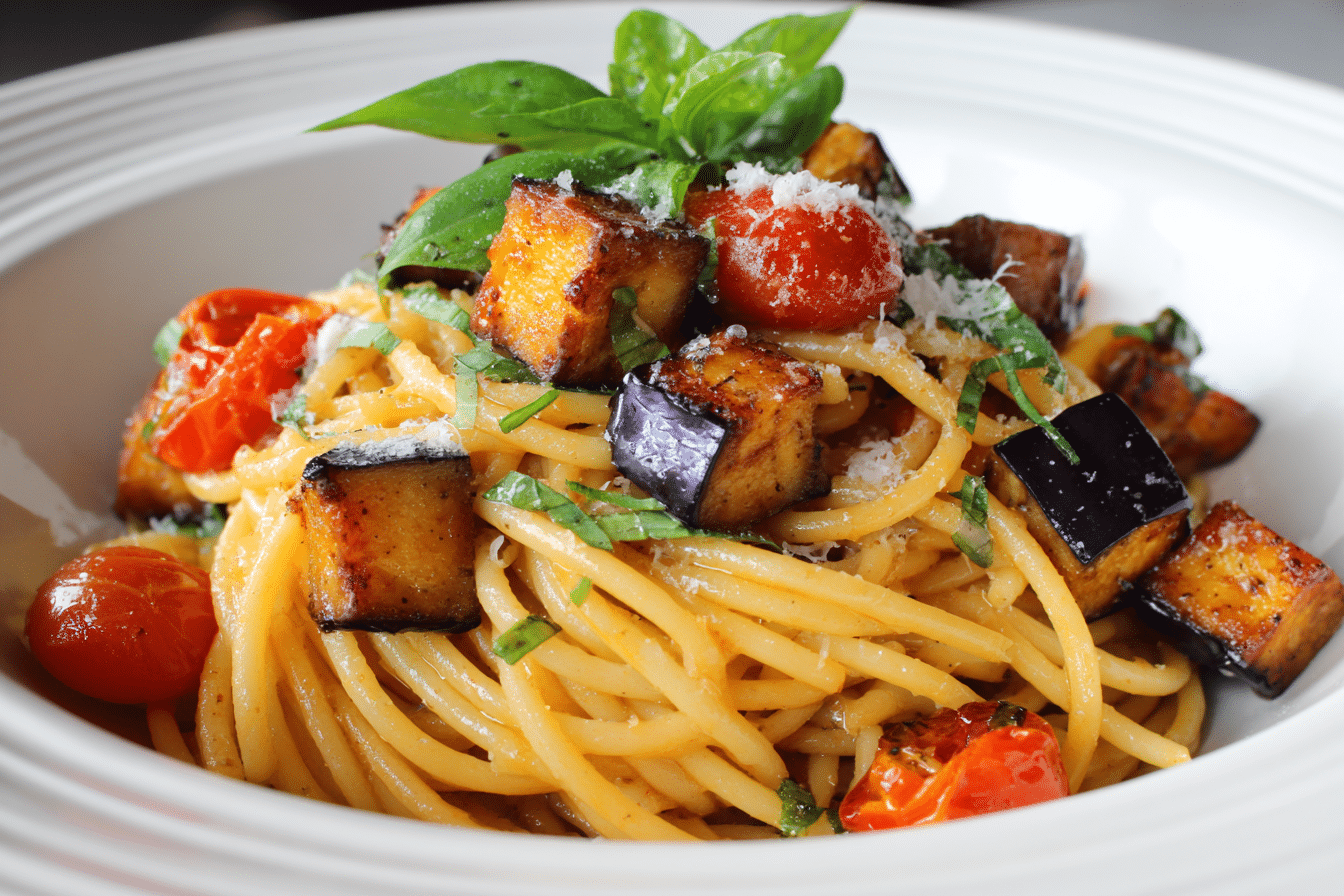
Roasted Eggplant Pasta combines tender roasted eggplant with tomato sauce and pasta to create a comforting Mediterranean-style meal. The roasting process transforms eggplant into soft, flavorful cubes that absorb olive oil and herbs while developing lightly caramelized edges.
When mixed with pasta and tomato sauce, the roasted eggplant creates a rich texture that feels hearty while still highlighting vegetables as the main ingredient. The natural sweetness that develops during roasting pairs beautifully with garlic, tomatoes, and fresh herbs.
Roasted Eggplant Pasta works well for both casual weeknight dinners and relaxed weekend meals. The preparation remains straightforward: roast the eggplant, prepare a simple sauce, and toss everything together with pasta.
The finished dish delivers balanced flavor and satisfying texture without complicated techniques. With a handful of ingredients and steady oven heat, roasted eggplant becomes the centerpiece of a warm pasta dish that reflects the comfort of Italian home cooking.
Ingredients Overview
Roasted Eggplant Pasta relies on a group of simple ingredients that build flavor through roasting and gentle simmering.
Eggplant forms the heart of the dish. Globe eggplants are ideal because their flesh becomes tender during roasting while holding its shape when tossed with pasta. Cutting the eggplant into cubes allows more surface area to brown, producing deeper flavor.
Olive oil coats the eggplant before roasting. A light drizzle helps the pieces develop golden edges and prevents them from drying out in the oven. Extra-virgin olive oil also adds mild fruitiness typical of Mediterranean cooking.
Garlic provides aromatic depth for the tomato sauce. When sautéed briefly in olive oil, garlic releases fragrance that strengthens the overall flavor of the dish.
Tomatoes form the base of the sauce. Crushed tomatoes or diced canned tomatoes both work well. The acidity of tomatoes balances the richness of roasted eggplant and olive oil.
Onion contributes sweetness to the sauce. Slowly sautéed onion softens and blends into the tomato base, creating a smoother and more rounded flavor.
Dried oregano or Italian seasoning adds familiar herbal notes that complement both eggplant and tomatoes.
Pasta acts as the structural component that ties everything together. Short shapes such as penne, rigatoni, or fusilli hold the sauce well and capture pieces of roasted eggplant within each bite.
Parmesan cheese provides a salty, nutty finish. Sprinkled over the pasta just before serving, it melts slightly and adds depth.
Fresh basil or parsley brings brightness and color, helping balance the rich roasted vegetables and tomato sauce.
For variations, chili flakes can add gentle heat, and mozzarella cubes can be stirred in for a creamier texture.
Step-by-Step Instructions
Begin by preparing the eggplant. Wash the eggplant and cut it into bite-sized cubes. Uniform pieces help the eggplant cook evenly during roasting.
Place the cubes on a large baking sheet lined with parchment paper. Drizzle with olive oil and sprinkle with salt and black pepper. Toss gently so each piece receives a light coating.
Roast the eggplant in a preheated oven at 425°F (220°C) for about twenty-five minutes. Stir the cubes halfway through cooking so they brown evenly. The eggplant should become soft inside while developing lightly caramelized edges.
While the eggplant roasts, bring a large pot of salted water to a boil. Add the pasta and cook according to package instructions until al dente. Reserve a small cup of pasta cooking water before draining.
Next prepare the sauce. Heat olive oil in a large skillet over medium heat. Add finely chopped onion and cook until softened and translucent.
Stir in minced garlic and cook briefly until fragrant. Add crushed tomatoes and dried oregano. Allow the sauce to simmer gently for about ten minutes so the flavors blend.
Once the eggplant finishes roasting, add the cubes to the tomato sauce. Stir gently so the pieces remain intact while absorbing the sauce.
Add the drained pasta directly to the skillet. Toss everything together so the pasta becomes evenly coated. If the mixture appears dry, add a small splash of reserved pasta cooking water to loosen the sauce.
Cook for another minute so the ingredients combine thoroughly.
Serve the pasta warm, topped with grated Parmesan cheese and chopped fresh basil.
Tips, Variations & Substitutions
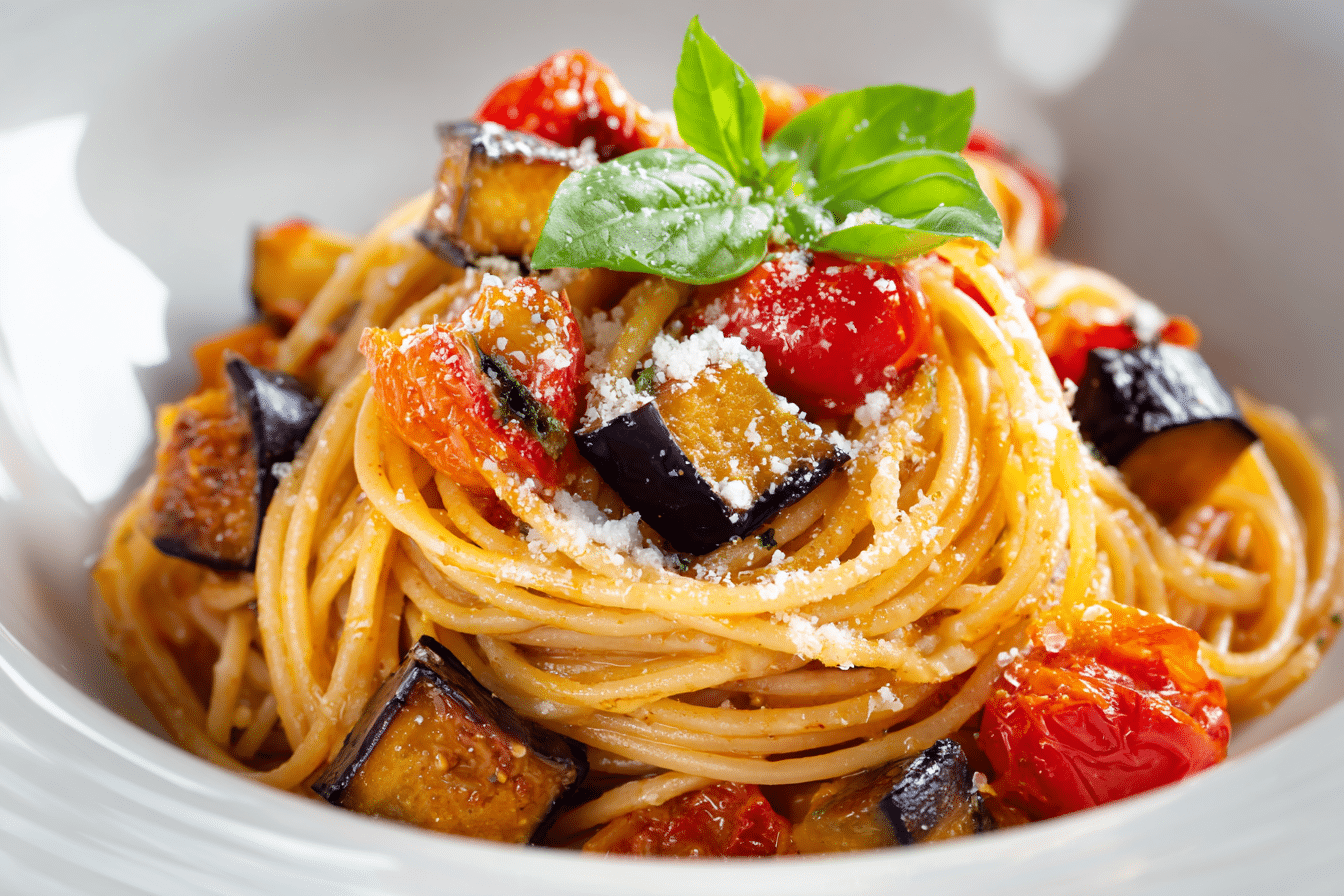
Roasting eggplant at high temperature helps achieve better flavor. The high heat caramelizes the surface while keeping the interior soft.
Spacing the eggplant cubes across the baking sheet remains important. Crowded pieces steam rather than roast, which prevents browning.
If eggplant tastes slightly bitter, sprinkle the cubes with salt and allow them to rest for fifteen minutes before roasting. Pat them dry afterward before adding olive oil.
For additional vegetables, roasted zucchini, bell peppers, or mushrooms can be added alongside the eggplant.
Whole wheat pasta works well in this dish and adds extra fiber while maintaining satisfying texture.
If a creamier version is desired, a spoonful of ricotta or mascarpone can be stirred into the pasta just before serving.
Chickpeas can also be added for extra protein while maintaining a plant-focused meal.
The dish can be finished with toasted breadcrumbs for light crunch.
Serving Ideas & Occasions
Roasted Eggplant Pasta works well as a main dish for family dinners or relaxed meals with friends.
A crisp green salad dressed with olive oil and lemon juice pairs beautifully with the warm pasta. The freshness of the salad balances the roasted vegetables and tomato sauce.
Garlic bread or crusty Italian bread also complements the dish, allowing diners to enjoy the remaining sauce.
For larger meals, roasted vegetables such as zucchini or asparagus can be served alongside the pasta.
Because the recipe reheats well, leftover pasta can be enjoyed the following day for lunch.
Roasted Eggplant Pasta also works nicely for casual gatherings where a simple yet satisfying pasta dish fits naturally on the table.
Nutritional & Health Notes
Roasted Eggplant Pasta provides a vegetable-centered meal that balances carbohydrates, fiber, and moderate fats.
Eggplant contributes fiber and beneficial plant compounds while remaining relatively low in calories. Roasting allows the vegetable’s natural flavor to develop without heavy frying.
Tomatoes add vitamin C and lycopene, a plant compound associated with Mediterranean-style cooking.
Olive oil supplies monounsaturated fats commonly included in balanced diets.
Pasta provides energy through carbohydrates, making the dish satisfying while supporting an active lifestyle.
Parmesan cheese contributes calcium and protein while adding concentrated flavor in small amounts.
When served with fresh vegetables or salad, the meal offers a balanced combination of nutrients.
FAQs
Should eggplant be peeled before roasting for pasta?
Peeling eggplant is usually not necessary. The skin softens during roasting and helps the cubes maintain their shape when mixed with pasta. Leaving the skin intact also adds color and nutrients to the dish. However, if the eggplant is very large and the skin appears thick, peeling can produce a slightly softer texture.
Why roast eggplant instead of cooking it in a pan?
Roasting eggplant allows the vegetable to develop deeper flavor while using minimal oil. The dry heat of the oven caramelizes the surface, creating slightly browned edges that add richness to the pasta. Pan cooking often requires more oil and may not produce the same roasted flavor.
How do I keep eggplant from becoming soggy?
Cutting eggplant into evenly sized cubes and spreading them in a single layer on the baking sheet helps prevent sogginess. Overcrowding the pan traps steam, which stops browning. Roasting at high heat also encourages better texture.
Can roasted eggplant pasta be made ahead of time?
Yes, the roasted eggplant can be prepared earlier and stored in the refrigerator until needed. The tomato sauce can also be made ahead. When ready to serve, simply cook the pasta and combine everything in a skillet to heat through.
What pasta shapes work best for this dish?
Short pasta shapes such as penne, rigatoni, or fusilli work particularly well because they hold the sauce and roasted eggplant pieces. These shapes allow the sauce to cling to the pasta, creating balanced bites throughout the dish.
Can protein be added to roasted eggplant pasta?
Yes, chickpeas, white beans, or grilled chicken can be added to the pasta for extra protein. These ingredients blend well with tomato sauce and roasted vegetables without overpowering the eggplant flavor.
How should leftovers be reheated?
Leftover pasta can be reheated in a skillet over medium heat with a small splash of water or broth. This helps loosen the sauce and prevents the pasta from drying out. Stir occasionally until the dish is warmed through.
PrintRoasted Eggplant Pasta: 3 Simple Italian Layers
Roasted Eggplant Pasta is a comforting Italian-style dish made with caramelized eggplant cubes, tomato sauce, garlic, and pasta, finished with Parmesan cheese and fresh herbs.
Ingredients
1 large eggplant cut into cubes
3 tablespoons olive oil
1 small onion chopped
3 cloves garlic minced
2 cups crushed tomatoes
1 teaspoon dried oregano
300 g pasta such as penne or rigatoni
½ cup grated Parmesan cheese
Salt and black pepper to taste
¼ cup chopped fresh basil
Instructions
-
Preheat oven to 425°F or 220°C.
-
Toss eggplant cubes with olive oil, salt, and pepper.
-
Spread on a baking sheet and roast for 25 minutes, stirring halfway.
-
Cook pasta in salted boiling water until al dente and reserve some pasta water.
-
Heat olive oil in a skillet and cook chopped onion until soft.
-
Add garlic and cook briefly until fragrant.
-
Stir in crushed tomatoes and oregano and simmer for 10 minutes.
-
Add roasted eggplant to the sauce and mix gently.
-
Add cooked pasta and toss to combine, adding pasta water if needed.
-
Serve with Parmesan cheese and fresh basil.
Notes
Roasting eggplant at high heat helps create caramelized edges and deeper flavor.