
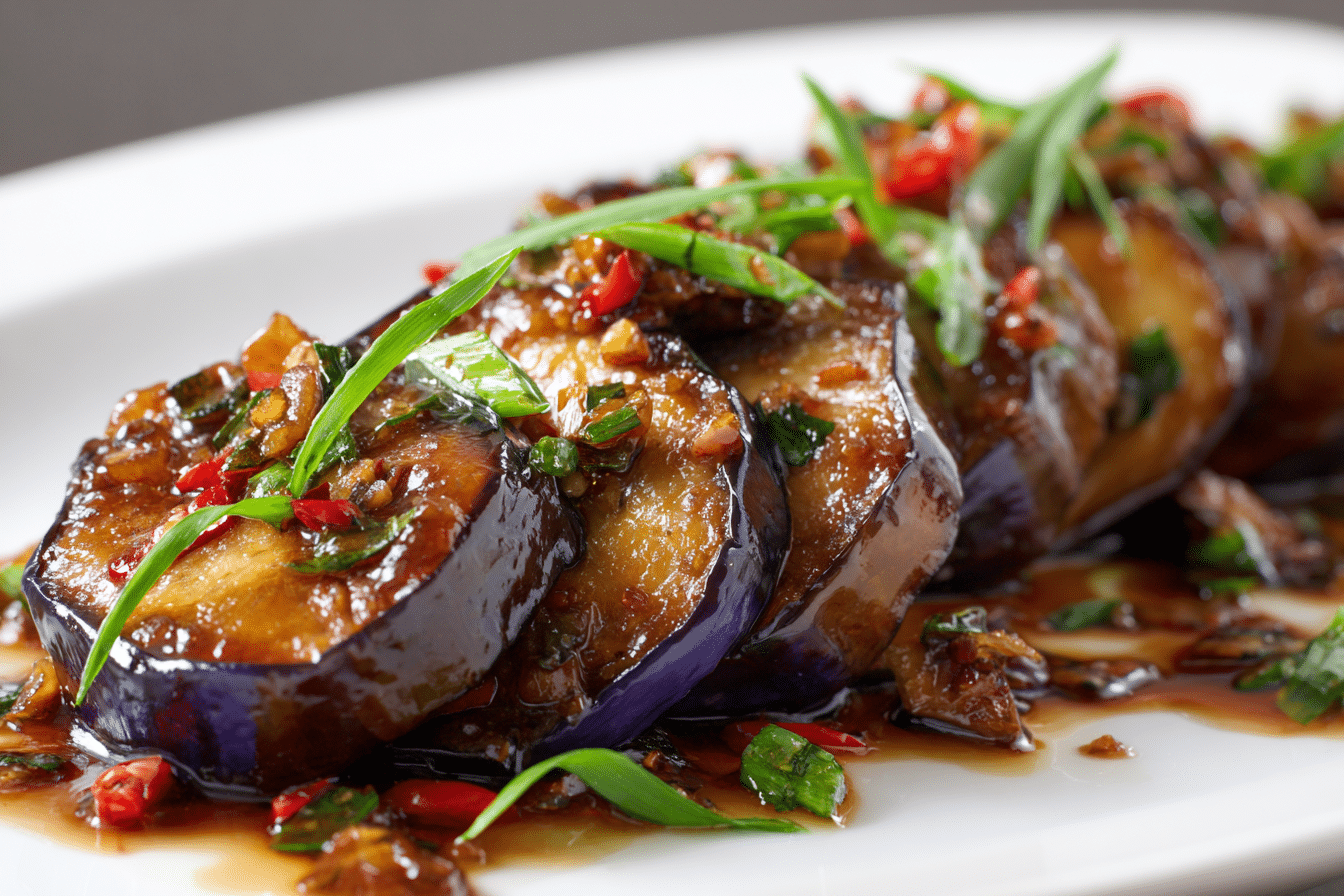
Sautéed Chinese Eggplant in Garlic Sauce is a popular dish found in many Chinese kitchens and restaurants. The recipe highlights the delicate texture of Chinese eggplant paired with a rich garlic sauce that coats each piece in savory flavor.
Unlike large globe eggplants, Chinese eggplants have thinner skin and a softer interior. When sautéed quickly in a hot pan or wok, the pieces become tender while absorbing the aromatic garlic sauce.
Sautéed Chinese Eggplant in Garlic Sauce delivers a satisfying balance between savory, slightly sweet, and mildly tangy flavors. Garlic provides strong aroma, soy sauce adds depth, and a small amount of sugar balances the sauce.
The dish cooks quickly, making it ideal for weeknight meals when a warm vegetable dish is needed without lengthy preparation. Served with steamed rice, the tender eggplant and glossy sauce create a comforting and flavorful plate.
With only a few ingredients and simple cooking steps, this dish showcases how high heat and balanced seasoning transform eggplant into a rich and satisfying meal.
Ingredients Overview
Sautéed Chinese Eggplant in Garlic Sauce uses ingredients commonly found in Chinese cooking that combine to create a flavorful stir-fry sauce.
Chinese eggplant is the star of the dish. It is long and slender with a thinner skin than globe eggplant. The flesh cooks quickly and becomes soft while absorbing sauces easily. Because it contains fewer seeds and less bitterness, it works especially well for stir-frying.
Garlic plays a central role in the recipe. Several cloves are minced and sautéed to release strong aroma that infuses the entire sauce.
Soy sauce provides the savory base of the sauce. It adds saltiness and deep umami flavor that pairs naturally with eggplant.
Rice vinegar contributes gentle acidity that balances the richness of the eggplant and soy sauce.
Sugar adds a touch of sweetness that rounds out the savory flavors. Only a small amount is needed to create a balanced sauce.
Cornstarch helps thicken the sauce so it clings to the eggplant pieces. When mixed with water, it forms a slurry that creates a glossy texture during cooking.
Sesame oil adds fragrance at the end of cooking. Its nutty aroma enhances the finished dish without overpowering the other flavors.
Green onions bring freshness and color when sprinkled over the dish before serving.
Vegetable oil is used for stir-frying. Oils with high heat tolerance such as peanut or canola oil work well in this recipe.
If Chinese eggplant is unavailable, Japanese eggplant can be used as a substitute because it has similar texture and cooking properties.
Step-by-Step Instructions
Begin by preparing the eggplant. Wash the Chinese eggplants and trim the ends. Slice them into long strips or bite-sized pieces about two to three inches in length.
Place the eggplant pieces in a bowl and sprinkle lightly with salt. Allow them to rest for about ten minutes. This step helps draw out excess moisture and improves texture during cooking.
Pat the eggplant dry with paper towels.
In a small bowl prepare the garlic sauce mixture. Combine soy sauce, rice vinegar, sugar, and water. In a separate small bowl mix cornstarch with water to create a slurry.
Heat a wok or large skillet over medium-high heat. Add vegetable oil and allow it to become hot.
Add the eggplant pieces to the pan and sauté them while stirring frequently. The eggplant should soften and begin to turn golden after several minutes.
Add the minced garlic to the pan and stir quickly so it releases aroma without burning.
Pour the prepared soy sauce mixture into the pan. Stir well so the eggplant becomes evenly coated.
Next add the cornstarch slurry. Continue stirring as the sauce thickens and forms a glossy coating around the eggplant pieces.
Drizzle sesame oil over the dish and mix gently.
Remove the pan from heat and sprinkle chopped green onions over the top.
Serve the sautéed eggplant immediately while the sauce remains glossy and the eggplant tender.
Tips, Variations & Substitutions
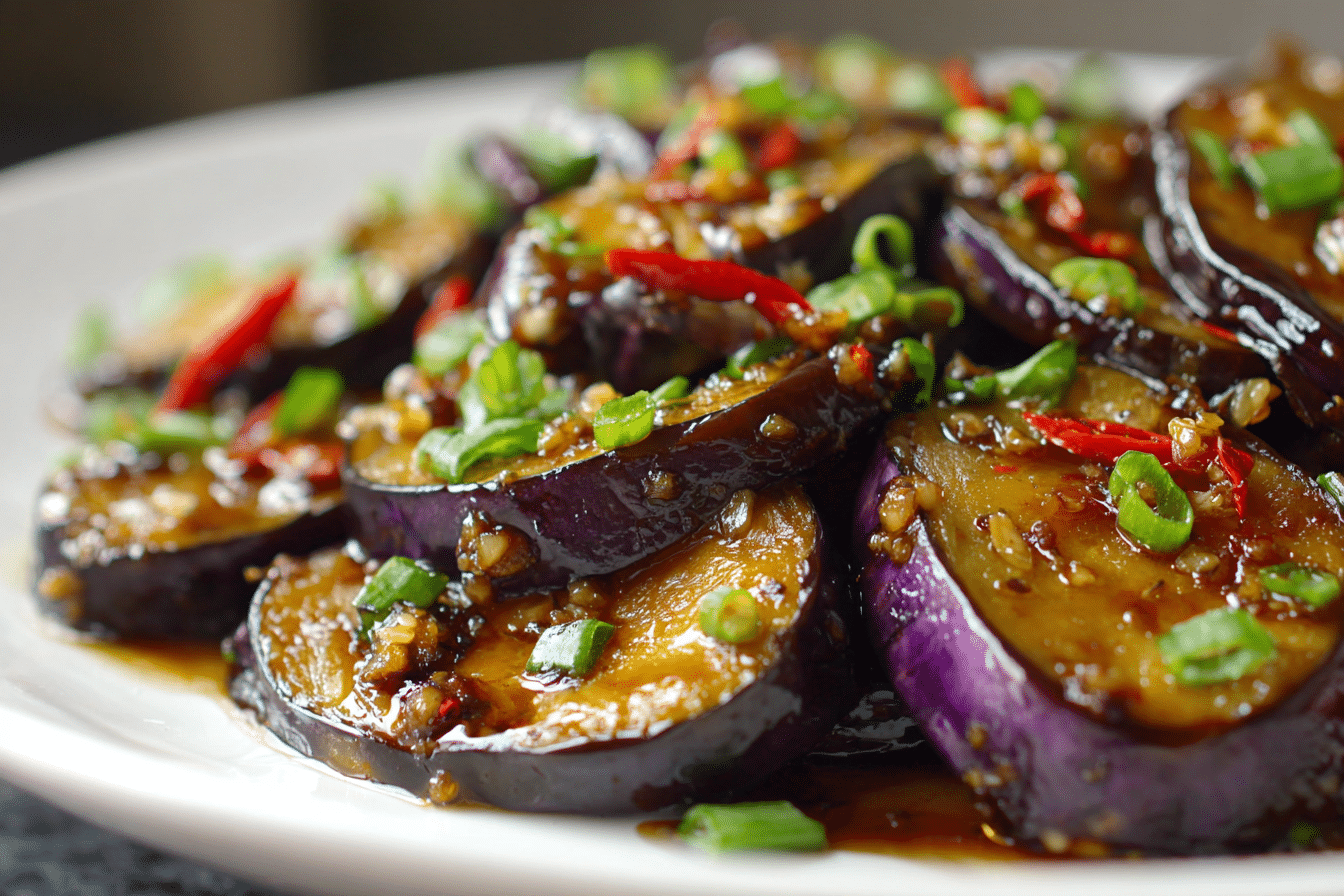
Chinese eggplant cooks quickly, so cutting the pieces into uniform sizes helps them soften evenly.
Using high heat during sautéing allows the eggplant to develop light browning while remaining tender inside. Stir frequently so the pieces cook evenly.
If eggplant absorbs too much oil during cooking, adding a small splash of water can help it soften without requiring extra oil.
For additional flavor, ginger can be sautéed with the garlic. The combination creates a classic Chinese aromatic base.
Chili paste or chili flakes can be added to the sauce for a spicier variation.
To add protein, cubes of tofu or slices of mushrooms can be cooked alongside the eggplant.
A vegetarian oyster-style sauce made from mushrooms can also be added to the sauce mixture for deeper flavor.
If the sauce becomes too thick, a small amount of water or vegetable broth can be added while stirring.
Serving Ideas & Occasions
Sautéed Chinese Eggplant in Garlic Sauce is commonly served as part of a shared meal with multiple dishes.
Steamed jasmine rice pairs naturally with the dish because the rice absorbs the flavorful garlic sauce.
The eggplant also works well alongside stir-fried vegetables, tofu dishes, or simple noodle dishes.
For a larger meal, serve it with fried rice, dumplings, or steamed greens such as bok choy.
Because the recipe cooks quickly, it is well suited for weeknight dinners when a flavorful vegetable dish can be prepared in under thirty minutes.
The glossy sauce and tender eggplant also make the dish appealing as part of a vegetarian meal.
Nutritional & Health Notes
Sautéed Chinese Eggplant in Garlic Sauce offers a vegetable-based dish that provides fiber and plant nutrients.
Eggplant contains dietary fiber and several plant compounds while remaining relatively low in calories. Cooking it quickly in a stir-fry preserves much of its texture and flavor.
Garlic contributes compounds associated with many traditional cooking practices and adds strong flavor without additional fats.
Soy sauce provides savory flavor but also contains sodium, so moderate use helps maintain balanced seasoning.
Using a small amount of oil during stir-frying keeps the dish lighter while still allowing proper cooking.
When served with rice and other vegetables, the dish fits comfortably into a balanced meal with carbohydrates, fiber, and plant-based nutrients.
FAQs
What is the difference between Chinese eggplant and regular eggplant?
Chinese eggplant is longer and thinner than the large globe eggplant commonly found in many grocery stores. It has thinner skin and fewer seeds, which gives it a softer texture when cooked. Because of this, Chinese eggplant cooks faster and absorbs sauces easily, making it ideal for stir-fry dishes like Sautéed Chinese Eggplant in Garlic Sauce.
Do I need to peel Chinese eggplant before cooking?
Peeling is not necessary. The skin of Chinese eggplant is thin and tender, and it softens during cooking. Keeping the skin also helps the pieces hold their shape during sautéing and adds color to the finished dish.
Why does eggplant absorb so much oil when cooking?
Eggplant has a porous structure that can soak up oil quickly. Cooking at high heat and stirring frequently helps reduce excessive oil absorption. Some cooks also salt the eggplant briefly before cooking to remove moisture and improve texture.
Can this dish be made less salty?
Yes. Using low-sodium soy sauce helps reduce the overall salt content. The sauce can also be balanced with a little extra water or rice vinegar if needed.
Can tofu be added to the recipe?
Yes, tofu pairs well with eggplant in this dish. Firm tofu can be cubed and lightly pan-fried before adding it to the eggplant and sauce. This adds protein while maintaining the flavor profile of the dish.
How should leftovers be stored?
Store leftover eggplant in an airtight container in the refrigerator for up to three days. Reheat gently in a skillet over medium heat with a small splash of water to loosen the sauce.
Is Sautéed Chinese Eggplant in Garlic Sauce vegetarian?
Yes, the dish is typically vegetarian when prepared with soy sauce and plant-based ingredients. Some restaurant versions include oyster sauce, so using a vegetarian mushroom-based sauce keeps the dish fully plant-based.
PrintSautéed Chinese Eggplant in Garlic Sauce: 3 Bold Flavors
Sautéed Chinese Eggplant in Garlic Sauce is a quick stir-fry dish featuring tender Chinese eggplant cooked with garlic, soy sauce, and a lightly thickened savory sauce.
Ingredients
2 Chinese eggplants cut into strips
2 tablespoons vegetable oil
4 cloves garlic minced
2 tablespoons soy sauce
1 tablespoon rice vinegar
1 teaspoon sugar
½ cup water
1 teaspoon cornstarch
1 teaspoon sesame oil
2 green onions chopped
Salt to taste
Instructions
-
Cut eggplants into strips and lightly salt them. Let rest for 10 minutes then pat dry.
-
Mix soy sauce, rice vinegar, sugar, and water in a bowl.
-
Mix cornstarch with a small amount of water to form a slurry.
-
Heat vegetable oil in a wok or skillet over medium-high heat.
-
Add eggplant and sauté until tender and lightly browned.
-
Add minced garlic and cook briefly until fragrant.
-
Pour in the sauce mixture and stir to coat the eggplant.
-
Add the cornstarch slurry and cook until the sauce thickens.
-
Drizzle sesame oil and mix gently.
-
Garnish with chopped green onions and serve hot.
Notes
Chinese eggplant cooks quickly and absorbs sauce well, making it ideal for stir-frying.