
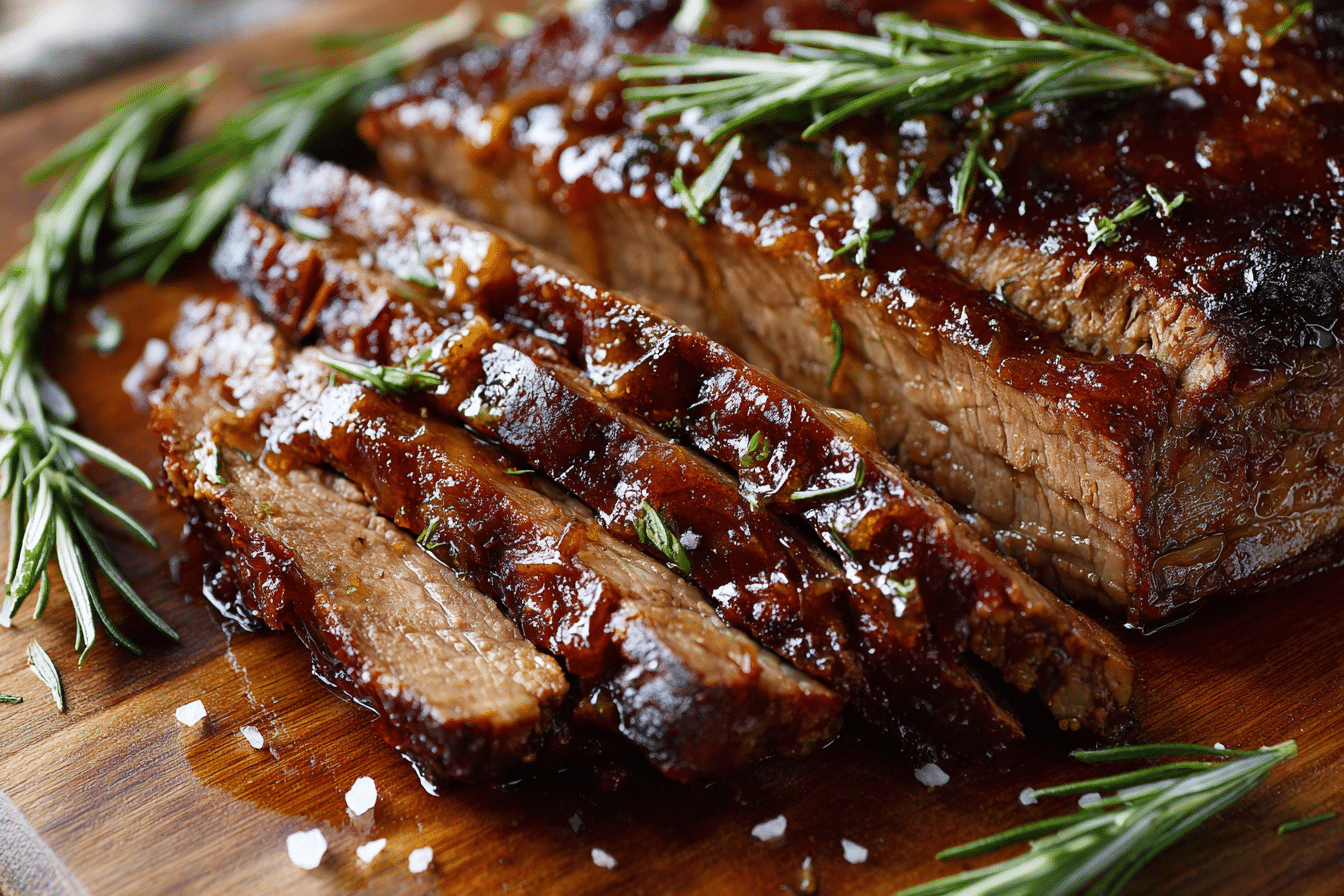
Slow Cooked Beef Brisket is the kind of meal that fills a kitchen with deep, savory aroma long before it reaches the table. As it gently simmers for hours, the brisket transforms from a firm, humble cut into tender slices that practically fall apart under the fork. The texture is soft and succulent, with a rich beef flavor that settles into every bite.
This dish is rooted in patience. Low heat and steady time allow the connective tissue to soften, creating a silky mouthfeel and deep, layered taste. The surrounding vegetables absorb the meat’s juices, turning simple ingredients into something deeply satisfying.
Whether served for a family Sunday supper or prepared ahead for a gathering, Slow Cooked Beef Brisket delivers warmth and comfort in every portion. It is hearty without being heavy and rustic without losing its sense of refinement.
Ingredients Overview
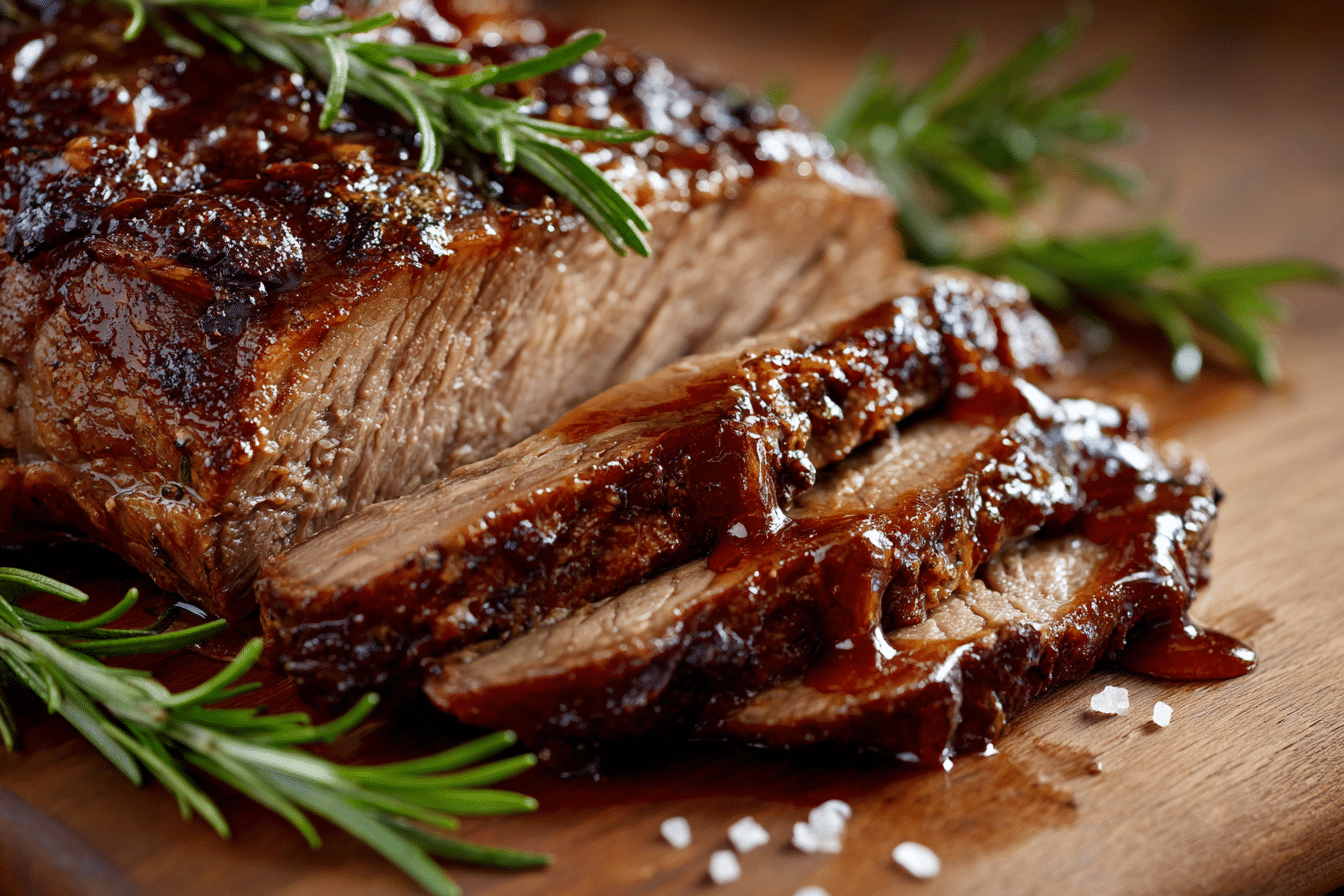
Beef brisket is the star of this recipe. Choose a whole brisket or a flat cut with a visible fat cap. That thin layer of fat melts gradually during cooking, keeping the meat moist and full of flavor. A brisket weighing about 3 to 4 pounds works well for steady, even cooking.
Onions form the aromatic base. As they soften, they release natural sweetness that balances the savory depth of the beef. Garlic adds a subtle sharpness that mellows during the long cooking time.
Carrots and celery contribute structure and gentle sweetness. They hold their shape while absorbing the cooking liquid, creating a flavorful bed beneath the brisket.
Beef broth provides the braising liquid. It should be full-bodied but not overly salty. For added depth, a splash of Worcestershire sauce and a spoonful of tomato paste bring savory notes and a hint of tang.
Fresh thyme and bay leaves give the dish a classic herbaceous character. If fresh thyme is unavailable, dried thyme can be substituted in smaller quantity.
A small amount of brown sugar balances acidity and rounds out the sauce. Salt and freshly ground black pepper are essential for seasoning throughout.
For substitutions, red wine can replace part of the broth for deeper complexity. Parsnips may stand in for carrots, and pearl onions can be added for a slightly sweeter finish.
Step-by-Step Instructions
Begin by preparing the brisket. Pat it dry with paper towels to remove excess moisture. Season generously on all sides with salt and freshly ground black pepper. Allow it to rest at room temperature for about 20 minutes before cooking.
Heat a large heavy-bottomed pot or Dutch oven over medium-high heat. Add a tablespoon of oil and allow it to heat until shimmering. Place the brisket fat-side down and sear for 4 to 5 minutes without moving it. A deep brown crust should form. Turn and sear the opposite side for another 4 to 5 minutes. This step builds flavor and should not be rushed.
Remove the brisket and set aside. In the same pot, reduce the heat to medium and add sliced onions. Cook for 5 to 7 minutes, stirring occasionally, until softened and lightly golden. Add minced garlic and cook for 30 seconds until fragrant.
Stir in tomato paste and cook for one minute to deepen its flavor. Deglaze the pot with a splash of beef broth, scraping up any browned bits from the bottom. These bits carry concentrated flavor that enriches the final sauce.
Return the brisket to the pot, fat side up. Add carrots and celery around the meat. Pour in enough beef broth to come about halfway up the sides of the brisket. Stir in Worcestershire sauce, brown sugar, thyme, and bay leaves.
Bring the liquid to a gentle simmer. Cover tightly with a lid and reduce the heat to low. Cook for 3 to 4 hours, turning the brisket once halfway through. The meat is ready when a fork slides in easily with little resistance.
Avoid boiling, as high heat can cause the meat to tighten and become firm. Keep the simmer low and steady.
Once cooked, remove the brisket and let it rest on a cutting board for at least 20 minutes. This resting period allows juices to redistribute, preventing dryness when slicing.
Meanwhile, skim excess fat from the surface of the cooking liquid. Simmer uncovered for 10 to 15 minutes if a thicker sauce is desired. Slice the brisket against the grain into even pieces and return to the pot to coat with sauce before serving.
Tips, Variations & Substitutions
For the most tender Slow Cooked Beef Brisket, cook it low and slow. Rushing the process will not allow the connective tissue to break down properly.
If using a slow cooker, sear the brisket first on the stovetop, then transfer everything to the slow cooker. Cook on low for 8 to 9 hours.
For a slightly smoky note, add a teaspoon of smoked paprika. A spoonful of Dijon mustard can bring subtle sharpness to the sauce.
To make the dish gluten-free, confirm that the Worcestershire sauce and broth are gluten-free varieties.
Leftover brisket can be shredded for sandwiches or folded into mashed potatoes for a hearty next-day meal. The flavor often deepens after resting overnight in the refrigerator.
Serving Ideas & Occasions
Slow Cooked Beef Brisket pairs beautifully with creamy mashed potatoes, which soak up the rich sauce. Buttered egg noodles or soft polenta also complement the tender slices.
For a lighter balance, serve alongside roasted green beans or a crisp cabbage slaw. The contrast of fresh vegetables against the slow-braised beef creates a well-rounded plate.
This dish works well for holiday dinners, weekend gatherings, or meal preparation for the week ahead. It can be made a day in advance and gently reheated, making it practical for hosting.
Serve with warm crusty bread to capture every drop of the savory sauce.
Nutritional & Health Notes
Beef brisket is a flavorful cut that contains protein, iron, and B vitamins. Slow cooking allows excess fat to render out into the braising liquid, which can be skimmed before serving.
Portion size plays an important role in balance. Pairing the brisket with vegetables and whole grains creates a satisfying and well-rounded meal.
Using low-sodium broth helps manage overall salt content. Adding plenty of carrots and celery increases fiber and natural sweetness without added sugar.
While this is a hearty dish, it can fit into a balanced eating plan when enjoyed in moderate portions alongside fresh vegetables.
FAQs
How do I know when Slow Cooked Beef Brisket is done?
The brisket is ready when a fork or knife slides into the thickest part with very little resistance. The meat should feel soft but still hold its shape when sliced. If it feels firm or difficult to pierce, it needs more time at a low simmer. Patience is key, as undercooked brisket can be tough. Allow extra cooking time in 20 to 30 minute increments if necessary.
Can I cook brisket in the oven instead of on the stovetop?
Yes, the oven works very well for Slow Cooked Beef Brisket. After searing and assembling the ingredients in a Dutch oven, cover tightly and cook at 300°F (150°C) for about 3 to 4 hours. The gentle, even heat of the oven maintains a steady braise and often requires less monitoring than stovetop cooking.
Should I trim the fat before cooking?
Leave a thin layer of fat on top of the brisket. This layer melts during cooking and keeps the meat moist. If the fat cap is very thick, you can trim it down to about a quarter inch. Removing all the fat before cooking may result in drier meat.
Why is my brisket still tough after hours of cooking?
Brisket contains significant connective tissue that requires steady low heat to break down. If it is tough, it likely needs additional cooking time rather than higher heat. Keep the temperature low and continue simmering until tender. Increasing heat can cause the muscle fibers to tighten.
Can I prepare Slow Cooked Beef Brisket in advance?
Yes, this dish is ideal for preparing ahead. After cooking, allow the brisket to cool in its sauce, then refrigerate. The next day, remove solidified fat from the surface and gently reheat on the stovetop or in the oven. The flavors often deepen overnight.
How should I slice brisket for serving?
Always slice brisket against the grain. This shortens the muscle fibers and makes each bite more tender. Look closely at the direction of the fibers before cutting and use a sharp knife to create even slices about a quarter inch thick.
Can I freeze leftover brisket?
Yes, sliced brisket freezes well. Store it in an airtight container with some of the sauce to prevent dryness. Freeze for up to three months. Thaw overnight in the refrigerator and reheat gently to maintain texture.
Print
Slow Cooked Beef Brisket is a tender, slow-braised beef dish simmered with onions, carrots, celery, and herbs until richly flavored and fork tender.
Ingredients
3 to 4 pounds beef brisket
2 teaspoons salt
1 teaspoon freshly ground black pepper
1 tablespoon vegetable oil
2 large onions, sliced
4 cloves garlic, minced
3 carrots, cut into chunks
2 celery stalks, sliced
2 tablespoons tomato paste
3 cups beef broth
1 tablespoon Worcestershire sauce
1 tablespoon brown sugar
3 sprigs fresh thyme
2 bay leaves
Instructions
-
Pat brisket dry and season with salt and pepper.
-
Heat oil in a Dutch oven over medium-high heat and sear brisket on both sides until deeply browned.
-
Remove brisket and cook onions until softened, then add garlic and cook briefly.
-
Stir in tomato paste and cook for one minute.
-
Add a splash of broth to deglaze the pot, scraping up browned bits.
-
Return brisket to the pot and add carrots and celery around it.
-
Pour in remaining broth, Worcestershire sauce, brown sugar, thyme, and bay leaves.
-
Bring to a gentle simmer, cover, and cook on low heat for 3 to 4 hours until tender.
-
Remove brisket and rest for 20 minutes before slicing against the grain.
-
Simmer sauce uncovered if needed to thicken, then return sliced brisket to coat before serving.