
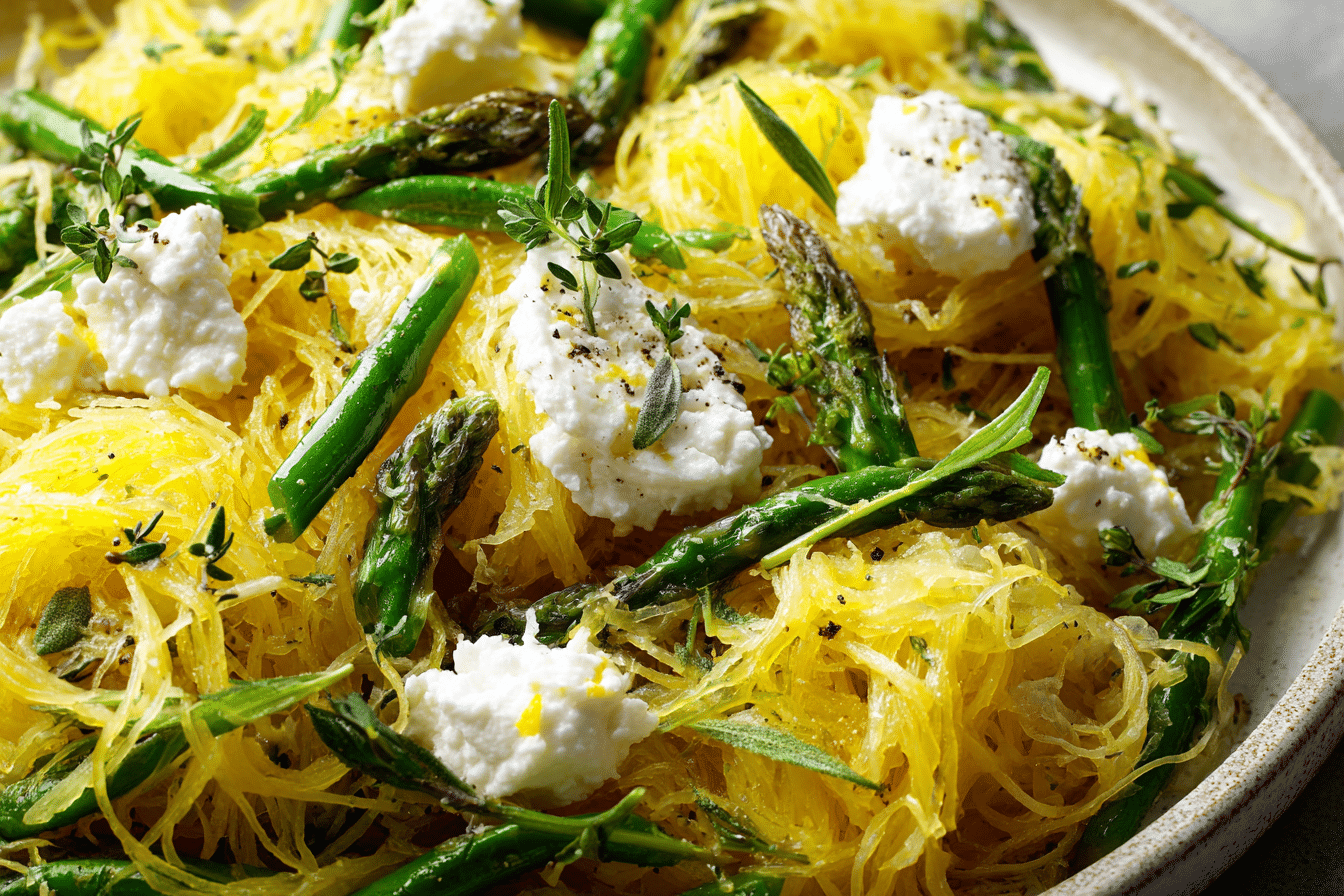
Spaghetti Squash with Asparagus, Ricotta, Lemon, and Thyme is the kind of vegetarian dish that feels light yet deeply satisfying. The tender strands of roasted squash mimic pasta, while creamy ricotta melts gently into every forkful. Fresh asparagus adds a crisp contrast, and lemon zest brings a clean citrus lift that balances the richness.
This recipe is rooted in simple ingredients treated with care. Roasting coaxes out the natural sweetness of the squash, while thyme adds an earthy note that ties everything together. Each bite delivers soft, creamy, and slightly crisp textures layered in harmony.
Whether served as a weeknight dinner or part of a relaxed weekend meal, Spaghetti Squash with Asparagus, Ricotta, Lemon, and Thyme brings comfort without heaviness. It is colorful, fragrant, and satisfying in a way that feels thoughtful rather than complicated.
Ingredients Overview
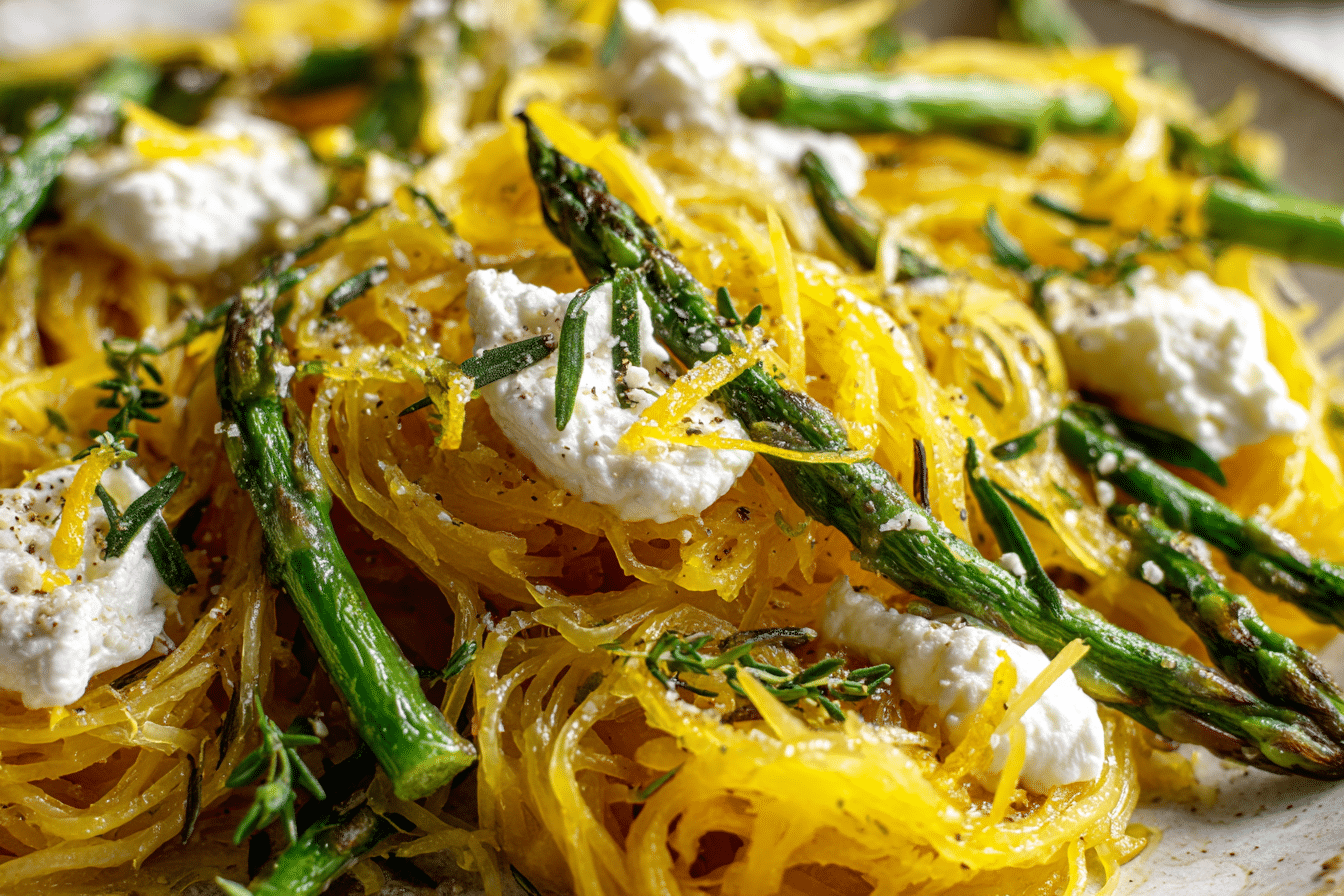
The foundation of Spaghetti Squash with Asparagus, Ricotta, Lemon, and Thyme is, of course, spaghetti squash. When roasted, its flesh separates into delicate strands that resemble pasta. Choose a squash that feels heavy for its size with firm, unblemished skin. Its mild flavor allows the other ingredients to shine while adding gentle sweetness.
Fresh asparagus provides structure and contrast. Look for firm stalks with tightly closed tips. Thinner spears cook quickly and stay tender-crisp, while thicker ones offer a slightly meatier bite. Trim the woody ends before cooking for the best texture.
Ricotta adds creaminess and body. Whole-milk ricotta creates a luscious texture that blends beautifully with warm squash strands. If you prefer a lighter feel, part-skim ricotta works well, though it will be slightly less rich. A spoonful stirred through at the end creates a soft, almost sauce-like coating.
Lemon zest and juice are essential. The zest contains fragrant oils that perfume the dish, while the juice adds brightness. Fresh thyme contributes a subtle herbal note that complements both the squash and asparagus. Olive oil binds everything together and supports roasting.
Salt and freshly ground black pepper round out the flavors. A sprinkle of grated Parmesan is optional for added depth, though the dish stands comfortably on its own.
Step-by-Step Instructions
Begin by preheating your oven to 400°F (200°C). Carefully cut the spaghetti squash in half lengthwise using a sturdy knife. Scoop out the seeds and stringy interior with a spoon. Drizzle the cut sides with olive oil and season with salt and pepper.
Place the squash halves cut-side down on a parchment-lined baking sheet. Roasting cut-side down helps trap steam, allowing the flesh to soften evenly. Roast for 35 to 45 minutes, depending on size, until the skin yields slightly when pressed and the interior is tender.
While the squash roasts, prepare the asparagus. Rinse and trim the woody ends, then cut the spears into 1- to 2-inch pieces. Toss them lightly with olive oil, salt, and pepper.
During the final 12 to 15 minutes of squash roasting time, spread the asparagus on a separate baking sheet. Roast until bright green and just tender, with lightly browned edges. Avoid overcooking, as mushy asparagus will flatten the texture contrast.
Once the squash is done, remove it from the oven and allow it to cool slightly. Use a fork to gently scrape the flesh into strands. Work carefully to preserve the long, spaghetti-like texture rather than mashing.
Transfer the squash strands to a large mixing bowl. Add the roasted asparagus, a generous scoop of ricotta, freshly grated lemon zest, and a squeeze of lemon juice. Sprinkle in chopped fresh thyme leaves.
Gently toss everything together while the squash is still warm. The heat will soften the ricotta, creating a creamy coating without the need for heavy sauces. Taste and adjust with additional salt, pepper, or lemon juice as needed.
Serve immediately, optionally topped with grated Parmesan and an extra drizzle of olive oil.
Tips, Variations & Substitutions
For deeper flavor, roast the squash with a light sprinkle of garlic powder or add a smashed garlic clove to the baking sheet. The garlic will mellow as it cooks and can be mixed into the strands afterward.
If asparagus is out of season, substitute with sautéed zucchini, roasted broccoli florets, or tender green beans. Each provides a slightly different texture while keeping the dish balanced.
For a dairy-free version, replace ricotta with a plant-based alternative or a spoonful of cashew cream. Nutritional yeast can add savory depth if desired.
Add texture by sprinkling toasted pine nuts or chopped walnuts over the finished dish. For gentle heat, a pinch of red pepper flakes pairs well with the lemon and thyme.
This recipe adapts easily to personal taste while maintaining the core balance of creamy, bright, and herbal notes.
Serving Ideas & Occasions
Spaghetti Squash with Asparagus, Ricotta, Lemon, and Thyme works beautifully as a main course for a light dinner. Pair it with a crisp green salad dressed simply with olive oil and vinegar for contrast.
It also makes an elegant side dish alongside roasted chicken or grilled fish for those who prefer a mixed menu. For gatherings, serve it warm on a large platter with extra thyme scattered over the top.
A chilled glass of dry white wine, sparkling water with lemon, or a light herbal iced tea complements the citrus and herbal flavors. The dish is particularly fitting for spring meals when asparagus is at its peak.
Nutritional & Health Notes
Spaghetti squash is naturally lower in carbohydrates than traditional pasta and provides fiber, vitamin C, and potassium. Its light texture allows for a satisfying portion without feeling heavy.
Asparagus contributes folate, vitamin K, and antioxidants. Combined with olive oil’s heart-friendly fats, the dish offers a balanced nutritional profile.
Ricotta adds protein and calcium, helping the meal feel complete. Using whole ingredients and moderate seasoning keeps the dish flavorful while remaining wholesome.
Because the recipe relies on roasting rather than frying, it maintains a lighter character. Adjusting the amount of ricotta and olive oil allows you to tailor richness to your preference.
FAQs
Can I cook the spaghetti squash ahead of time?
Yes, you can roast the spaghetti squash up to three days in advance. After scraping the strands from the shell, let them cool completely before storing in an airtight container in the refrigerator. When ready to serve, gently reheat the strands in a skillet over medium heat or in the microwave until warmed through. Add the ricotta, asparagus, lemon, and thyme after reheating to keep the flavors fresh and balanced.
How do I prevent spaghetti squash from becoming watery?
Roasting the squash cut-side down helps reduce excess moisture. If the strands still seem watery after scraping, let them rest in a colander for a few minutes to drain. Avoid covering the squash tightly while hot, as trapped steam can create additional moisture. Tossing the strands briefly in a warm skillet can also help evaporate extra liquid before mixing with ricotta.
Can I freeze Spaghetti Squash with Asparagus, Ricotta, Lemon, and Thyme?
While you can freeze roasted spaghetti squash on its own, freezing the fully assembled dish is not ideal. Ricotta may become grainy after thawing, and asparagus can lose its crisp texture. For best results, freeze only the cooked squash strands and prepare fresh asparagus and ricotta when ready to serve.
What herbs can I use instead of thyme?
If thyme is unavailable, try fresh basil, parsley, or chives. Basil adds a sweeter herbal note, while parsley keeps the flavor clean and mild. Chives offer a gentle onion-like accent. Use herbs sparingly at first and adjust gradually so they complement rather than overpower the lemon and ricotta.
Is this recipe suitable for a low-carb diet?
Spaghetti squash is commonly enjoyed as a pasta alternative because it contains fewer carbohydrates than traditional noodles. When combined with asparagus and ricotta, the dish remains moderate in carbohydrates while providing fiber and protein. Portion size and the amount of ricotta used will influence the overall nutritional balance.
Can I add protein to this vegetarian dish?
Yes, you can add protein while keeping the dish balanced. White beans, chickpeas, or lentils blend well with the lemon and thyme flavors. Simply fold them in while tossing the warm squash strands. If you are not strictly vegetarian, grilled shrimp or roasted chicken breast can also pair nicely without overpowering the lighter ingredients.
How do I choose a ripe spaghetti squash?
Select a squash with firm, matte skin that feels heavy for its size. Avoid any soft spots, cracks, or shiny patches, which can indicate underripeness. A pale yellow to golden color typically signals maturity. When tapped, the squash should sound slightly hollow, indicating a dense interior ready for roasting.
Print
Spaghetti Squash with Asparagus, Ricotta, Lemon, and Thyme is a light yet satisfying vegetarian dish featuring roasted squash strands tossed with tender asparagus, creamy ricotta, fresh lemon zest, and fragrant thyme.
Ingredients
1 medium spaghetti squash about 3 pounds
1 tablespoon olive oil plus more for drizzling
Salt to taste
Freshly ground black pepper to taste
1 bunch asparagus trimmed and cut into 1 to 2 inch pieces
3/4 cup whole milk ricotta cheese
1 teaspoon lemon zest
1 to 2 tablespoons fresh lemon juice
1 teaspoon fresh thyme leaves
2 tablespoons grated Parmesan cheese optional
Instructions
-
Preheat oven to 400°F. Cut spaghetti squash in half lengthwise and scoop out seeds.
-
Drizzle cut sides with olive oil and season with salt and pepper. Place cut side down on a baking sheet and roast 35 to 45 minutes until tender.
-
Toss asparagus with olive oil salt and pepper. Roast on a separate sheet during the last 12 to 15 minutes until tender.
-
Scrape roasted squash flesh into strands using a fork and transfer to a large bowl.
-
Add roasted asparagus ricotta lemon zest lemon juice and thyme. Toss gently until combined and creamy.
-
Adjust seasoning with additional salt pepper or lemon juice. Sprinkle with Parmesan if desired and serve warm.