
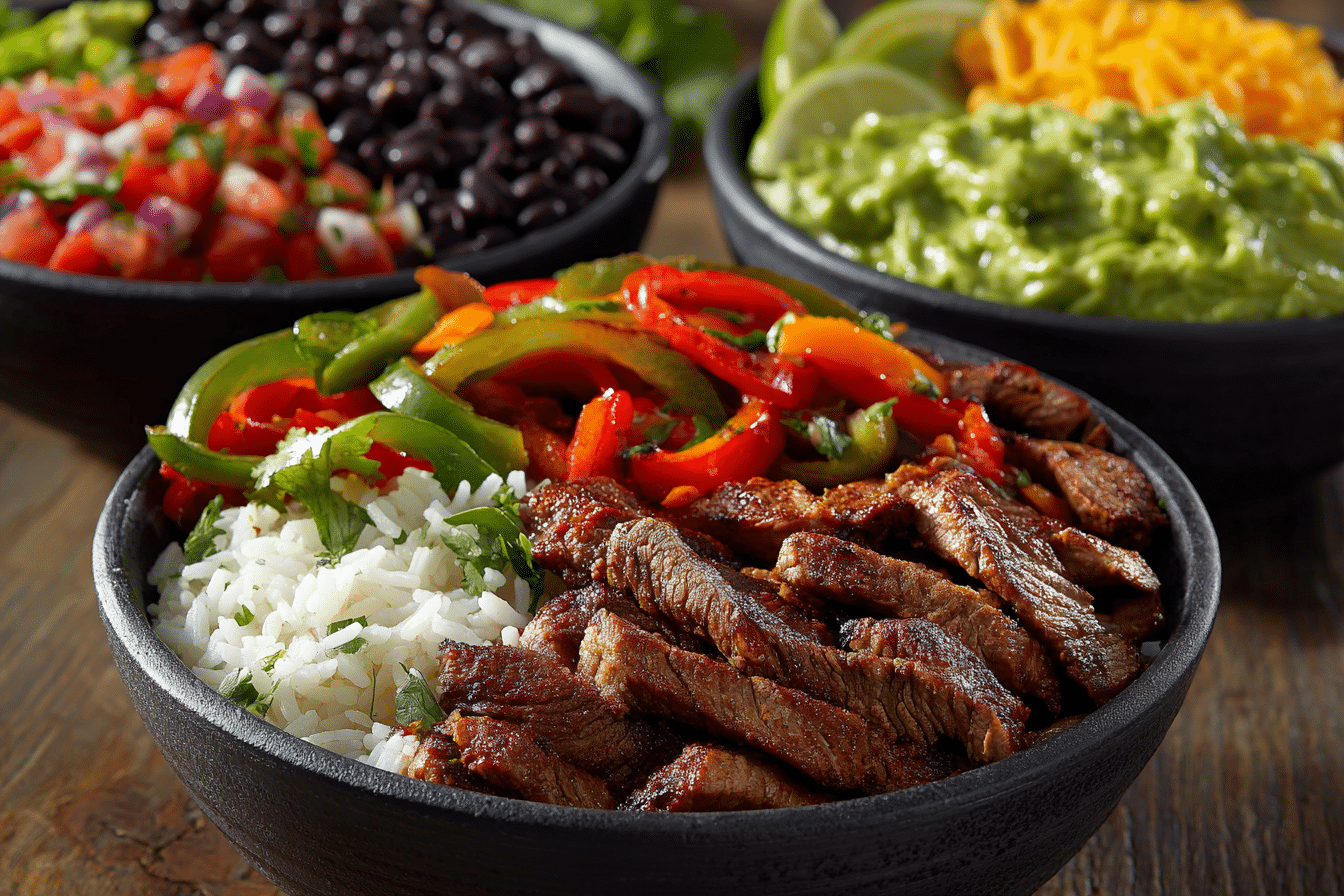
Steak Fajita Bowls bring together sizzling strips of seasoned beef, tender peppers, and fluffy rice in a colorful, satisfying dish that feels both hearty and fresh. Each bite delivers smoky spice from the seared steak, gentle sweetness from caramelized onions, and a bright finish from lime and cilantro.
This meal captures everything people enjoy about classic fajitas, served in a convenient bowl instead of wrapped in tortillas. The combination of warm grains, juicy steak, and vibrant toppings creates contrast in texture and flavor that keeps every forkful interesting.
Whether prepared for a busy weeknight dinner or portioned for lunches throughout the week, Steak Fajita Bowls offer comfort without feeling heavy. With balanced ingredients and customizable toppings, this dish fits easily into many meal plans while still feeling generous and satisfying.
Ingredients Overview
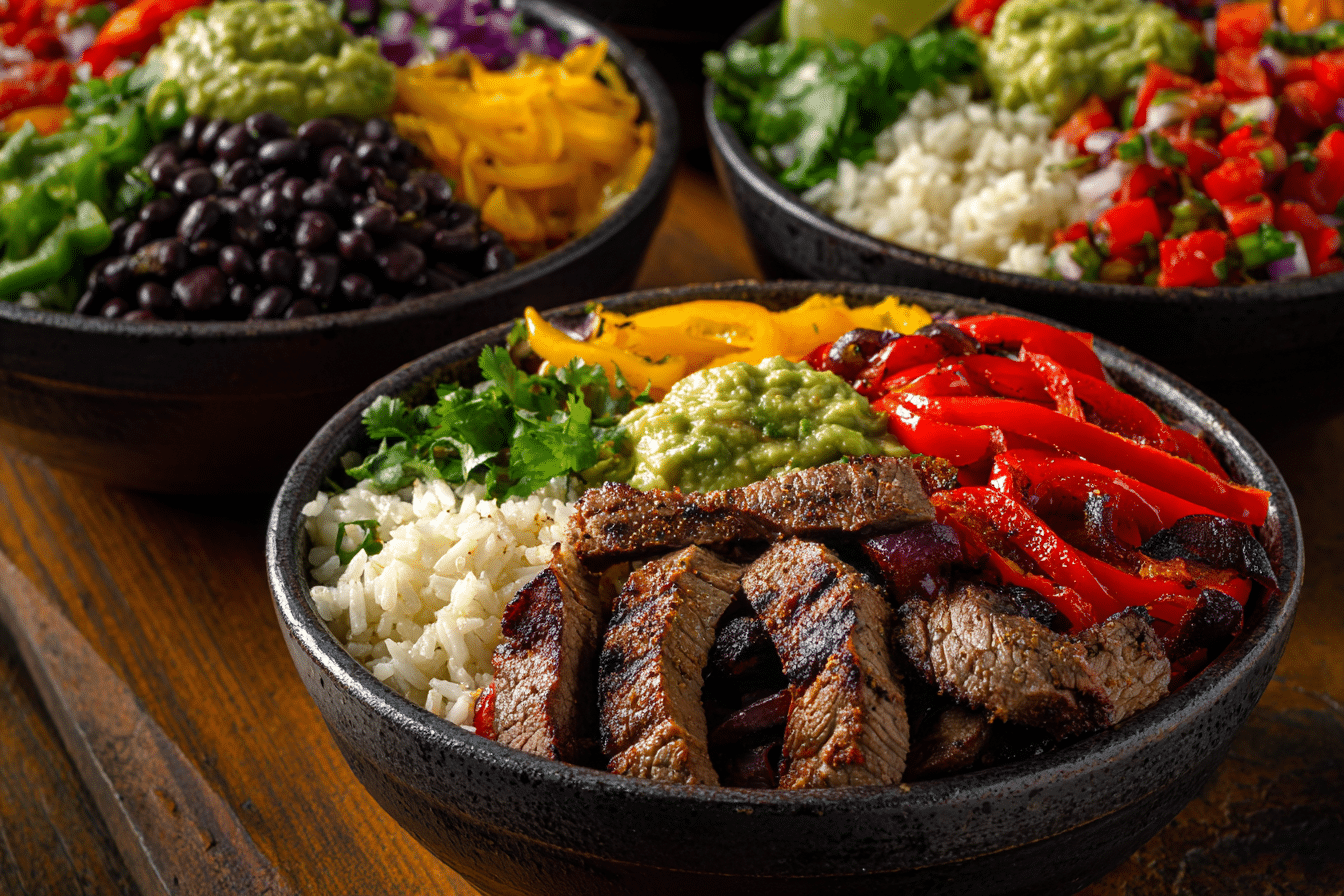
The heart of Steak Fajita Bowls is the beef. Flank steak or skirt steak works best because both cuts cook quickly at high heat and develop a flavorful crust. Their natural marbling keeps the meat tender when sliced thinly against the grain.
A simple fajita marinade typically includes olive oil, lime juice, minced garlic, chili powder, ground cumin, smoked paprika, and a pinch of salt and black pepper. Lime juice tenderizes the meat while adding brightness. Cumin and chili powder provide earthy depth, and smoked paprika contributes subtle smokiness that echoes traditional cast-iron cooking.
Bell peppers and onions are essential. Red, yellow, and green bell peppers add color and sweetness, while sliced yellow or white onion turns soft and slightly caramelized during sautéing. Together, they create the classic fajita vegetable base.
Rice forms the foundation of the bowl. Long-grain white rice produces light, separate grains, while brown rice adds nuttiness and extra fiber. Cilantro-lime rice can be prepared by stirring chopped cilantro, lime zest, and a small squeeze of lime juice into warm cooked rice.
Additional toppings such as black beans, corn, diced tomatoes, avocado slices, shredded lettuce, sour cream, shredded cheese, or fresh salsa allow flexibility. Greek yogurt can replace sour cream for a lighter option. Cauliflower rice can substitute for traditional rice when a lower-carb alternative is preferred.
Step-by-Step Instructions
Begin by preparing the marinade. In a bowl, whisk together olive oil, fresh lime juice, minced garlic, chili powder, cumin, smoked paprika, salt, and black pepper. Place the steak in a shallow dish or resealable bag and coat it thoroughly with the marinade. Refrigerate for at least 30 minutes, though up to 4 hours deepens flavor.
While the steak marinates, cook the rice according to package instructions. Once cooked, fluff it with a fork and stir in chopped cilantro and a squeeze of lime juice if desired. Keep warm and covered.
Heat a large cast-iron skillet or heavy pan over medium-high heat. Add a small drizzle of oil. Remove the steak from the marinade and allow excess liquid to drip off. Place the steak in the hot pan without crowding. Cook for about 3–5 minutes per side, depending on thickness, until a browned crust forms and the internal temperature reaches your preferred doneness.
Avoid moving the steak too frequently, as this prevents proper searing. Once cooked, transfer the steak to a cutting board and let it rest for 5–10 minutes. Resting allows juices to redistribute throughout the meat.
In the same skillet, add sliced onions and bell peppers. Cook over medium-high heat, stirring occasionally, until softened and lightly charred at the edges. This usually takes 6–8 minutes. If the pan seems dry, add a small splash of oil.
Slice the rested steak thinly against the grain. Cutting against the grain shortens muscle fibers and keeps the meat tender rather than chewy.
To assemble the Steak Fajita Bowls, spoon a generous portion of rice into each bowl. Top with sliced steak, sautéed peppers and onions, and any desired additions such as black beans or corn. Finish with avocado, salsa, sour cream, shredded cheese, or fresh cilantro.
Serve immediately while warm. The contrast between hot steak and cool toppings creates a balanced, satisfying meal.
Tips, Variations & Substitutions
For deeper flavor, allow the steak to marinate closer to four hours. Avoid marinating overnight, as extended exposure to lime juice can change the texture of the meat.
If flank or skirt steak is unavailable, sirloin can be used. It is leaner, so take care not to overcook. A meat thermometer helps maintain ideal doneness; medium-rare registers around 130–135°F before resting.
To add gentle heat, include sliced jalapeños in the vegetable mixture or sprinkle crushed red pepper flakes into the marinade. For a smoky twist, cook the steak on an outdoor grill instead of a skillet.
Steak Fajita Bowls adapt easily to dietary needs. Swap rice for cauliflower rice for a lower-carb option. Use dairy-free yogurt alternatives instead of sour cream. Add extra beans and grilled vegetables for a heartier, plant-forward version.
Preparing components in advance simplifies weeknight meals. Cook rice and vegetables ahead of time, then reheat and slice freshly cooked steak before serving.
Serving Ideas & Occasions
Steak Fajita Bowls fit naturally into casual family dinners, meal prep routines, or relaxed gatherings with friends. Set up a build-your-own bowl bar so guests can customize toppings according to preference.
Pair the bowls with tortilla chips and fresh salsa or guacamole for added texture. A crisp green salad with a lime vinaigrette complements the smoky steak and balances richness.
For beverages, sparkling water with lime, iced tea, or a citrus-forward mocktail pairs well with the savory spices. These bowls also travel well, making them suitable for packed lunches or outdoor picnics when stored in insulated containers.
Nutritional & Health Notes
Steak Fajita Bowls provide a balanced mix of protein, carbohydrates, and healthy fats. Flank or skirt steak supplies high-quality protein along with iron and vitamin B12, nutrients that support energy levels and red blood cell production.
Bell peppers contribute vitamin C and antioxidants, while onions add fiber and natural sweetness without added sugar. Choosing brown rice increases fiber content, which supports digestive health and steady energy.
Portion control is simple with bowl meals. Adjust rice quantity to manage carbohydrate intake, and increase vegetables for added volume without significantly raising calories. Using Greek yogurt instead of sour cream reduces saturated fat while maintaining creamy texture.
As with any dish, balance comes from mindful ingredient choices and appropriate serving sizes.
FAQs
What cut of steak works best for Steak Fajita Bowls?
Flank steak and skirt steak are traditional choices because they cook quickly at high heat and develop strong flavor. Their texture becomes tender when sliced thinly against the grain. Sirloin is another suitable option if a leaner cut is preferred. Regardless of the cut, avoid overcooking, since thin steaks can dry out rapidly. Resting the meat after cooking helps retain juices and keeps each slice moist inside the bowl.
Can I prepare Steak Fajita Bowls ahead of time?
Yes, these bowls are well suited for meal preparation. Cook the rice, sauté the vegetables, and store them in separate airtight containers. Marinate and cook the steak fresh for best texture, or cook it in advance and reheat gently to avoid toughness. Assemble bowls just before serving, adding fresh toppings like avocado or salsa at the last moment to preserve texture and flavor.
How do I keep the steak tender?
Marinating with lime juice and oil helps tenderize the meat. Cooking over high heat for a short period creates a flavorful crust while keeping the interior juicy. Always slice the steak against the grain into thin strips. Cutting with the grain results in longer muscle fibers, which can taste chewy. Resting the steak before slicing is equally important, as it allows juices to redistribute evenly.
Are Steak Fajita Bowls spicy?
The spice level depends on the amount of chili powder and any additional peppers used. The standard seasoning blend produces warmth rather than intense heat. To reduce spice, decrease chili powder and skip jalapeños. To increase heat, add fresh sliced chilies or a pinch of cayenne. Since toppings are added individually, each person can adjust heat according to personal preference.
Can I use a different base instead of rice?
Absolutely. Cauliflower rice offers a lighter alternative with fewer carbohydrates. Quinoa provides extra protein and a slightly nutty flavor. Shredded lettuce can serve as a base for a low-carb salad-style bowl. Each option pairs well with the seasoned steak and vegetables, allowing flexibility while maintaining the core flavor profile of Steak Fajita Bowls.
What toppings pair well with this dish?
Classic toppings include black beans, corn, diced tomatoes, shredded cheese, sour cream, and avocado slices. Fresh cilantro and lime wedges add brightness. For added texture, include shredded lettuce or pickled red onions. A spoonful of fresh salsa or pico de gallo introduces acidity that balances the richness of the steak and complements the smoky spices.
How should leftovers be stored and reheated?
Store leftover components in separate airtight containers in the refrigerator for up to three days. Reheat steak and vegetables gently in a skillet over medium heat or in short microwave intervals to prevent drying. Rice can be reheated with a small splash of water to restore moisture. Add fresh toppings after reheating to maintain texture and freshness.
Print
Steak Fajita Bowls combine marinated flank steak, sautéed peppers and onions, and cilantro lime rice in a hearty, customizable meal packed with bold flavor.
Ingredients
1 1/2 pounds flank or skirt steak
2 tablespoons olive oil
3 tablespoons fresh lime juice
3 cloves garlic minced
1 1/2 teaspoons chili powder
1 teaspoon ground cumin
1 teaspoon smoked paprika
1/2 teaspoon salt
1/2 teaspoon black pepper
3 cups cooked long grain rice
1/4 cup chopped fresh cilantro
1 red bell pepper sliced
1 yellow bell pepper sliced
1 green bell pepper sliced
1 medium yellow onion sliced
1 cup black beans drained and rinsed
1 cup corn kernels
1 avocado sliced
1/2 cup sour cream or Greek yogurt
1/2 cup shredded cheddar or Monterey Jack cheese
Instructions
-
In a bowl whisk olive oil, lime juice, garlic, chili powder, cumin, smoked paprika, salt, and pepper.
-
Coat steak with marinade and refrigerate for at least 30 minutes.
-
Cook rice according to package directions and stir in cilantro and a squeeze of lime.
-
Heat a skillet over medium high heat and sear steak 3 to 5 minutes per side until desired doneness.
-
Rest steak 5 to 10 minutes, then slice thinly against the grain.
-
In the same skillet sauté bell peppers and onion until tender and lightly charred.
-
Assemble bowls with rice, sliced steak, vegetables, black beans, and corn.
-
Top with avocado, sour cream, and shredded cheese before serving.