

Teriyaki Beef Skewers bring together tender strips of beef and a glossy, savory-sweet glaze that caramelizes beautifully over high heat. Each skewer carries deep umami from soy sauce, balanced by subtle sweetness and a gentle hint of ginger. The aroma alone sets the stage for a meal that feels both comforting and vibrant.
Whether prepared over a grill, under a broiler, or on a stovetop grill pan, Teriyaki Beef Skewers deliver juicy texture with lightly charred edges. The sauce thickens as it cooks, coating every piece with a lacquered finish that clings to the meat.
This dish suits casual backyard gatherings, weeknight dinners, or festive spreads. With minimal prep and straightforward ingredients, it offers bold flavor without complicated techniques.
Ingredients Overview

The foundation of Teriyaki Beef Skewers is high-quality beef. Sirloin, flank steak, or ribeye all work beautifully. Sirloin offers balanced marbling and tenderness, flank steak provides a leaner bite with pronounced beef flavor, and ribeye delivers extra richness. Whichever cut you select, slicing against the grain keeps the texture tender.
Soy sauce forms the savory base of the teriyaki glaze. Choose regular soy sauce for full flavor or low-sodium if preferred. Tamari works as a gluten-free alternative, maintaining similar depth.
Brown sugar contributes gentle sweetness and assists with caramelization. Honey can replace brown sugar for a slightly floral note, while maple syrup introduces a subtle earthiness.
Fresh garlic and grated ginger add warmth and aromatic complexity. If fresh ginger is unavailable, ground ginger can substitute, though fresh provides brighter character.
Rice vinegar balances sweetness with mild acidity. Apple cider vinegar serves as an alternative if necessary.
A small amount of cornstarch thickens the sauce, creating that signature glossy coating. Sesame oil, used sparingly, imparts nutty fragrance.
Wooden or metal skewers hold everything together. If using wooden skewers, soak them in water for at least thirty minutes to prevent scorching during cooking.
Step-by-Step Instructions
Begin by preparing the beef. Trim excess fat and slice the meat into even strips or cubes, roughly one inch thick. Consistent sizing promotes uniform cooking and prevents dry edges.
In a mixing bowl, combine soy sauce, brown sugar, minced garlic, grated ginger, rice vinegar, and a drizzle of sesame oil. Stir until the sugar dissolves completely. Reserve a small portion of this mixture in a separate bowl before adding raw beef; this reserved sauce will later become the glaze.
Add the sliced beef to the remaining marinade. Coat thoroughly, cover, and refrigerate for at least thirty minutes. For deeper flavor, marinate up to four hours. Avoid extended marinating beyond that window, as excessive acidity can alter texture.
While the beef marinates, prepare the skewers. Thread the beef pieces onto skewers, leaving slight space between each piece. This spacing allows heat to circulate evenly.
Preheat a grill to medium-high heat, approximately 400°F. Lightly oil the grates to prevent sticking. Place the skewers directly over the heat source.
Cook for about three to four minutes per side, turning carefully with tongs. The surface should develop light char marks while the interior remains juicy. For medium doneness, aim for an internal temperature of 135–140°F.
During the final minutes of cooking, transfer the reserved marinade to a small saucepan. Bring it to a gentle boil, then whisk in a cornstarch slurry made from cornstarch and cold water. Simmer until thickened and glossy.
Brush the thickened glaze over the skewers during the final minute of grilling. The sauce will caramelize slightly, creating a shiny coating.
Remove the skewers from heat and allow them to rest for five minutes. Resting allows juices to redistribute, preserving tenderness in every bite.
Common mistakes include overcrowding skewers, cooking over excessively high heat that burns the sugar, or skipping the resting period. Controlled heat and patience deliver superior results.
Tips, Variations & Substitutions
For deeper flavor, add a splash of pineapple juice to the marinade. This introduces subtle sweetness and gentle acidity without overpowering the savory base.
If a hint of spice appeals to your palate, stir in red pepper flakes or a small amount of sriracha. This contrast pairs beautifully with the sweet glaze.
Chicken thighs or shrimp can replace beef while using the same teriyaki marinade. Adjust cooking duration accordingly, as poultry and seafood cook at different rates.
For a lower-sugar version, reduce the brown sugar slightly and allow the sauce to simmer longer to concentrate flavor. Coconut aminos can substitute for soy sauce for those avoiding traditional soy products.
Vegetable additions such as bell peppers, red onion, or zucchini can be threaded onto the skewers between beef pieces. These vegetables absorb the glaze and develop light char, adding color and texture.
Serving Ideas & Occasions
Teriyaki Beef Skewers pair beautifully with steamed jasmine rice or short-grain rice. The rice absorbs extra glaze, balancing savory intensity.
For a lighter presentation, serve alongside a crisp cabbage slaw dressed with rice vinegar and sesame oil. The crunch contrasts with the tender beef.
These skewers fit seamlessly into summer cookouts, family dinners, or celebratory gatherings. They also work well as an appetizer platter, arranged neatly and garnished with sliced green onions and toasted sesame seeds.
A chilled sparkling water with citrus or a light lager complements the sweet-savory profile without overwhelming the palate.
Nutritional & Health Notes
Teriyaki Beef Skewers provide a solid source of protein, supporting muscle maintenance and satiety. Beef also supplies iron, zinc, and B vitamins, which contribute to energy metabolism and immune function.
Using leaner cuts such as sirloin reduces overall fat content while preserving flavor. Adjusting sugar levels within the marinade can moderate carbohydrate content.
Grilling allows excess fat to drip away, which may slightly lower calorie density compared to pan-frying. Pairing the skewers with vegetables and whole grains creates a balanced meal with fiber, vitamins, and minerals.
Portion control remains important, as the glaze contains natural sugars. Enjoying these skewers as part of a varied diet supports balanced nutrition.
FAQs
How long should beef marinate for Teriyaki Beef Skewers?
Beef benefits from at least thirty minutes in the marinade to absorb flavor. For deeper penetration, allow up to four hours in the refrigerator. Extending beyond that period may cause texture changes due to the acidic components in the marinade. Always keep the beef chilled during marinating and discard any marinade that has contacted raw meat unless it is boiled thoroughly before use as a glaze.
Can Teriyaki Beef Skewers be cooked without a grill?
Yes, a grill pan or broiler works effectively. When using a grill pan, preheat over medium-high heat and lightly oil the surface. Cook the skewers while turning occasionally to develop even browning. Under a broiler, position the skewers on a rack set over a baking sheet and cook a few inches from the heat source, flipping halfway through for balanced caramelization.
What cut of beef works well for this recipe?
Sirloin, flank steak, and ribeye all perform well. Sirloin provides balanced tenderness and affordability. Flank steak offers pronounced beef flavor when sliced against the grain. Ribeye yields richer texture due to higher marbling. Consistent slicing and proper resting contribute significantly to tenderness regardless of cut selection.
Can the glaze be prepared in advance?
Yes, the teriyaki glaze can be prepared up to three days ahead and stored in an airtight container in the refrigerator. Reheat gently in a saucepan before brushing onto cooked skewers. If the sauce thickens excessively during storage, add a tablespoon of water while reheating to restore desired consistency.
How do I prevent wooden skewers from burning?
Soak wooden skewers in water for at least thirty minutes before threading the beef. This added moisture reduces the chance of scorching during grilling. Placing exposed ends away from direct flame also helps minimize charring.
Are Teriyaki Beef Skewers suitable for meal prep?
Yes, cooked skewers store well in the refrigerator for up to three days. Remove the beef from skewers and store in airtight containers. Reheat gently in a skillet over medium heat or in a microwave at moderate power to prevent drying.
Can I freeze Teriyaki Beef Skewers?
Freezing is possible either before or after cooking. For uncooked skewers, freeze them flat on a tray until solid, then transfer to freezer-safe bags. For cooked skewers, cool completely before freezing. Thaw overnight in the refrigerator prior to reheating for optimal texture.
Print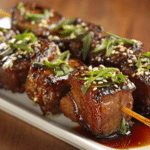
Tender beef skewers coated in a savory-sweet teriyaki glaze and grilled until lightly charred and juicy.
Ingredients
1 1/2 pounds sirloin or flank steak, sliced into 1-inch strips
1/2 cup soy sauce
1/4 cup brown sugar
2 cloves garlic, minced
1 tablespoon fresh ginger, grated
1 tablespoon rice vinegar
1 teaspoon sesame oil
1 tablespoon cornstarch
2 tablespoons water
Wooden or metal skewers
Instructions
-
Slice beef into even strips or cubes.
-
In a bowl, combine soy sauce, brown sugar, garlic, ginger, rice vinegar, and sesame oil.
-
Reserve 1/4 cup of the marinade in a separate bowl.
-
Add beef to remaining marinade, cover, and refrigerate for 30 minutes to 4 hours.
-
Soak wooden skewers in water for 30 minutes if using.
-
Thread beef onto skewers with slight space between pieces.
-
Preheat grill to medium-high heat and lightly oil grates.
-
Grill skewers for 3 to 4 minutes per side until desired doneness.
-
In a saucepan, bring reserved marinade to a boil.
-
Mix cornstarch with water and whisk into boiling sauce until thickened.
-
Brush thickened glaze over skewers during final minute of cooking.
-
Rest skewers for 5 minutes before serving.