
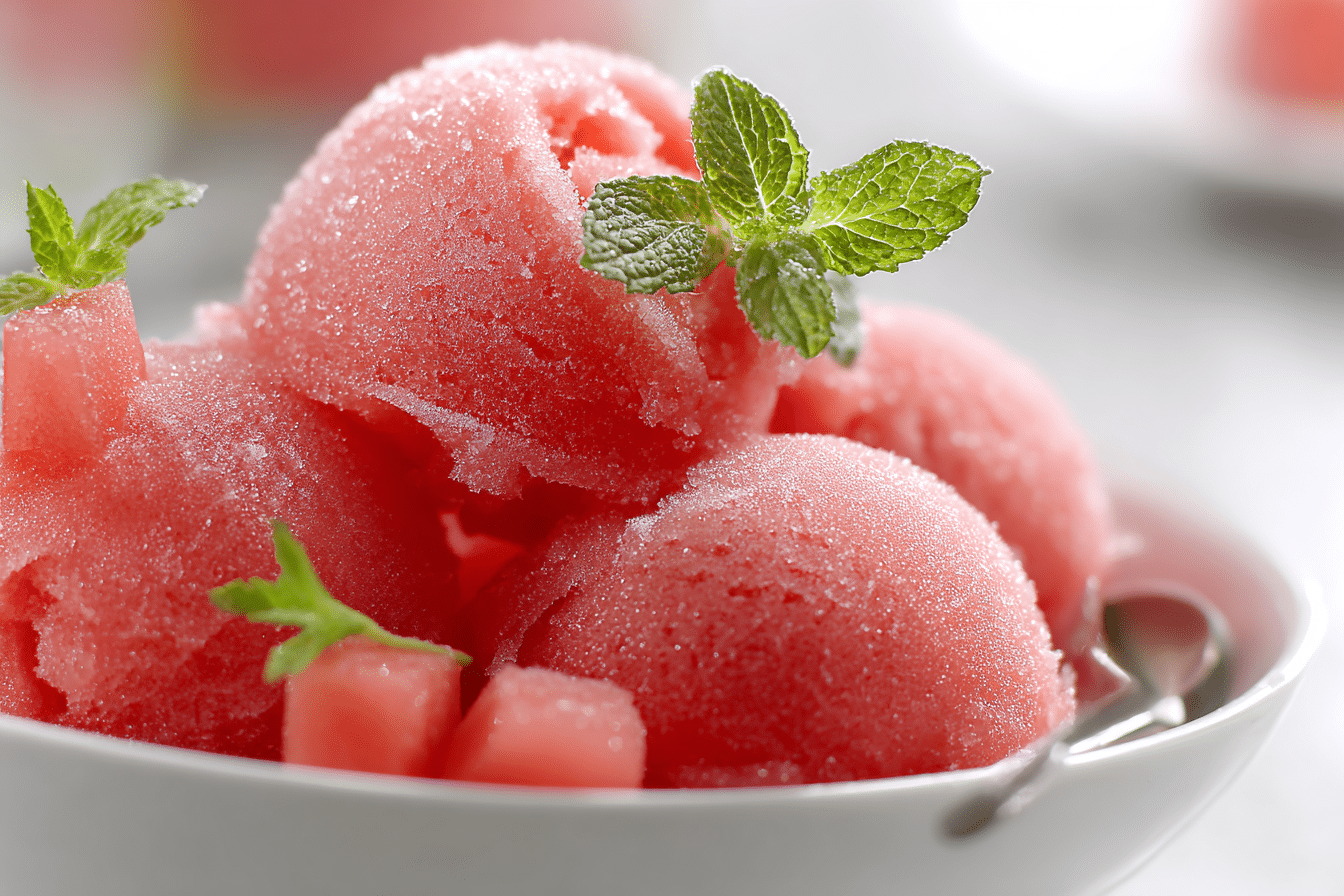
Watermelon sorbet delivers a bright, cooling dessert built around the pure taste of ripe watermelon. Its texture sits between shaved ice and classic ice cream, offering a smooth frozen scoop that melts gently across the tongue. During hot afternoons or summer gatherings, watermelon sorbet provides a refreshing finish without heavy cream or eggs.
This frozen dessert relies on just a handful of ingredients. Sweet watermelon forms the base, while citrus juice and a small amount of sugar support balance and texture. After blending and freezing, the mixture turns into a vibrant pink sorbet with a clean fruit flavor.
Watermelon sorbet also suits many dietary preferences since dairy stays absent. The dessert feels light yet satisfying, and the natural fruit aroma creates an inviting bowl that stands out at picnics, backyard dinners, or relaxed weekend meals.
Because watermelon contains abundant water, careful freezing and occasional stirring create a smooth scoop instead of a hard icy block. With proper preparation, each spoonful holds delicate crystals that glide easily across the palate.
Ingredients Overview
Watermelon stands as the centerpiece of watermelon sorbet. Fully ripe fruit delivers the sweetness and vibrant color that define this dessert. Seedless watermelon works particularly well since blending becomes simpler and texture remains smooth. Cubes of chilled fruit also freeze faster and help maintain freshness during blending.
Granulated sugar contributes gentle sweetness while also assisting with sorbet texture. Sugar lowers the freezing point slightly, allowing the mixture to remain scoopable rather than turning solid. Depending on the natural sweetness of the watermelon, the sugar quantity may shift slightly.
Fresh lime juice brightens the flavor. Watermelon carries subtle sweetness that benefits from a small citrus contrast. Lime introduces acidity that sharpens the fruit profile and prevents the dessert from tasting flat. Lemon juice can replace lime if preferred, though lime pairs especially well with watermelon.
A small pinch of salt might seem surprising, yet it subtly amplifies fruit flavor. Salt does not create a salty dessert; instead, it highlights the natural sweetness already present within the fruit.
Some recipes add a small portion of simple syrup instead of granulated sugar. This liquid sweetener dissolves quickly and blends evenly into the purée. Honey or agave syrup also function as alternatives, though each brings a slightly different sweetness profile.
Fresh mint occasionally appears as an optional accent. A few leaves blended with the fruit create a gentle herbal note that complements watermelon beautifully. For a pure fruit experience, the sorbet works perfectly without additional herbs.
The simplicity of these ingredients allows the watermelon to remain the focus while the supporting elements maintain balance and smooth freezing.
Ingredients
6 cups seedless watermelon cubes, chilled
3/4 cup granulated sugar
1/4 cup fresh lime juice
1/4 cup water
Pinch of salt
4 fresh mint leaves (optional)
Step-by-Step Instructions
Begin with ripe watermelon. Cut the melon into thick slices, remove the rind, then divide the flesh into cubes. Seedless varieties reduce preparation effort and result in a smoother purée. Measure roughly six cups of fruit and place the cubes inside a blender or food processor.
Blend the watermelon until completely smooth. The mixture should appear bright pink and fluid with no visible chunks. If mint appears in the recipe, add the leaves during this blending stage so the herb disperses evenly.
Next, prepare a simple syrup. Combine the granulated sugar and water in a small saucepan over medium heat. Stir gently until the sugar dissolves completely and the liquid turns clear. Remove the pan from heat and allow the syrup to cool for several minutes.
Pour the cooled syrup into the watermelon purée. Add fresh lime juice and a small pinch of salt. Blend briefly again so the ingredients combine thoroughly. Taste the mixture before freezing. If the fruit tastes mild, an extra tablespoon of lime juice brightens the flavor.
Transfer the mixture into a shallow metal pan or freezer-safe container. A wider container helps the sorbet freeze evenly.
Place the container in the freezer for about 45 minutes. During this stage, ice crystals begin forming along the edges. Remove the container and stir the mixture vigorously with a fork or whisk. This step breaks up large ice crystals and promotes a smoother sorbet texture.
Return the container to the freezer. Repeat the stirring process every 30–40 minutes for about two to three hours. Each stir redistributes freezing crystals and gradually thickens the sorbet.
As freezing continues, the mixture transforms into a fluffy frozen texture. When the sorbet becomes firm yet scoopable, stop stirring and allow the dessert to freeze undisturbed for an additional hour.
Before serving, allow the container to rest at room temperature for five minutes. This short pause softens the sorbet slightly and allows clean scoops.
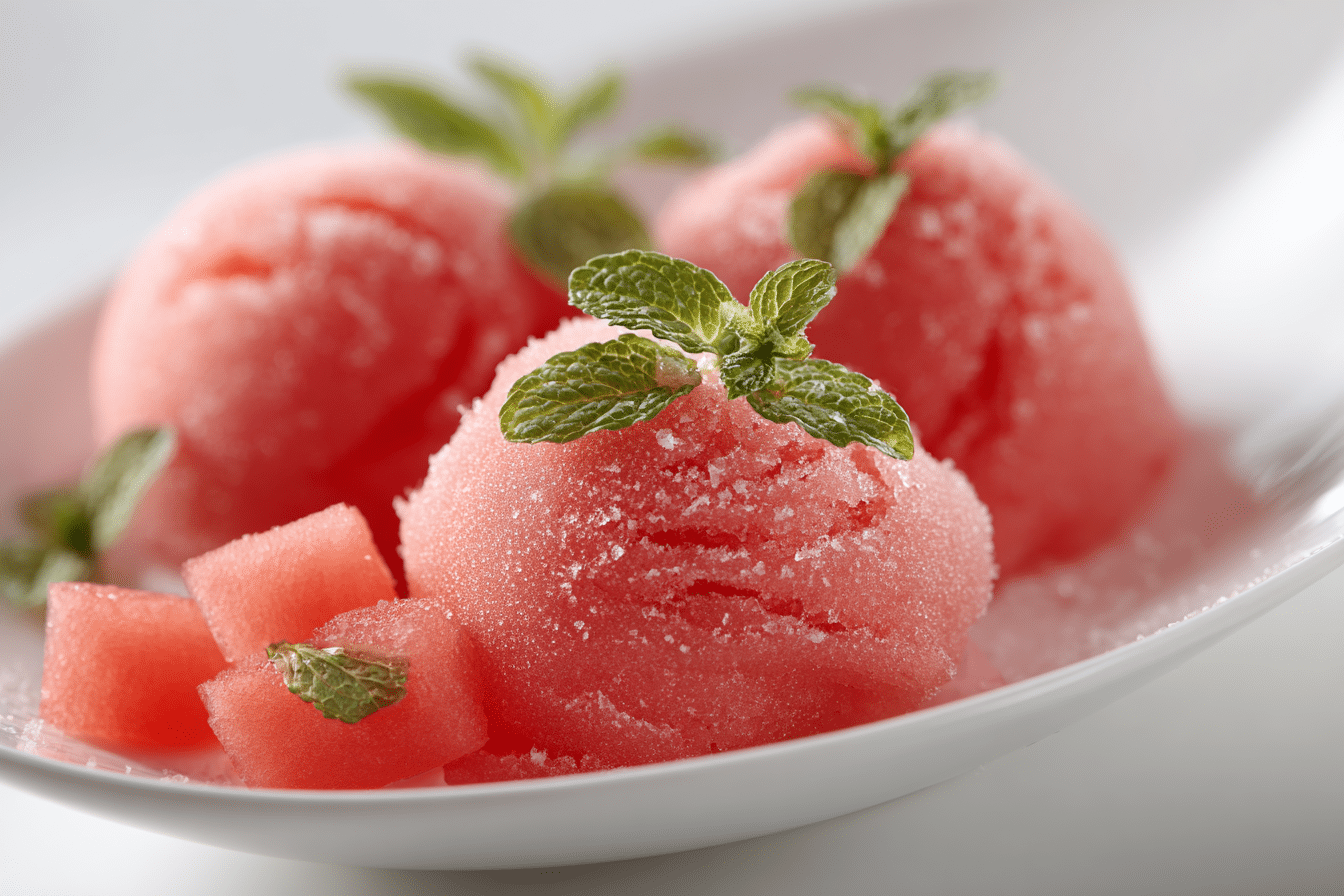
Scoop the watermelon sorbet into chilled bowls or dessert glasses. The color should appear vibrant and the texture smooth with delicate crystals.
Avoid skipping the stirring stage. Without agitation during freezing, the mixture forms large icy blocks rather than a refined sorbet texture.
Tips, Variations & Substitutions
Selecting ripe watermelon remains the most important factor. Look for melons with a deep hollow sound when tapped and a creamy yellow field spot on the rind. These signs usually indicate sweetness and maturity.
Chilling the watermelon cubes before blending shortens freezing duration and helps maintain fresh fruit flavor. Cold fruit also prevents dilution during blending.
For an extra-smooth consistency, strain the blended mixture through a fine mesh sieve before freezing. This removes tiny pulp particles and produces a silkier sorbet.
A splash of vodka, roughly one tablespoon, may appear in certain sorbet recipes. Alcohol lowers the freezing point slightly and keeps the dessert softer during storage. The quantity remains small enough that the flavor stays subtle.
Flavor variations offer fun twists. Blend a handful of strawberries with the watermelon for a deeper berry note. Fresh basil or mint creates a gentle herbal layer that pairs naturally with the fruit.
For reduced sugar versions, replace half of the granulated sugar with honey or agave syrup. These liquid sweeteners blend easily and maintain smooth freezing.
If an ice cream maker sits available, the watermelon mixture can churn directly inside the machine. Churning introduces air and produces a creamier sorbet texture with less manual stirring.
Store finished sorbet in an airtight container. Press a layer of parchment paper directly across the surface before sealing the lid to limit ice crystal formation.
Serving Ideas & Occasions
Watermelon sorbet shines during warm weather meals. After grilled dishes, barbecue spreads, or outdoor picnics, this frozen dessert delivers a light and refreshing finish.
Serve scoops inside chilled bowls, coupe glasses, or hollowed watermelon halves for an eye-catching presentation. A small sprig of mint or a thin lime slice adds a fresh accent without overwhelming the fruit.
For elegant gatherings, pair watermelon sorbet with crisp almond cookies or delicate shortbread. The contrast between cold fruit and buttery biscuits creates a pleasant balance.
Beverage pairings also complement the dessert beautifully. Sparkling water with lime, iced green tea, or light rosé wine pairs nicely with the clean fruit flavor.
During summer celebrations, watermelon sorbet also functions as a palate refresher between meal courses.
Nutritional & Health Notes
Watermelon sorbet contains relatively few ingredients and relies primarily on fruit. Watermelon consists largely of water, which contributes hydration along with subtle natural sweetness.
Compared with dairy-based frozen desserts, sorbet typically contains lower fat content since cream and egg yolks remain absent. This characteristic creates a lighter texture and a refreshing mouthfeel.
Watermelon also provides small amounts of vitamin C and vitamin A through natural plant pigments. While the dessert still contains sugar, the fruit base contributes flavor so excessive sweeteners remain unnecessary.
Portion size remains the primary factor influencing calorie intake. A moderate scoop delivers refreshing flavor without excessive richness.
Individuals seeking dairy-free or vegan desserts often appreciate sorbet because the recipe avoids milk products entirely.
Can watermelon sorbet appear without an ice cream machine?
Yes. A freezer container combined with periodic stirring produces excellent watermelon sorbet. Stirring every 30–40 minutes breaks apart forming ice crystals and gradually builds a smoother frozen texture. Although an ice cream machine introduces air and churns continuously, manual freezing still yields satisfying results. Using a shallow metal pan improves freezing efficiency since cold air circulates evenly across the mixture.
How long can watermelon sorbet remain in the freezer?
Watermelon sorbet typically keeps well for about one week when stored in an airtight container. Placing parchment paper directly across the surface helps prevent excess ice crystals from forming. After longer storage, the sorbet may become firmer and slightly icy. Allowing the container to rest at room temperature for several minutes softens the texture before scooping.
Can frozen watermelon replace fresh fruit?
Frozen watermelon cubes function well for sorbet preparation. Allow the fruit to thaw slightly before blending so the blender operates smoothly. Frozen fruit often produces an even colder purée, which shortens the freezing stage. Flavor remains very similar as long as the watermelon reached ripeness before freezing.
Why does sorbet sometimes turn icy?
Large ice crystals develop when the mixture freezes without agitation. Watermelon carries a high water content, so stirring during freezing becomes especially important. Regular stirring redistributes freezing crystals and keeps them small. Sugar within the recipe also helps maintain smoother texture by slightly lowering the freezing point.
Can sugar quantities shift?
Yes. Watermelon sweetness varies widely depending on ripeness and variety. Taste the purée before freezing and adjust sugar gradually if needed. Lime juice also influences perceived sweetness, so balancing sugar and citrus produces the brightest flavor.
Is watermelon sorbet dairy free?
Traditional watermelon sorbet contains fruit, sugar, citrus juice, and water. Dairy products remain absent, making it suitable for individuals avoiding milk ingredients. The texture relies entirely on frozen fruit and dissolved sugar rather than cream.
What creates the vibrant color in watermelon sorbet?
The striking pink color comes naturally from pigments inside watermelon flesh. When blended and frozen, these pigments remain vivid, producing a bright frozen dessert without artificial coloring. Selecting ripe watermelon deepens both color and flavor.
PrintWatermelon Sorbet: 3 Amazing Spectacular Scoops
Refreshing frozen dessert featuring ripe watermelon blended with sugar and lime juice, then frozen into a smooth fruit sorbet.
Ingredients
6 cups seedless watermelon cubes
3/4 cup granulated sugar
1/4 cup water
1/4 cup fresh lime juice
Pinch of salt
4 mint leaves (optional)
Instructions
-
Blend watermelon cubes until smooth in a blender or food processor.
-
Heat sugar and water in a saucepan until the sugar dissolves completely. Cool slightly.
-
Combine the watermelon purée, simple syrup, lime juice, and salt in the blender and blend briefly.
-
Pour the mixture into a shallow freezer-safe container.
-
Freeze for 45 minutes, then stir vigorously with a fork.
-
Continue freezing and stirring every 30–40 minutes for about 2–3 hours.
-
Once thick and scoopable, freeze for another hour before serving.
-
Let the container rest at room temperature for several minutes, then scoop into bowls.
Notes
Stirring during freezing prevents large ice crystals and keeps the sorbet smooth. Mint leaves provide an optional herbal accent.