
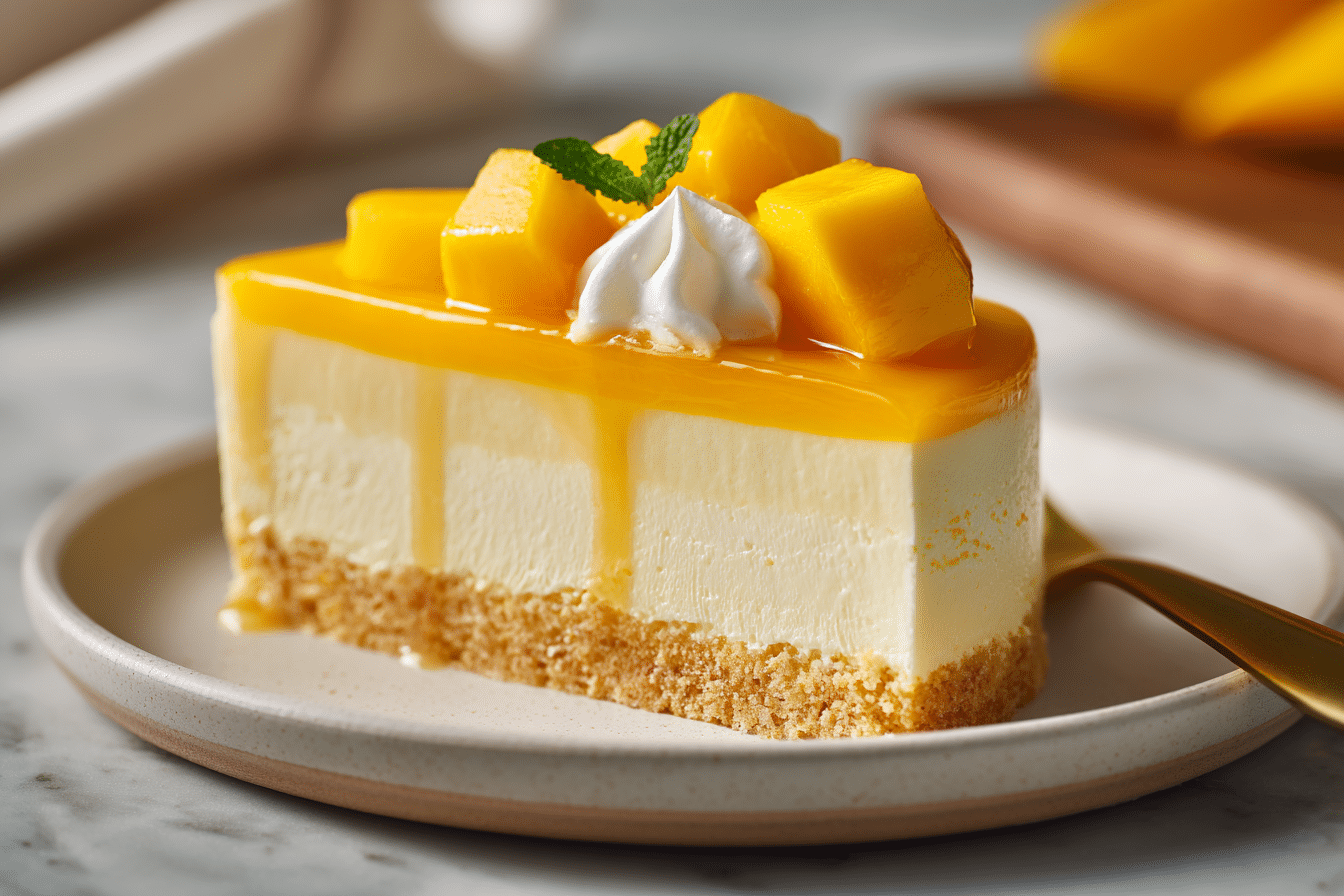
Mango Mousse Cake is a light yet indulgent dessert that combines airy mousse with a soft cake base and vibrant mango flavor. Each slice delivers a smooth, creamy texture balanced by the natural sweetness and gentle tang of ripe mangoes.
This dessert stands out for its refreshing taste and elegant layers. The mousse is soft and cloud-like, while the base provides just enough structure to hold everything together. It feels both luxurious and approachable, making it a favorite for special occasions or warm-weather treats.
With its bright color and delicate texture, Mango Mousse Cake offers a beautiful balance of flavor and presentation in every slice.
Ingredients Overview
The highlight of Mango Mousse Cake is ripe mango. Fresh mango puree provides natural sweetness, color, and a slightly tangy flavor that defines the dessert. If fresh mango is unavailable, high-quality canned mango puree can be used.
The mousse layer relies on heavy cream, which is whipped to create a light and airy texture. Gelatin is often used to stabilize the mousse, allowing it to hold its shape while remaining soft and creamy.
Sugar enhances the mango’s natural sweetness, while a small amount of lemon juice can brighten the flavor and prevent it from becoming overly rich.
The cake base is typically a simple sponge or biscuit layer. Sponge cake works well because it is light and absorbs moisture without becoming dense. Crushed biscuits mixed with butter can also be used for a no-bake base.
Eggs, flour, and sugar are used for the sponge layer, creating a soft and slightly springy texture that complements the mousse.
Together, these ingredients create a dessert that is smooth, fruity, and balanced.
Ingredients
For the cake base:
3 large eggs
1/2 cup granulated sugar
1/2 cup all-purpose flour
1/2 teaspoon vanilla extract
For the mango mousse:
2 cups mango puree
1 cup heavy cream
1/2 cup granulated sugar
1 tablespoon lemon juice
2 teaspoons gelatin powder
3 tablespoons water
For topping (optional):
1/2 cup mango puree
Fresh mango slices
Step-by-Step Instructions
Begin by preparing the cake base. Preheat your oven to 350°F and line a round cake pan with parchment paper.
In a mixing bowl, beat the eggs and sugar together until the mixture becomes pale and fluffy. This step incorporates air, which helps create a light sponge.
Add vanilla extract and gently fold in the flour. Mix carefully to avoid deflating the batter.
Pour the batter into the prepared pan and bake for 12–15 minutes, or until the cake springs back when lightly touched. Allow it to cool completely in the pan.
While the cake cools, prepare the mango mousse. In a small bowl, sprinkle gelatin over water and let it sit for 5 minutes to bloom.
Heat the bloomed gelatin gently until dissolved, then mix it into the mango puree along with sugar and lemon juice. Stir until smooth.
In a separate bowl, whip the heavy cream until soft peaks form. This creates the light texture needed for the mousse.
Gently fold the mango mixture into the whipped cream. Mix carefully to keep the mousse airy and smooth.
Place the cooled cake base in a springform pan. Pour the mango mousse over the cake, spreading it evenly.
Refrigerate for at least 4 hours, or until the mousse is fully set.
For the topping, spread additional mango puree over the set mousse and decorate with fresh mango slices if desired.
Carefully remove the cake from the pan before serving. Slice with a clean, sharp knife for neat layers.
Common mistakes include overmixing the mousse, which can deflate it, and not allowing enough chilling time, which prevents proper setting.
Tips, Variations & Substitutions
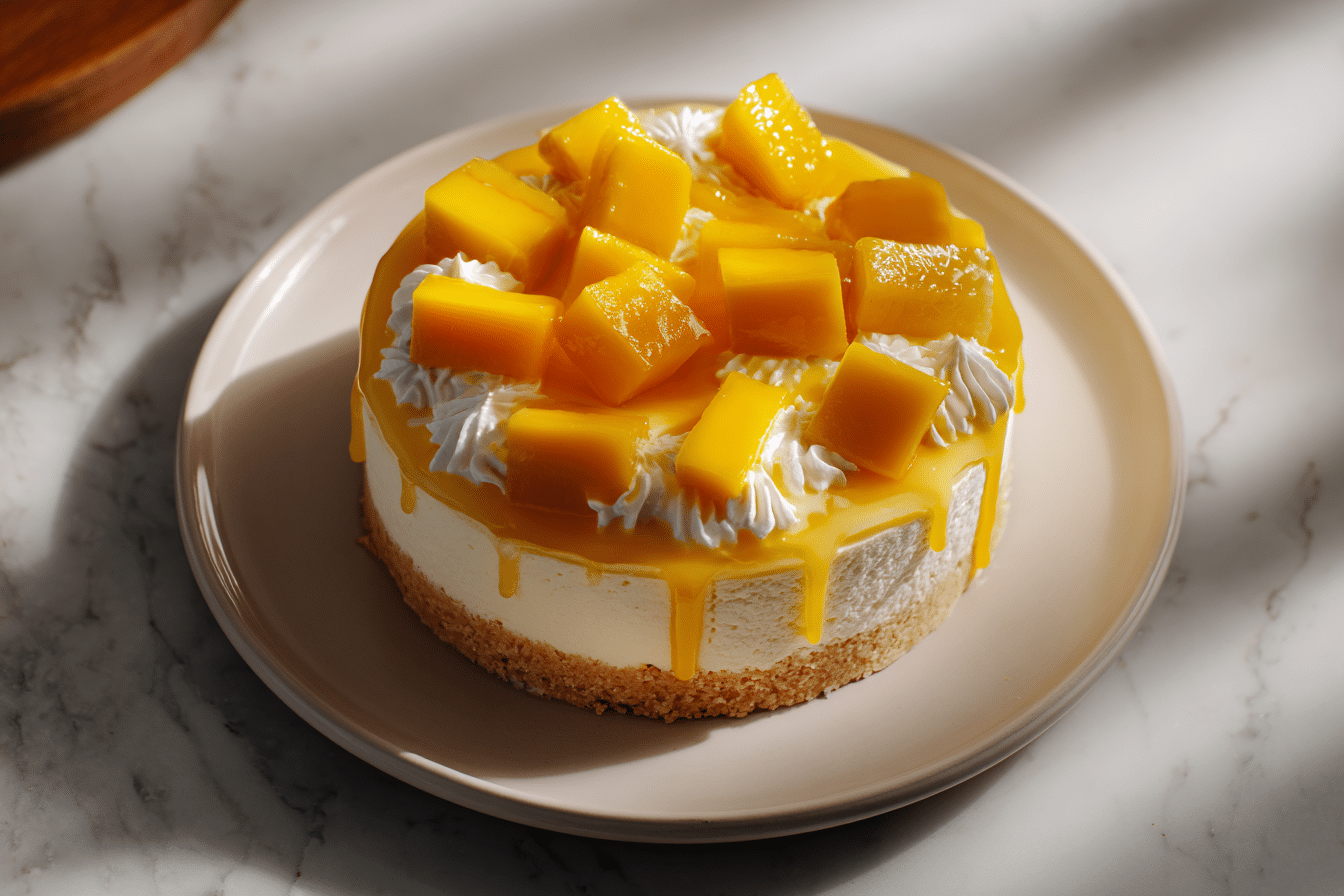
For a no-bake version, replace the sponge cake with a biscuit crust made from crushed cookies and melted butter. Press it firmly into the pan before adding the mousse.
If you prefer a richer flavor, add a small amount of cream cheese to the mousse mixture. This creates a slightly denser texture with a subtle tang.
A coconut variation can be made by replacing part of the cream with coconut cream, adding a tropical twist that pairs well with mango.
For a vegetarian option, agar-agar can be used instead of gelatin. Follow package instructions for proper setting.
Using very ripe mangoes results in a sweeter and more flavorful mousse, reducing the need for added sugar.
Serving Ideas & Occasions
Mango Mousse Cake is ideal for celebrations, birthdays, or warm-weather gatherings. Its light texture makes it a refreshing dessert after a hearty meal.
Serve chilled for the best flavor and texture. Each slice pairs well with a light beverage or a simple fruit garnish.
This cake also works beautifully as a centerpiece dessert due to its bright color and clean layers.
For smaller servings, it can be made in individual cups or jars for easy presentation.
Nutritional & Health Notes
This dessert provides a balance of carbohydrates, fats, and natural fruit sugars. Mango contributes vitamins and a fresh fruit component, while the cream adds richness.
Portion size plays a key role, as the mousse is light but still contains cream and sugar. Adjusting sugar levels based on the sweetness of the mango can help maintain balance.
Using a lighter cream or reducing sugar slightly can create a less rich version without losing the overall character of the dessert.
Mango Mousse Cake offers a refreshing way to enjoy a fruit-based dessert with a creamy texture.
FAQs
Can I use canned mango puree instead of fresh mango?
Yes, canned mango puree works well and is a convenient option. Choose a high-quality product without added sugar if possible. This allows you to control the sweetness of the mousse more accurately.
How do I know when the mousse is set?
The mousse should feel firm to the touch and hold its shape when sliced. Refrigerating for at least 4 hours is usually enough, but overnight chilling provides the best results.
Can I make this cake ahead of time?
Yes, Mango Mousse Cake is perfect for making ahead. It can be prepared a day in advance and stored in the refrigerator until ready to serve.
What can I use instead of gelatin?
Agar-agar is a good alternative for a vegetarian version. It sets more firmly than gelatin, so adjust the quantity according to package instructions.
Can I freeze Mango Mousse Cake?
Yes, it can be frozen, but the texture may change slightly after thawing. For best results, thaw it slowly in the refrigerator before serving.
How do I get clean slices?
Use a sharp knife and wipe it clean between each cut. This helps maintain neat layers and a polished appearance.
Can I add other fruits to this cake?
Yes, fruits like passion fruit, berries, or peaches can be added as layers or toppings. They complement the mango flavor and add variety to the dessert.
PrintMango Mousse Cake: 5 Amazing Creamy Tropical Slices
A light and creamy cake made with airy mango mousse layered over a soft sponge base.
Ingredients
3 eggs
1/2 cup sugar
1/2 cup flour
1/2 teaspoon vanilla
2 cups mango puree
1 cup cream
1/2 cup sugar
1 tablespoon lemon juice
2 teaspoons gelatin
3 tablespoons water
1/2 cup mango puree
Instructions
- Beat eggs and sugar until fluffy.
- Fold in flour and bake sponge.
- Bloom and dissolve gelatin.
- Mix mango puree, sugar, and lemon juice.
- Whip cream and fold into mango mixture.
- Pour over cooled cake base.
- Chill until set.
- Add topping and slice.
Notes
Chill fully for best texture.
Use ripe mango for flavor.