
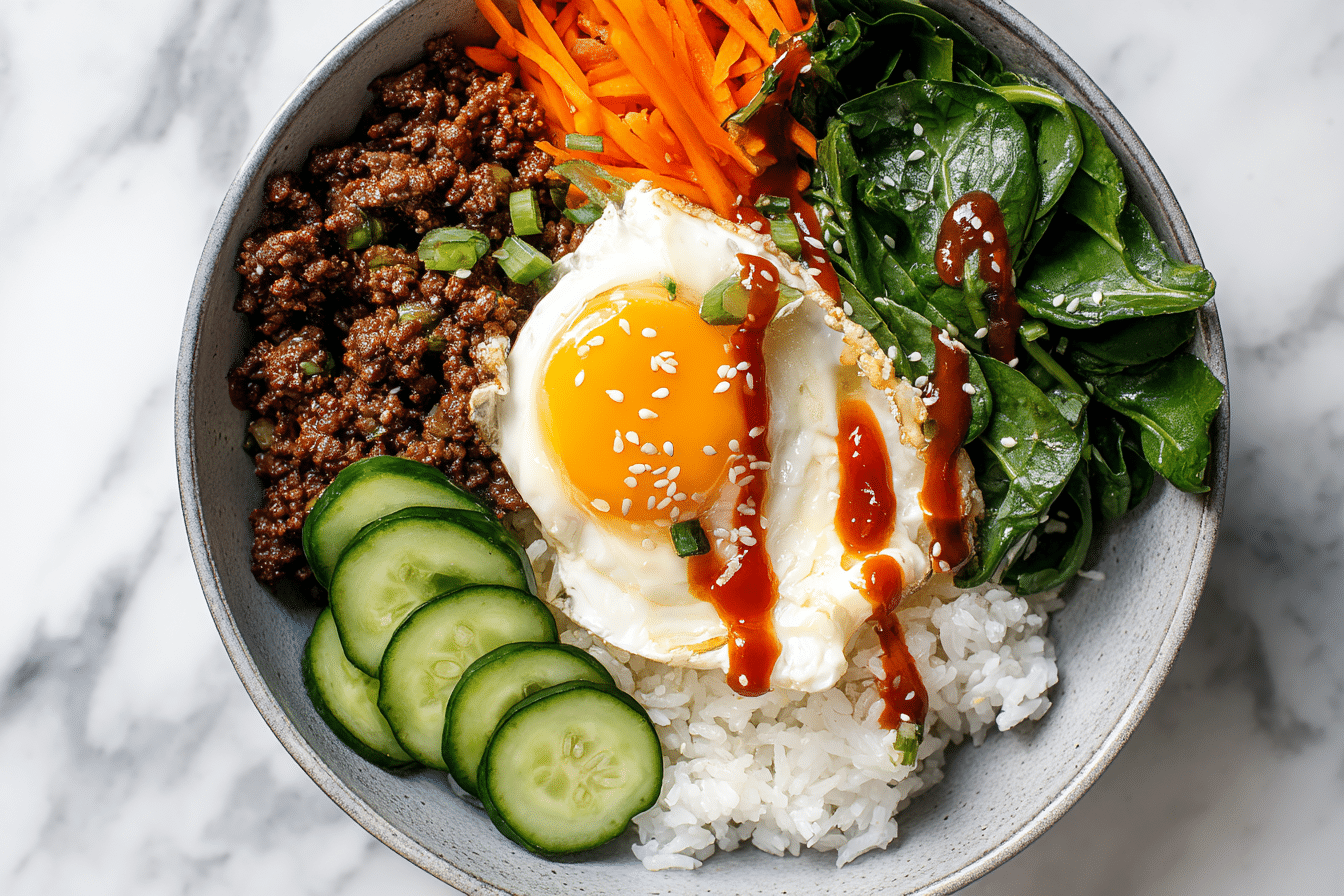
Easy Bibimbap with Ground Beef brings a warm rice bowl filled with seasoned beef, sautéed vegetables, and a rich gochujang-style sauce. Each component sits neatly over rice, then gets mixed just before eating, creating layers of texture and flavor in every spoonful.
This bowl works well for weeknight meals or meal prep since the ingredients can be cooked ahead and assembled quickly. The combination of savory beef, tender vegetables, and slightly spicy sauce creates a balanced dish that feels satisfying without complicated steps.
Bibimbap is traditionally built around contrast—hot rice, seasoned toppings, crisp vegetables, and a bold sauce that ties everything together.
Ingredients Overview
Ground beef forms the main protein in this bibimbap bowl. It cooks quickly in a skillet and absorbs seasoning well, creating a savory base. Lean ground beef helps reduce excess oil while still keeping a rich texture. As it browns, it develops depth that pairs well with rice.
Rice acts as the foundation of the dish. Short or medium grain rice is commonly used because it holds a slightly sticky texture that supports the toppings. Freshly cooked rice or reheated rice both work, as long as it remains soft and warm when serving.
Vegetables add color, crunch, and balance. Common choices include carrots, spinach, zucchini, and bean sprouts. Each vegetable is typically cooked separately to maintain its texture and flavor clarity. Light seasoning keeps them distinct while still fitting into the overall bowl.
Eggs are often added on top of bibimbap. A fried egg with a soft yolk adds richness that blends into the rice when mixed. The yolk creates a smooth coating that enhances the overall texture.
Soy sauce and sesame oil provide seasoning for both beef and vegetables. Soy sauce adds saltiness and umami depth, while sesame oil contributes a nutty aroma that defines the dish’s flavor profile.
Garlic plays a supporting role in seasoning the beef. It adds sharpness and aroma that balances the richness of the meat.
Gochujang-style sauce gives the bowl its signature spice. It brings heat, slight sweetness, and fermented depth that ties all ingredients together when mixed.
Sesame seeds and green onions are used as finishing touches. They add light crunch and freshness without overpowering the main ingredients.
Ingredients
1 pound ground beef
3 cups cooked short grain rice
1 medium carrot, julienned
2 cups spinach leaves
1 zucchini, sliced thin
1 cup bean sprouts
2 tablespoons soy sauce
1 tablespoon sesame oil
3 cloves garlic, minced
2 eggs
1 tablespoon vegetable oil
2 tablespoons gochujang-style chili paste
1 teaspoon sugar
1 teaspoon rice vinegar
1 tablespoon water
1 tablespoon sesame seeds
2 green onions, sliced
Step-by-Step Instructions
Start by preparing the rice. Cook short grain rice until soft and slightly sticky. Keep it warm so it can support the toppings when assembled.
Heat a skillet over medium heat and add vegetable oil. Place ground beef into the pan and break it apart while cooking. Stir until the beef browns evenly and loses its raw color.
Add minced garlic to the beef and stir until aromatic. Pour in soy sauce and a small amount of sesame oil. Continue cooking until the liquid blends into the meat and the texture becomes slightly glazed.
Remove the beef from the pan and set aside.
In the same skillet, lightly cook each vegetable separately. Start with carrots, stirring until slightly softened but still firm. Remove and set aside.
Add zucchini slices and cook briefly until tender but not mushy. Remove and keep separate.
Place spinach in the skillet and stir until just wilted. Remove immediately to maintain color and texture.
Quickly heat bean sprouts until slightly softened while keeping a light crunch. Set aside with other vegetables.
Prepare the sauce by mixing gochujang-style paste, sugar, rice vinegar, and water in a small bowl. Stir until smooth and slightly loose in texture.
Cook eggs in a separate pan using a small amount of oil. Fry until whites are set while keeping yolks soft for a richer finish.
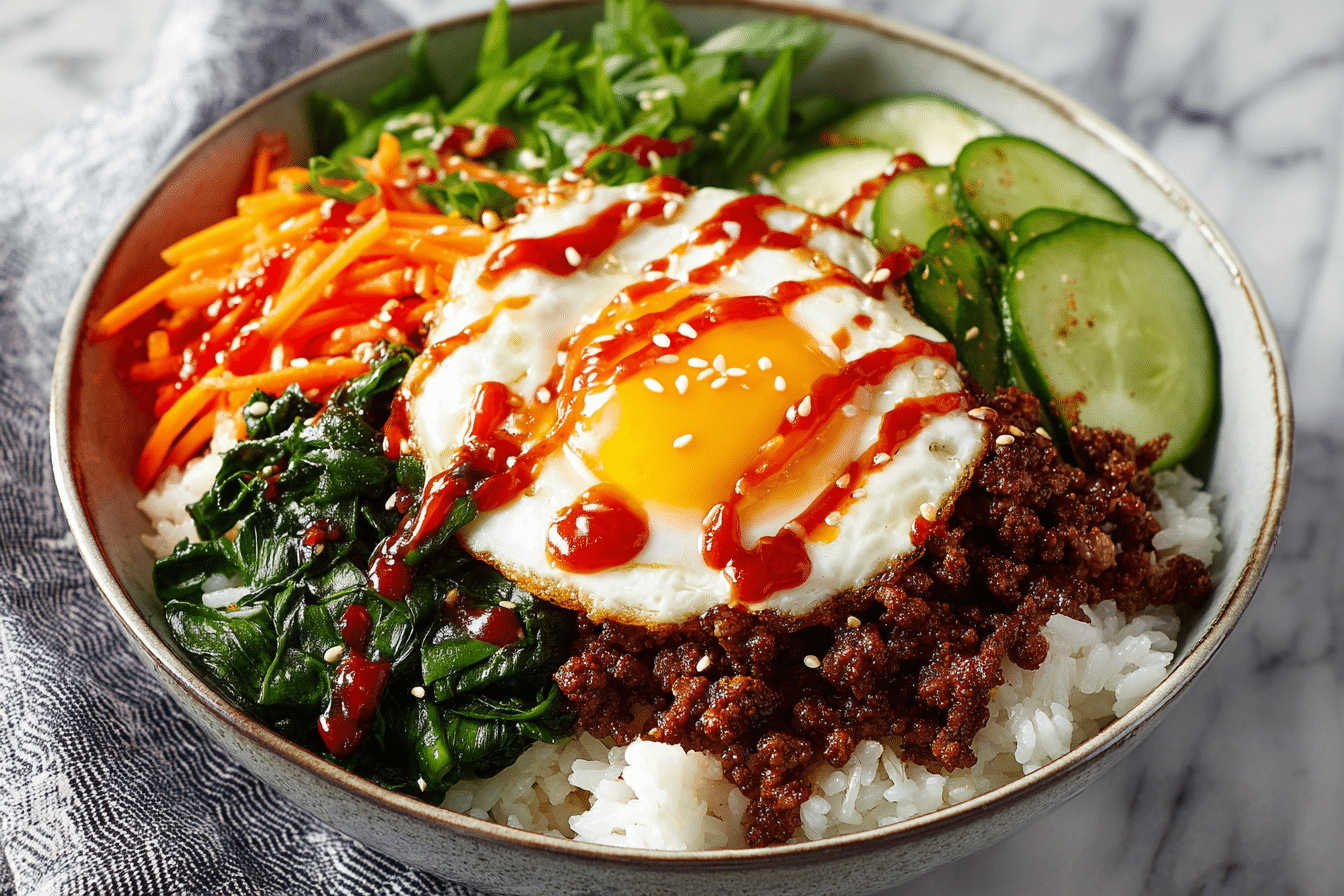
To assemble, place warm rice in serving bowls. Arrange cooked beef and vegetables in sections over the rice instead of mixing them immediately. This traditional presentation keeps flavors distinct.
Place a fried egg on top of each bowl. Sprinkle sesame seeds and sliced green onions over the surface.
Add a spoonful of sauce over the top or serve it on the side depending on preference.
Before eating, mix everything together thoroughly so the sauce coats the rice, beef, and vegetables evenly.
Tips, Variations & Substitutions
Ground beef can be replaced with ground turkey or chicken for a lighter protein option. Both absorb seasoning well and cook quickly.
Vegetables can be adjusted based on preference or availability. Mushrooms, bell peppers, or shredded cabbage can replace traditional ingredients while still maintaining texture variety.
For extra depth, a small amount of mirin or honey can be added to the sauce to balance heat and acidity.
Brown rice or quinoa can replace white rice for a firmer texture and higher fiber content. The bowl will still hold its structure when mixed.
If a spicier profile is preferred, additional chili paste or red pepper flakes can be added to the sauce mixture.
A vegetarian version can be created by replacing beef with tofu or additional vegetables, cooked until lightly browned for texture contrast.
Serving Ideas & Occasions
This bibimbap bowl works well for lunch or dinner and is often used for meal prep due to its ability to hold flavor after reheating. Each component can be stored separately and assembled quickly when needed.
It pairs well with simple side dishes like cucumber salad or light broth-based soups. These sides complement the richness of the bowl without overpowering it.
For serving, bowls are preferred so the ingredients can be mixed easily before eating. The mixing step is important for combining textures and distributing sauce evenly.
Bibimbap is also suitable for family-style meals where ingredients are arranged separately and assembled at the table.
Nutritional and Balance Notes
This dish provides a balanced mix of protein, carbohydrates, and vegetables. Ground beef supplies protein and iron, while rice provides energy-rich carbohydrates.
Vegetables contribute fiber, vitamins, and color variety. Cooking them lightly helps preserve texture and nutritional value.
Eggs add protein and healthy fats, while sesame oil contributes small amounts of unsaturated fats and flavor depth.
Portion control can be adjusted by changing rice or beef quantities while keeping vegetable proportions steady for balance.
FAQs
What type of rice works for bibimbap?
Short grain rice is commonly used because it has a slightly sticky texture that holds toppings well. Medium grain rice also works. The rice should be cooked until soft but not overly wet so it can support the other ingredients without becoming mushy.
Can ground beef be replaced with another protein?
Yes, ground chicken or turkey can be used instead of beef. Both cook quickly and absorb seasoning well. Tofu is another option for a vegetarian version and can be pan-seared for extra texture before adding to the bowl.
Do vegetables need to be cooked separately?
Yes, cooking vegetables separately helps maintain their individual texture and flavor. This method prevents them from becoming too soft and ensures each ingredient contributes a distinct bite to the bowl.
What is the purpose of the sauce?
The sauce adds heat, sweetness, and depth to the dish. When mixed into the bowl, it coats the rice and ingredients evenly, bringing all flavors together in a cohesive way.
Can the bowl be prepared ahead of serving?
Yes, all components can be cooked in advance and stored separately. When ready to serve, reheat the rice and beef, then assemble with vegetables, egg, and sauce.
Is a fried egg necessary?
A fried egg is traditional but not required. It adds richness and a soft texture that blends into the rice when mixed, but the bowl can still be served without it.
How is the bowl typically eaten?
The bowl is mixed thoroughly before eating so all ingredients and sauce combine. This mixing step is important for achieving balanced flavor in each bite.
Easy Bibimbap with Ground Beef
Easy Bibimbap with Ground Beef combines seasoned beef, fresh vegetables, rice, and spicy sauce in a balanced Korean-inspired rice bowl.
Ingredients
1 lb ground beef
3 cups cooked rice
1 carrot
2 cups spinach
1 zucchini
1 cup bean sprouts
2 tbsp soy sauce
1 tbsp sesame oil
3 garlic cloves
2 eggs
1 tbsp vegetable oil
2 tbsp chili paste
1 tsp sugar
1 tsp vinegar
1 tbsp sesame seeds
2 green onions
Instructions
- Cook rice and keep warm.
- Brown ground beef in a skillet.
- Add garlic, soy sauce, and sesame oil.
- Cook vegetables separately.
- Mix sauce ingredients until smooth.
- Fry eggs in a pan.
- Arrange rice, beef, and vegetables in bowls.
- Top with egg, sauce, and garnishes.
- Mix before serving.
Notes
Cooking vegetables separately helps preserve texture and color.
Prep Duration:
20 minutes
Cook Duration:
25 minutes
Total Duration:
45 minutes
Yield:
4 bowls
Calories:
520 per bowl
Course:
Dinner
Cuisine:
Korean-Inspired